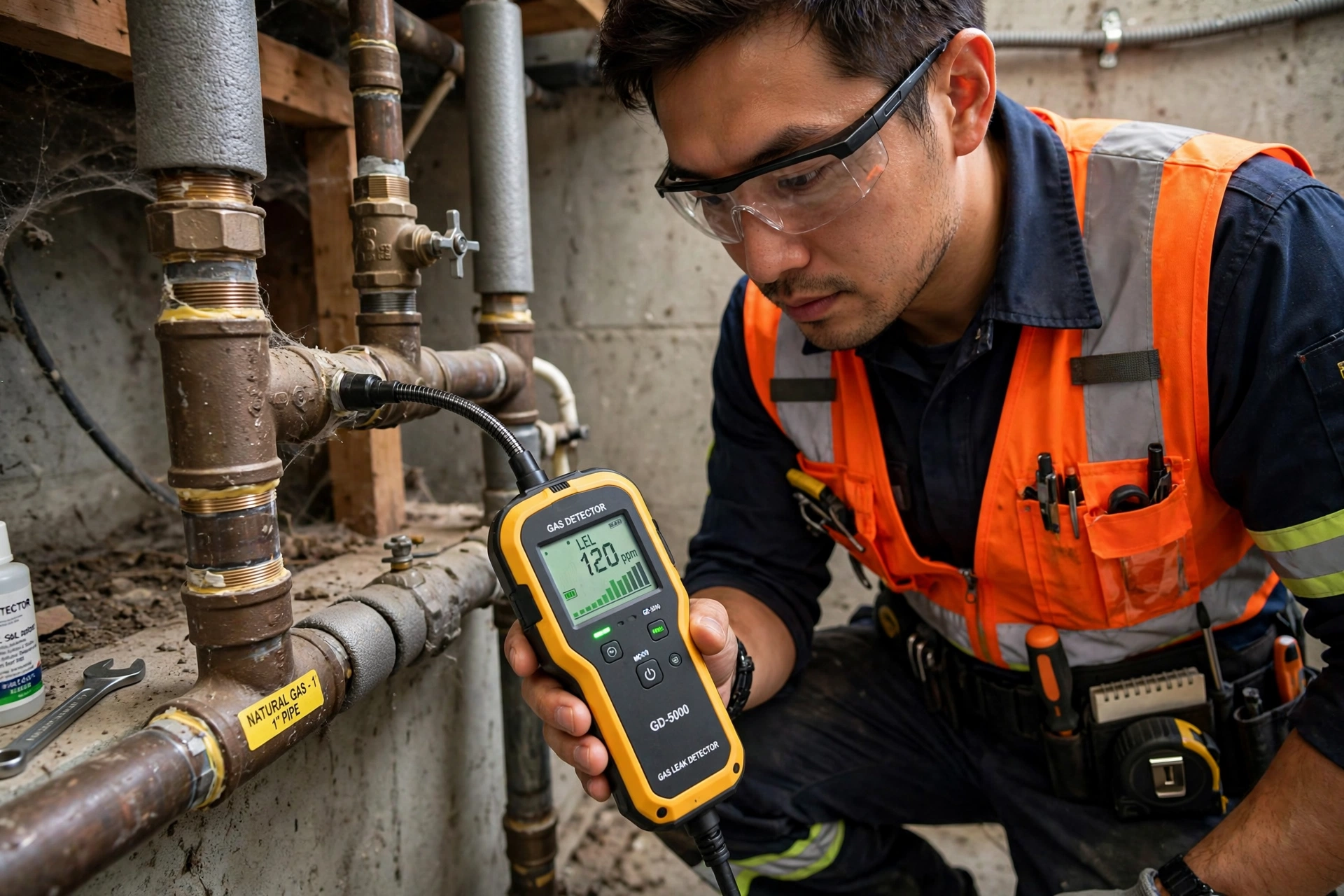
Thorough Inspections
We conduct detailed inspections to identify any issues with your gas lines, ensuring that all potential problems are addressed.
Our gas line repair service includes comprehensive inspections, repairs, and necessary replacements to ensure your gas lines are safe and functional.
We conduct detailed inspections to identify any issues with your gas lines, ensuring that all potential problems are addressed.
Our team specializes in repairing leaks, using high-quality materials to ensure a long-lasting solution.
We ensure all repairs comply with local codes and safety regulations, providing peace of mind for homeowners.
After repairs, we perform safety tests to ensure your gas lines are leak-free and functioning correctly.
Several forces work against gas piping over time, and corrosion leads the list for metal pipe: moisture, corrosive soil chemistry, contact between dissimilar metals, and damaged protective coatings. On the Gulf Coast, humidity deserves special mention — it relentlessly attacks exposed outdoor piping, which is why risers, meter connections, and any above-ground steel near the meter in Missouri City should be checked for rust as a matter of routine.
Physical damage is the other major threat. Digging without calling 811, driving heavy equipment over shallow lines, shifting soil, and flooding that washes away the bedding supporting a buried pipe can all injure a line long before corrosion would. A single careless shovel strike can do what decades of soil chemistry could not.
Installation quality casts a long shadow over everything else. A line installed with proper depth, correct fittings, adequate support, appropriate coating, and clean backfill starts life with every advantage. A line installed with shortcuts — shallow burial, poor joint compound, rocks left in the trench — starts life already compromised. Much of a gas line’s lifespan is decided on installation day.
Southeast Texas clay expands when wet and shrinks when dry, and that seasonal swelling and shrinking moves the ground around buried pipe — stressing it, flexing rigid joints, and in severe cases cracking them. The same soil holds moisture against buried metal, feeding corrosion at the same time it is mechanically working the joints. This one-two punch is why Fort Bend County’s gumbo clay has such a reputation among people who work underground here, and why proper bedding, correct depth, and corrosion-resistant materials matter more in Missouri City than they might elsewhere.
Gas lines rarely fail without warning. Visible rust or corrosion on exposed piping — especially at fittings, valves, and threaded joints — is the most direct evidence of aging. Look for flaking, pitting, or thinning metal rather than light surface discoloration; deep, crusty corrosion at a joint is a different matter from a faint patina on a straight run. Any active seepage, however small, needs immediate professional attention.
Outdoors, the signs mirror those of any underground leak: patches of dead vegetation tracing a line from the street toward the meter, dirt mysteriously blowing from a hole in the ground, or bubbles rising in puddles over the pipe’s path after rain. A corroded, tilted, or damaged meter assembly is another red flag. If you notice any of these, a professional gas line inspection can determine whether you are looking at cosmetic aging or a line that needs work.
Not every symptom means the whole line is failing. Light surface rust on an exposed pipe in a humid Gulf Coast utility room may be largely cosmetic — unattractive, but not structurally meaningful. Deep pitting, flaking layers, thinning walls, or rust that returns quickly after cleaning point to active, ongoing corrosion. The dividing line between the two is not always visible to the naked eye, which is why pressure testing — not appearance alone — is the real measure of a line’s integrity.
Inspection is the tool that turns uncertainty into knowledge. A professional gas line inspection typically combines a visual assessment of accessible piping, a leak survey with sensitive detection equipment, and pressure testing that reveals whether the system holds as it should. Small problems found this way — a weeping joint, early corrosion at a riser, a damaged coating — can be addressed while they are still small.
Regular inspection does more than catch problems — it documents the system’s condition over time, creating a baseline that makes future changes detectable. For buyers considering an older home in Quail Valley or Stafford, and for sellers who want to show their steel lines are sound, that documented history is genuinely valuable.
A practical approach: give accessible piping a visual check every few years, looking for new rust, damage, or changes around the meter. Schedule a professional inspection with pressure testing when buying an older home, after significant flooding or a major hurricane, or whenever symptoms appear — unexplained odors, dead vegetation strips, or a creeping gas bill. After any event that moves soil or soaks it thoroughly, an inspection is cheap peace of mind.
01
What we do: Contact us immediately for gas line repair in Missouri City. Our technicians will locate and fix the leak quickly.
→ This ensures your home is safe and eliminates the risk of gas exposure.
02
What we do: Our team will inspect the gas lines and connections to identify any issues affecting performance.
→ You'll enjoy improved efficiency and reliability from your gas appliances.
03
What we do: We provide gas line servicing in Missouri City to ensure safe and efficient installations.
→ This guarantees that your new appliances operate safely and effectively.
Gas Line Repair in Missouri City requires an understanding of local building codes and common issues faced by residents. The humid climate can lead to corrosion in gas lines, making regular inspections essential. Our team is familiar with the unique challenges of the area, ensuring effective and compliant repairs. With gas line servicing in Missouri City, we address issues promptly to maintain safety and efficiency.
Bridlewood
This neighborhood often experiences gas line issues due to older infrastructure.
Parker Square
Residents here benefit from our prompt gas line repair services, especially during extreme weather.
Lake Forest
We provide thorough inspections to ensure safety in homes with aging gas lines.
High humidity levels in summer
This can accelerate corrosion in gas lines, necessitating regular inspections and repairs.
Frequent temperature fluctuations in winter
These fluctuations can lead to pipe expansion and contraction, increasing the risk of leaks.
Our gas line repair services address common issues that can pose risks to your home and family.
Problem
Ignoring gas leaks can lead to dangerous situations, including explosions or health hazards from inhalation.
Our Fix
Our team quickly identifies and repairs leaks, ensuring your gas lines are safe and compliant with local regulations.
Problem
Faulty connections can lead to inefficient appliance operation and increased energy costs.
Our Fix
We repair and replace faulty connections, improving appliance efficiency and reducing energy bills.
Problem
Pressure drops can affect appliance performance, leading to inadequate heating or cooking.
Our Fix
We diagnose and fix pressure issues, ensuring your gas appliances operate at optimal levels.
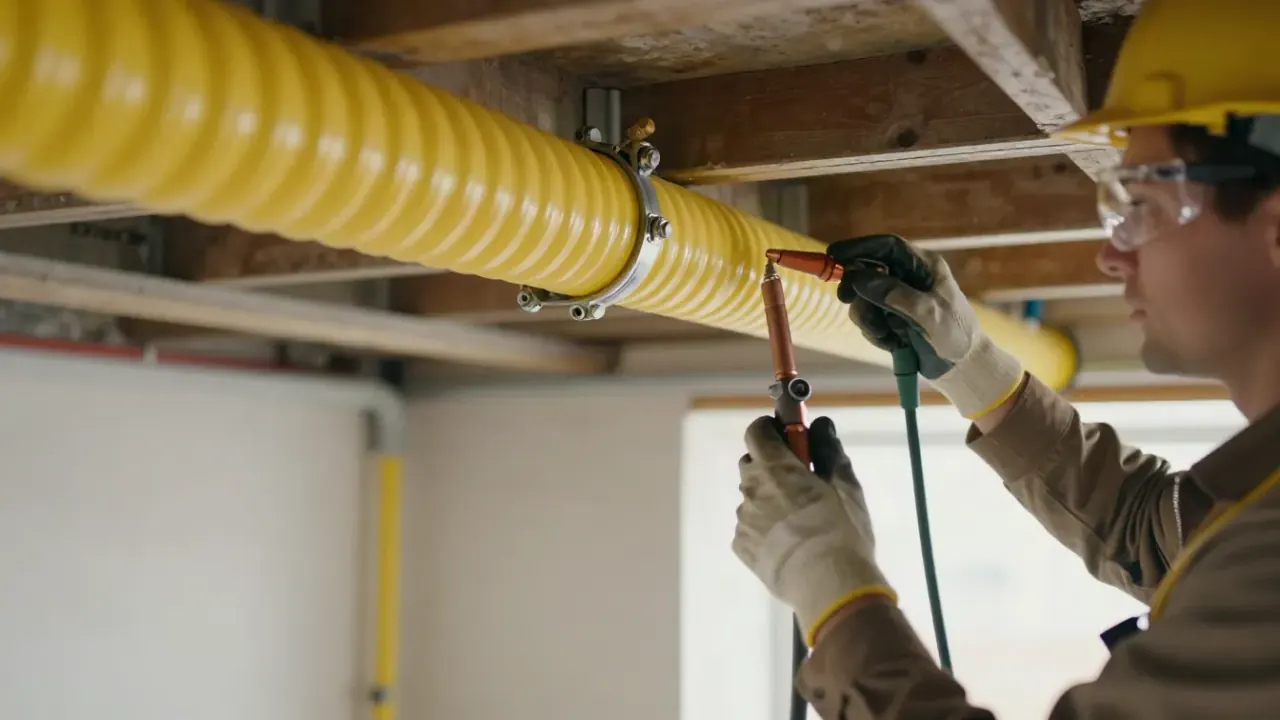
Investing in gas line repair offers numerous advantages that enhance safety and efficiency.
Enhanced Safety
Regular gas line repair significantly reduces the risk of dangerous gas leaks. By addressing potential issues early, homeowners can prevent hazardous situations and ensure their family's safety.
Increased Efficiency
Properly functioning gas lines improve the efficiency of your appliances. This can lead to lower energy bills and a more effective heating system, especially during the colder months in Missouri City.
Longer Lifespan
Timely gas line servicing in Missouri City can extend the lifespan of your gas appliances. By addressing wear and tear, you ensure that your systems function optimally for years.
Compliance with Codes
Gas line repairs ensure compliance with the National Fuel Gas Code (NFGC) and local regulations. This is crucial for avoiding fines and ensuring your home passes inspections.
Gas line repair costs in Missouri City typically range from $180 to $450 in 2026, depending on the complexity of the repair. Factors such as the extent of damage, materials used, and labor involved can affect the final price. Our transparent pricing ensures you know what to expect before we start any work.
Typical Investment Range
$180 - $450 depending on scope
Our pricing reflects the quality of service and materials used, ensuring long-lasting repairs.
What changes the price
Extent of Damage
More extensive damage requires more materials and labor, increasing costs.
Materials Used
The type of piping and fittings required can impact the overall repair cost.
Labor Intensity
Complex repairs that require more time and expertise will cost more.
Google ★★★★★4.9
Quick response and professional service! They fixed my gas leak within hours. Highly recommend!
Yelp ★★★★★4.8
Excellent service! The team was knowledgeable and friendly. They explained everything clearly.
BBB ★★★★★4.7
Very satisfied with the gas line repair. They were prompt and thorough in their work.
With local experience in gas line repair, our team is equipped with the necessary skills and certifications to handle any gas-related issue.
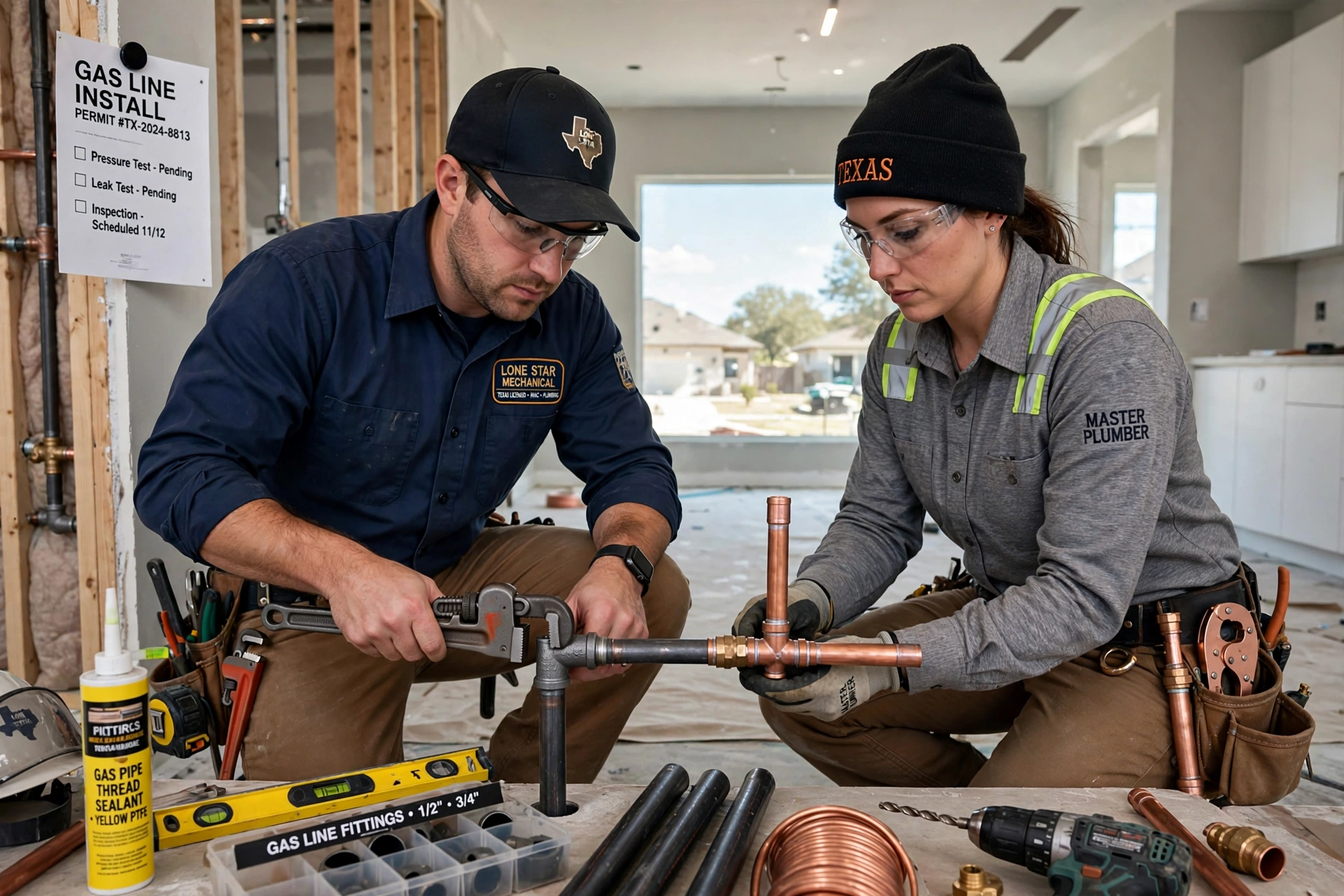
Real experiences from customers who chose our Gas Line Repair services.
“I had a gas leak in my home, and the team responded quickly. They were professional and resolved the issue within hours. Highly recommend!”
Sarah T.
Homeowner, Missouri City
“Their gas line repair service was excellent. They explained everything and worked efficiently. I felt safe knowing my gas lines were in good hands.”
Mark L.
Business Owner, Lewisville
“I appreciated their 24/7 emergency service. When I had a problem late at night, they were there within an hour. Great service!”
Emily R.
Resident, Highland Village
There is no universal schedule, but a sensible rhythm is a visual check of accessible piping every few years, plus a professional inspection with pressure testing when buying an older home, after major flooding or a hurricane, or whenever warning signs appear. Homes with aging steel systems in older neighborhoods benefit from closer attention than newer homes with modern materials.
Often, yes — but material is the deciding factor. Modern polyethylene lines buried underground are protected from the physical knocks and temperature swings of interior spaces and do not corrode, so they tend to age gracefully. Older buried steel can actually fare worse than indoor steel, because soil moisture and chemistry attack it from the outside. It is the material-and-conditions combination that determines the outcome, not the location alone.
For buried exterior use, polyethylene is the modern answer — it simply does not corrode in soil. Indoors, both black steel and CSST are proven performers when properly installed. The honest answer is that the ‘best’ material is the right material for the location, installed correctly for the soil and conditions it will face — which is why material selection should follow an assessment of your specific situation.
Gas lines are generally not relined the way some water or sewer pipes are. The standard practice is to cut out the damaged section and replace it, or to replace the full run when the system’s condition warrants it. Relining technologies that work for drain pipes do not transfer to pressurized fuel-gas piping, so replacement — partial or full — is the accepted path.
Yes, it can. The expansive clay soils common across the Houston metro — including Fort Bend County — retain moisture against buried pipe and move through seasonal shrink-and-swell cycles that stress rigid joints. Over time that combination of chemical and mechanical attack shortens the service life of vulnerable installations, which is why proper bedding, depth, and material choice matter so much here.
Generally, the utility owns and maintains the line up to and including the meter — that is their equipment and their responsibility. Everything past the meter — the piping running into and through your home — belongs to the homeowner, including its maintenance, repair, and replacement. If you are ever unsure where the boundary sits on your property, your gas utility can clarify.
Our gas line installation service ensures your new gas lines are installed safely and comply with local codes, providing reliable service for your home.
View Gas Line InstallationRegular gas line inspections help identify potential issues before they become serious problems, ensuring the safety and efficiency of your gas systems.
View Gas Line InspectionOur gas leak detection service uses advanced technology to locate leaks quickly, preventing hazardous situations and ensuring your home's safety.
View Gas Leak DetectionWe provide professional gas appliance hookup services, ensuring your appliances are connected safely and function optimally for your home.
View Gas Appliance HookupWe're here to help you with your gas line needs. Reach out during business hours for quick responses and assistance.
Phone
(281) 343-3759Address
2209 Texas Pkwy, Missouri City, TX 77489, USA, Missouri City, Texas
Hours
Mon–Fri: 7AM – 7PM
Sat: 8AM – 4PM
Sun: Emergency Only
24/7 Emergency Available