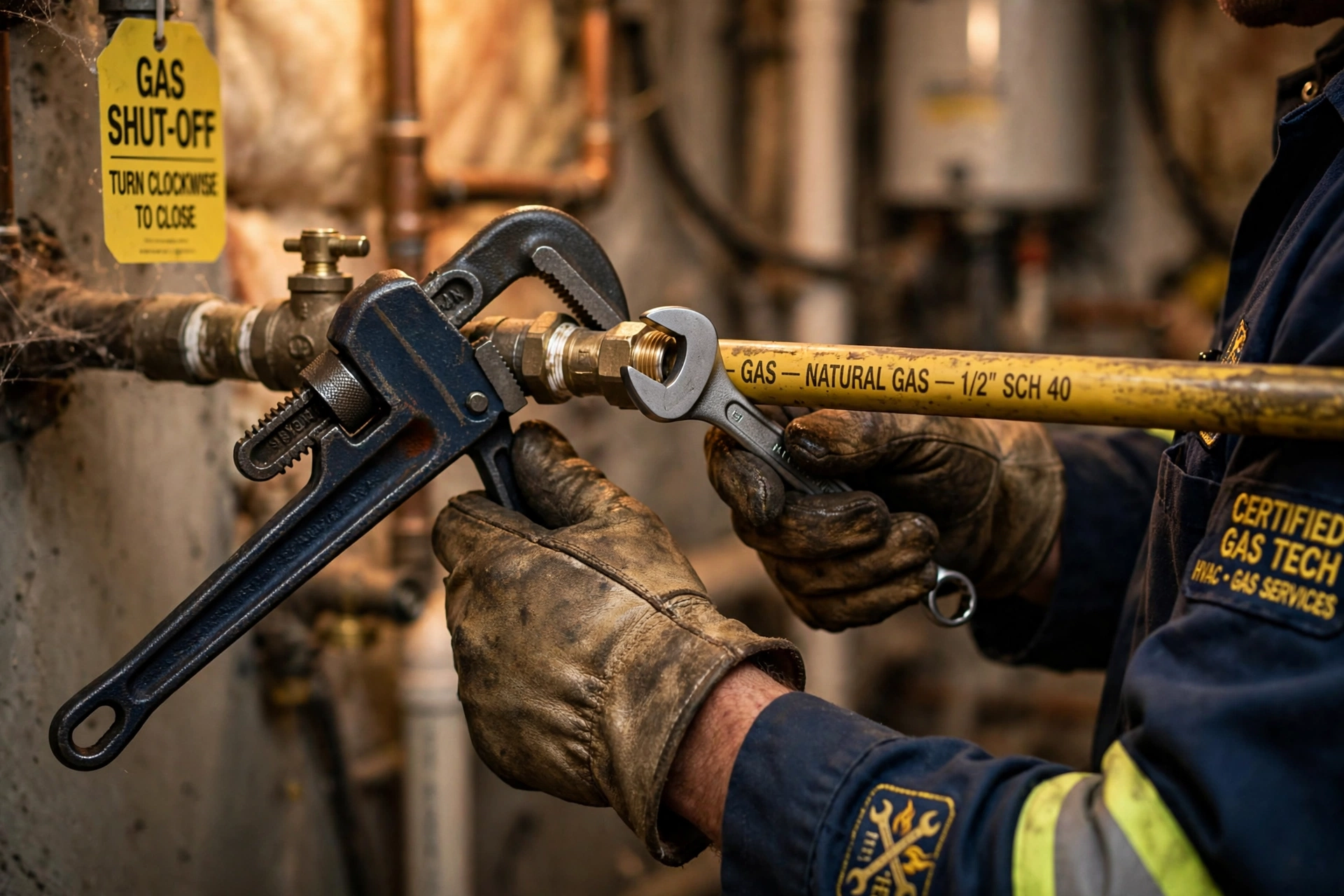
Gas Line Repair
When a joint loosens, a line corrodes, or shifting clay stresses a buried run — we diagnose with electronic detection and pressure gauges, then repair only what needs repairing.
View DetailsEvery service below is delivered the same way: careful diagnosis, plain explanation, code-compliant work, and a pressure test to prove it.
When a joint loosens, a line corrodes, or shifting clay stresses a buried run — we diagnose with electronic detection and pressure gauges, then repair only what needs repairing.
View Details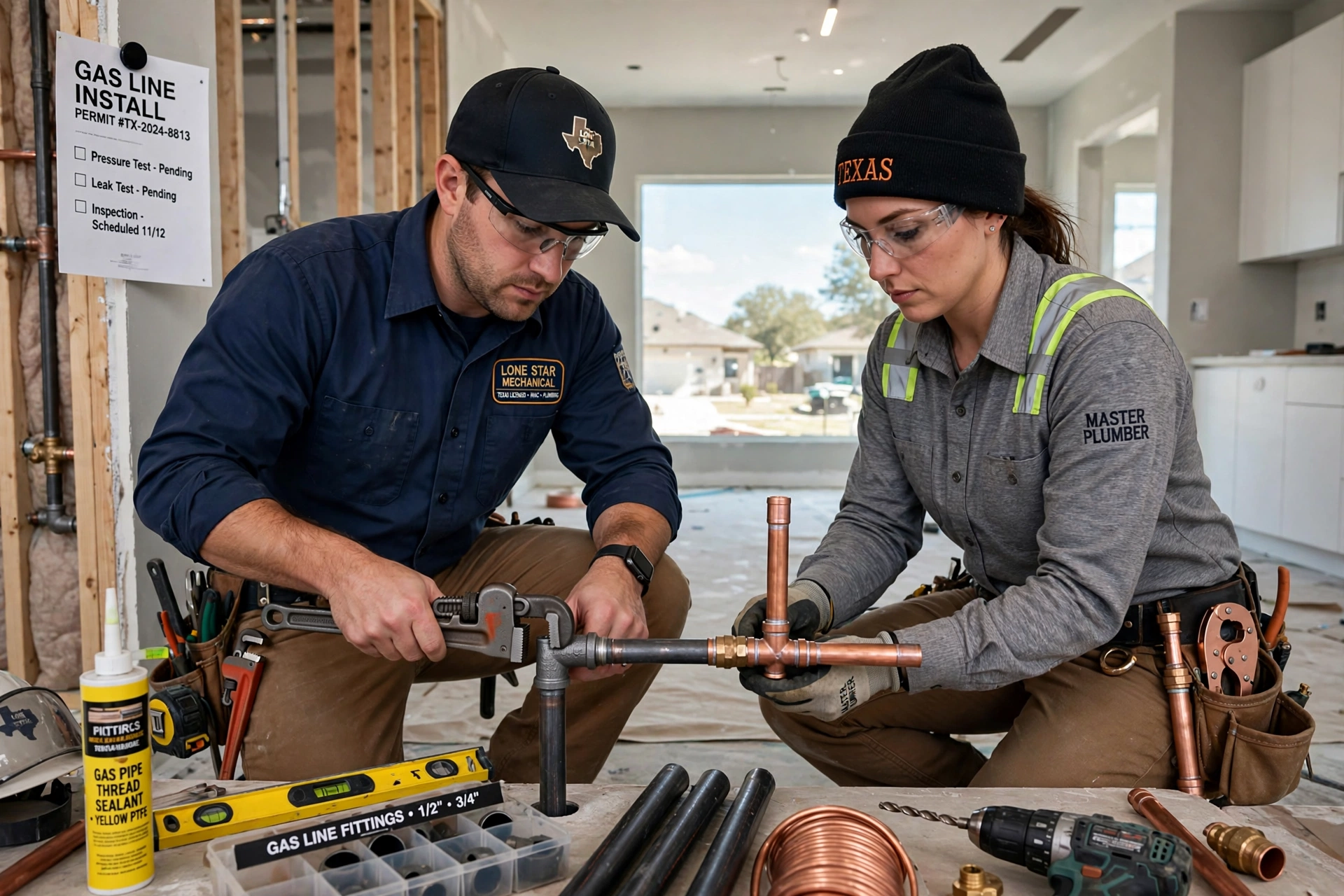
New gas lines for homes, additions, and businesses — routed, sized from real load calculations, and supported for decades of service in our soil and climate.
View Details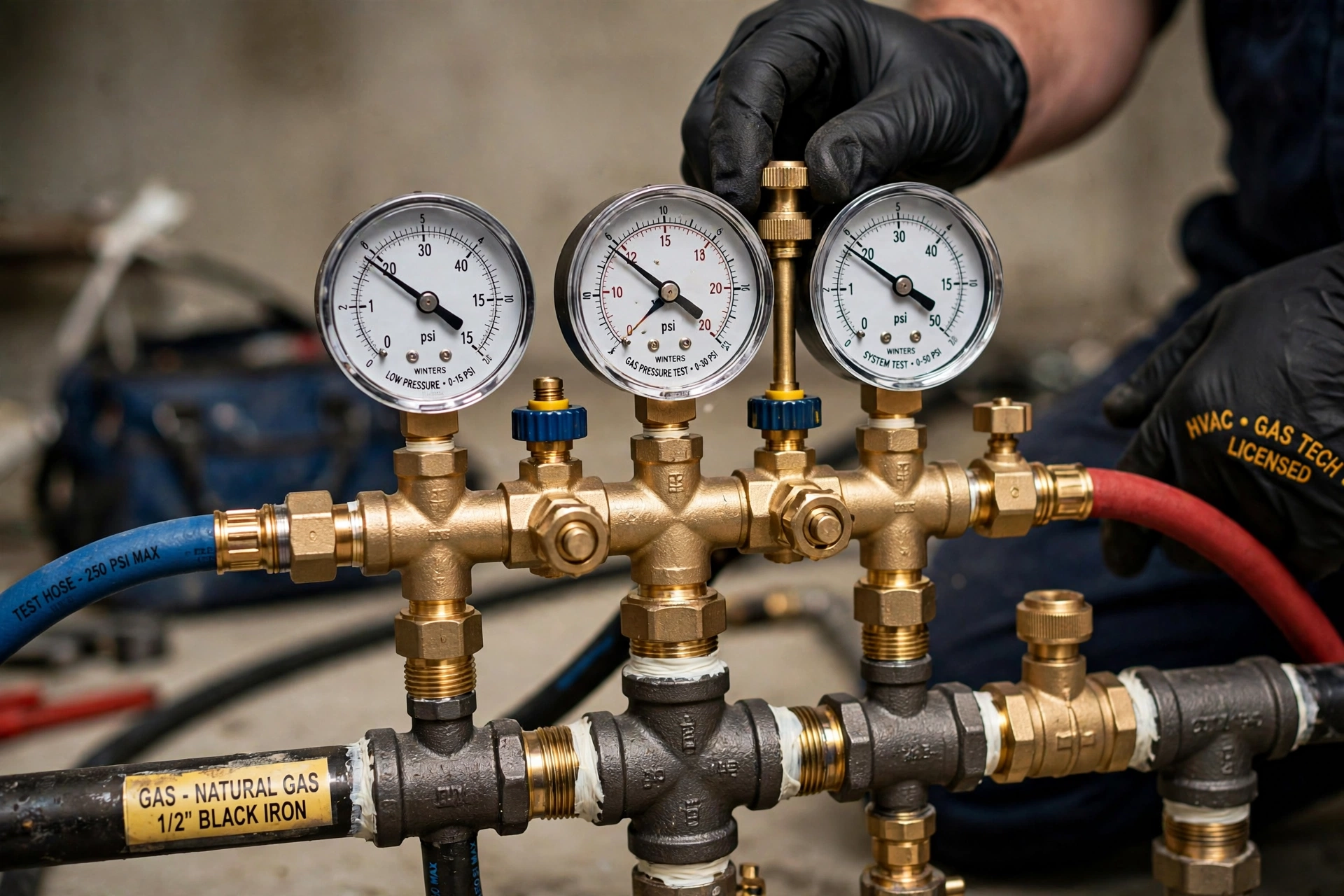
System-by-system checks that catch corrosion, loose fittings, and code issues before they become dangerous — essential before buying, after storms, and at milestone ages.
View Details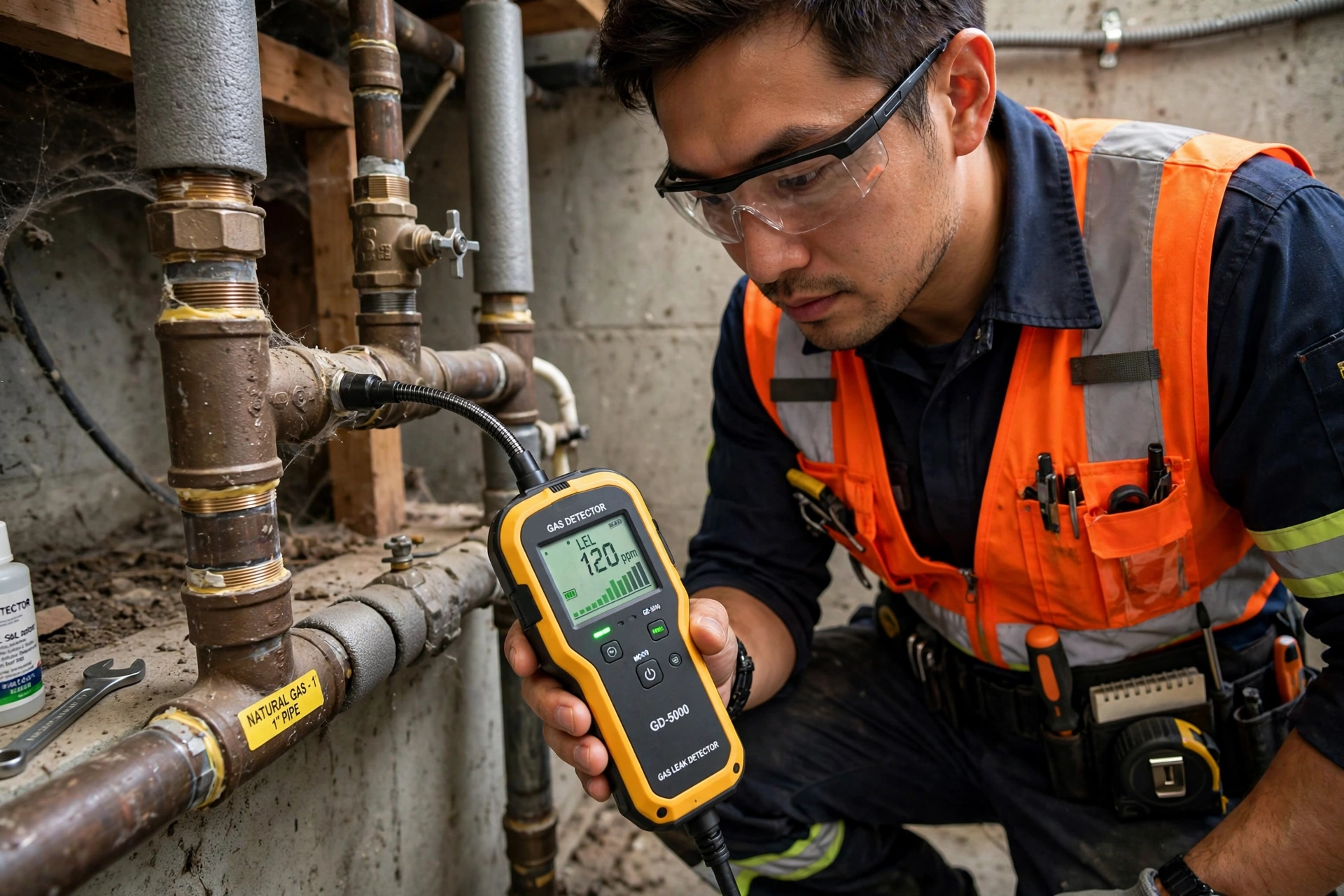
Advanced detection equipment that traces odors and suspected leaks to the exact fitting or pipe section — indoors, outdoors, and underground.
View Details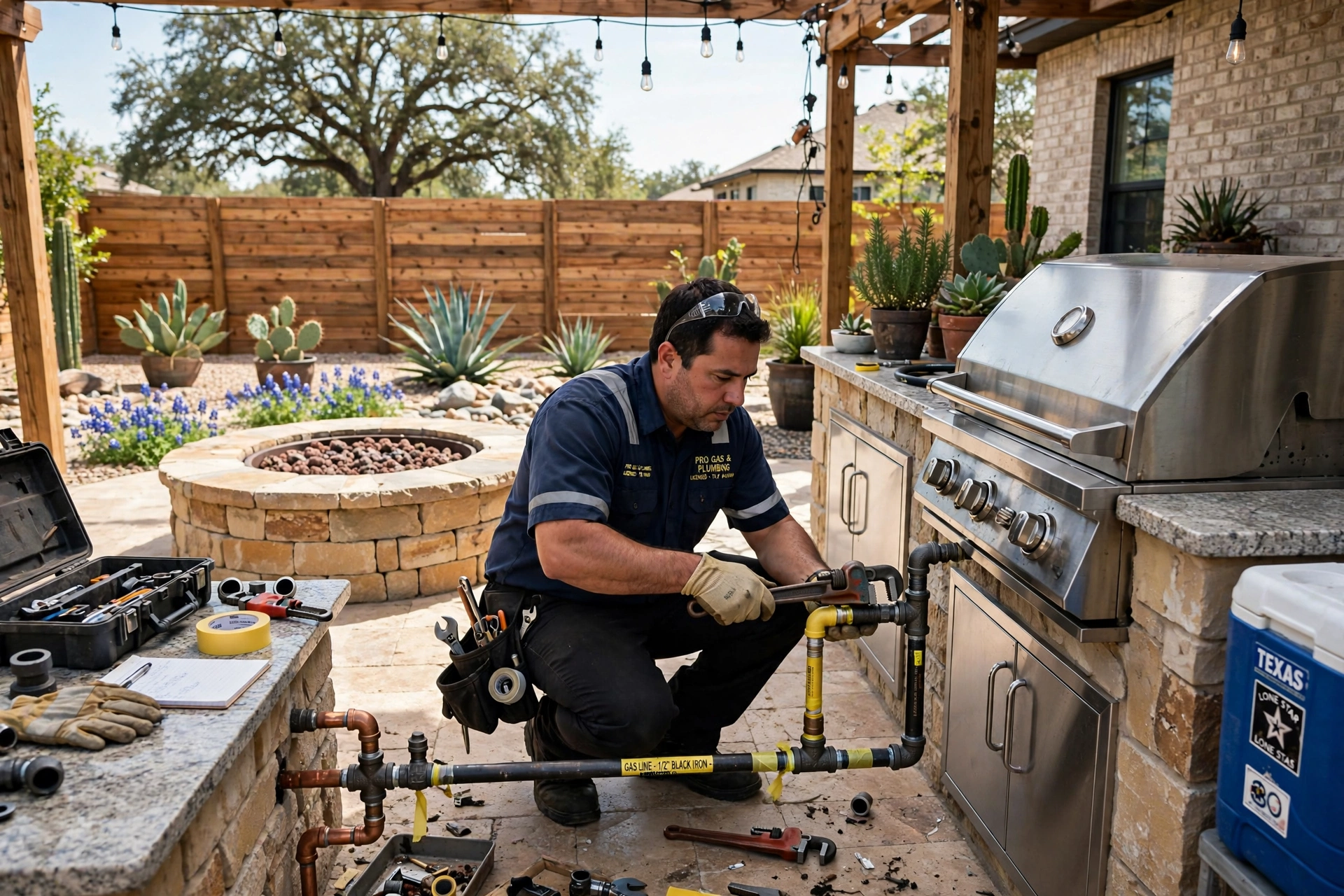
Safe, code-compliant connections for the appliances that make a house a home — with the right connectors, accessible shutoffs, and verification at every unit.
View DetailsOne process, every service, every time — so you always know what happens next.
01
Call (281) 343-3759 or send a message. Describe the issue or the project — for suspected leaks, you will get safety instructions on the spot.
02
We inspect with professional equipment, find the real problem or map the real scope, and document what we see.
03
You approve a clear written scope before work begins. No allowances, no surprises — the price we quote is the price you pay.
04
Permitted where required and installed to spec, with permits closed and inspections passed as part of the job.
05
Pressure-tested, verified, and documented — then we walk you through what was done and where your shutoffs are.
The work matters, but so does the way the work is run.
Every gas call is a safety call first. We diagnose carefully, never rush a leak, and verify with testing before anyone considers the job done.
You see the scope and the price in writing before we start. The estimate explains itself — no decoding required.
A Missouri City company accountable to its neighbors — our reputation is built one local job at a time.
Drop cloths, clean penetrations, protected finishes, and a worksite left cleaner than we found it.
Suspected leaks jump the queue, day or night. When gas is involved, waiting is not a strategy we offer.
Test records, permit cards, as-built sketches — the paperwork that proves the work and protects your home's value.
Not sure which service you need? Here is how to think about it — and how to tell a good gas contractor from a risky one.
Start with the symptom or the project, not the service name. Smell gas or hear hissing? That is an emergency call — leak detection and repair, right now. Planning a kitchen remodel with a new range location? That is installation, and it belongs in the project timeline before drywall. Buying a 1980s home with original piping? That is an inspection first, which tells you whether you need repair, replacement, or just a baseline.
The second filter is urgency versus planning. Emergencies get immediate response and on-the-spot diagnosis. Everything else benefits from an assessment visit: we look at the whole system, not just the symptom, because gas problems are often systemic — the weak grill flame is a sizing issue, the repeat leak is an aging-system issue. The assessment is what turns a symptom into a correct scope.
And the final filter is the contractor. Gas work is permit-and-inspection work in our area, so anyone who waves off permits is waving off your protection. Ask how they diagnose (instruments or guesses?), whether they pressure-test after repairs (they should), and whether you get documentation (you should). The answers tell you everything about how the job will go.
Same fuel, different scale — here is what changes (and what does not) between home and business gas work.
Homes and businesses both burn gas, but the work differs in scale, regulation, and stakes. A home system serves a handful of appliances on modest pipe; a restaurant kitchen can out-draw a block of homes, with pipe sizing, meter capacity, and regulator staging to match. Commercial work also answers to more inspectors — building departments, fire marshals, health departments — with permits and documentation to match.
What does not differ is the standard: diagnose with instruments, size from real load calculations, install to code, test before leaving, document everything. Whether it is a dryer hookup in Quail Valley or a restaurant re-pipe off Highway 6, the process is the same — only the BTU numbers change.
If you run a business, the practical difference is scheduling: commercial gas work happens around your revenue, not our convenience — overnights, closed days, early mornings. And the planning starts earlier, because utility meter coordination and permit lead times are part of every commercial project.
Most of gas craftsmanship is invisible after the fact — which is why it has to be right during the work.
The difference between adequate gas work and excellent gas work lives in details most customers never see — until they do. Proper pipe supports at the right intervals, so runs do not sag and stress joints over time. Threaded connections made with the correct sealant, torqued properly, not just 'tight enough.' CSST runs bonded to the electrical grounding system, because in lightning-prone Southeast Texas that bonding is a life-safety item, not a nicety.
Buried work gets the same obsession: sand bedding under polyethylene pipe so it never grinds against clay clods, tracer wire alongside every run so the line can be found in twenty years, backfill compacted in lifts instead of dumped. These are the things that separate a line that lasts decades from one that develops a stress crack in year twelve — and they are all invisible once the trench is closed, which is exactly why they have to be done right while it is open.
And the finish work matters too: penetrations sealed cleanly, finishes protected, the worksite left cleaner than we found it. You should not be able to tell we ran pipe through your attic except that the new appliance works perfectly. That is the standard we hold on every job, and it is why our work passes inspections without drama and stays trouble-free for years.
Gas work rewards the careful and punishes the hurried. Our technicians work Missouri City gas systems every day — the same clay soil, the same housing stock, the same Gulf Coast weather — and that repetition builds judgment you cannot get from a manual.
Describe the symptom or project and we will tell you — but roughly: odors or hissing mean emergency leak detection and repair; new appliances or remodels mean installation; buying an older home or post-storm checks mean inspection; aging systems with repeat problems mean assessment for replacement.
Yes — we serve all of Missouri City plus surrounding Fort Bend communities including Sugar Land, Stafford, Fresno, Sienna, Richmond, and Rosenberg. Call (281) 343-3759 to confirm your area.
In Missouri City and Fort Bend County, most gas work requires permits and inspections. We handle the permit process as part of the job — it protects you at resale, refinance, and insurance time.
Emergency calls — suspected leaks — jump the queue immediately, day or night. Planned work is typically scheduled within days. When you call, we will give you a straight timeline.
We stand behind our workmanship and prove every job with pressure testing and documentation. If something we did is not right, we make it right.
Yes — commercial gas work is routinely scheduled overnight, on closed days, or early mornings. We plan shutdowns around your revenue, not our convenience.
Repair, installation, inspection, or emergency — one call covers it. Reach us at (281) 343-3759 for a written estimate and work that is tested before we leave.
Tell us which service you need — or just describe the situation and we will point you to the right one. We respond during business hours; emergencies should call, not write.
Phone
(281) 343-3759Address
2209 Texas Pkwy, Missouri City, TX 77489, United States, Missouri City, Texas
Hours
Mon–Fri: 7AM – 7PM
Sat: 8AM – 4PM
Sun: Emergency Only
After-Hours Urgent Calls Welcome