Job Scope
Scope & complexity varies per job
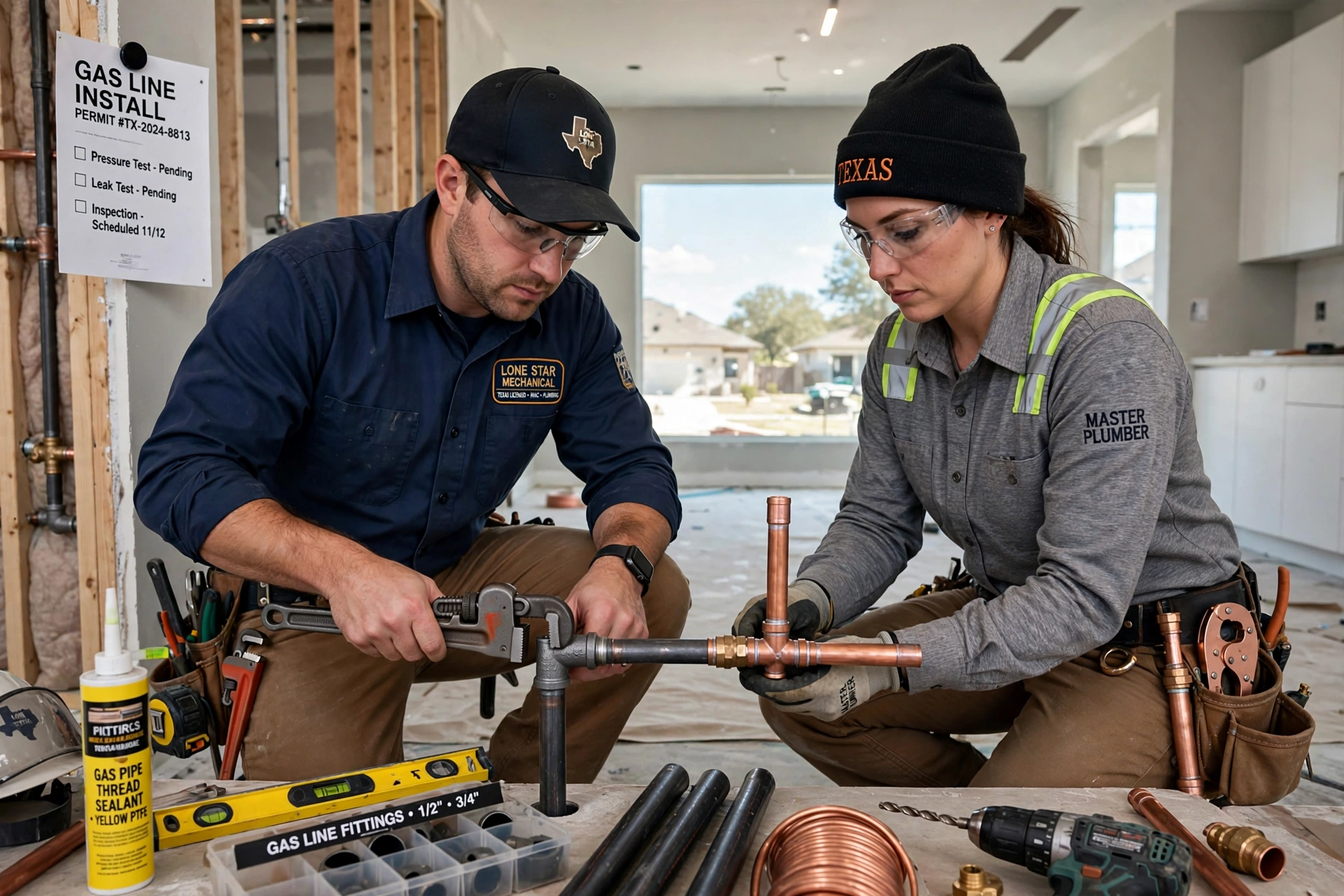
- Short, accessible line repairs
- Single fitting or valve replacement
- One-appliance branch connections
- Straightforward interior routing
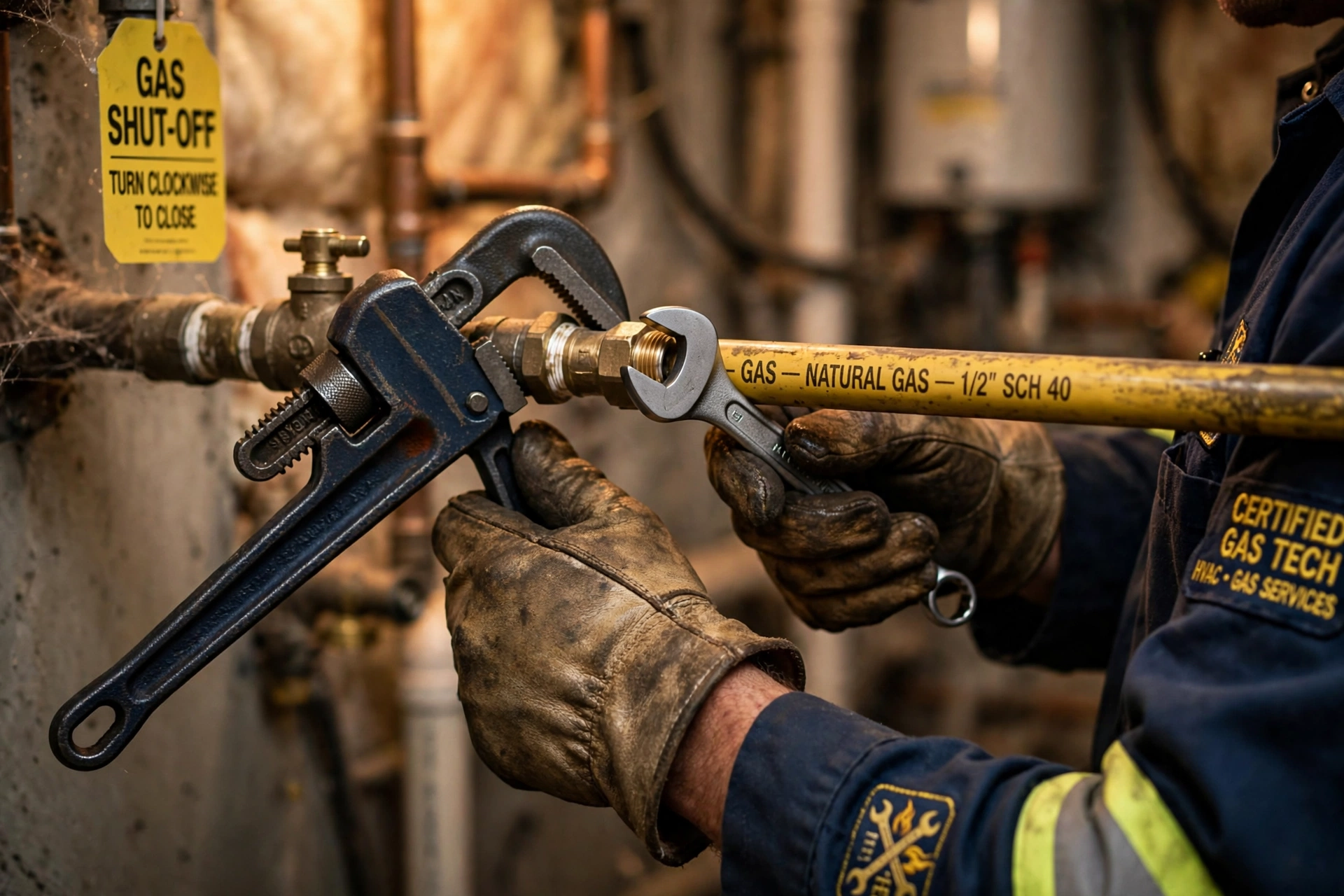
Sugar Land grew from an Imperial Sugar company town into one of Fort Bend County's most sought-after suburbs, and its gas piping tells that story neighborhood by neighborhood. In First Colony, where 1980s and 1990s brick homes dominate, original black-iron gas lines are now reaching the age where threaded joints corrode and pinhole leaks develop. Newer master-planned communities like Telfair, Riverstone, Greatwood, and New Territory typically run CSST or coated steel, which brings its own considerations around proper bonding and routing. Underneath it all sits the same Gulf Coast clay that swells with every heavy rain and shrinks in summer heat, moving foundations and the buried lines connected to them. Add a high water table, the Brazos River floodplain, and the memory of Harvey's 2017 flooding across Fort Bend County, and you get conditions that punish gas piping far faster than drier climates do. We work in these neighborhoods every day — from Sugar Creek and Sweetwater to the streets around Sugar Land Town Square — so we know which eras of construction hide which problems. Whether your home needs a targeted leak repair, a full re-pipe, or a new gas run for an outdoor kitchen or pool heater, we diagnose first, explain what we find in plain language, and pressure-test every job before we leave.
Sugar Land homeowners call us for everything from a faint gas odor near the meter to a full backyard gas plan with a pool heater, outdoor kitchen, and fire pit. The sections below cover our core services across the city — each one shaped by local realities like 1980s black-iron pipe in First Colony, CSST in Telfair and Riverstone, clay soil movement, and the high-BTU outdoor loads common in Greatwood and New Territory backyards.
Sugar Land's combination of housing eras, clay soil, and Gulf Coast weather creates a short list of repeat offenders. These are the problems we see week after week across First Colony, Telfair, Greatwood, New Territory, and the rest of Fort Bend County — and knowing them helps you spot trouble early.
Thousands of Sugar Land homes built during the First Colony boom still run on their original black-iron gas piping. After three to four decades in a humid climate, threaded joints and drip legs corrode, pipe walls thin, and pinhole leaks develop — often in attics or inside walls where nobody looks. The first sign is usually a faint gas odor, a hissing sound near a joint, or a failed pressure test during a remodel. We replace failed sections with properly sized modern pipe, add accessible shutoffs where the original layout skipped them, and pressure-test the entire system so one repair does not turn into a series of callbacks.
Fort Bend County sits on some of the most expansive clay soil in Texas. It swells when the spring rains and hurricane-season downpours arrive, then shrinks and cracks during hot, dry summers — and your foundation rides that cycle up and down. Gas lines do not flex with it. Buried runs and the risers where pipe enters the home take the stress at their joints, which is why leaks so often appear at the meter connection or where the line penetrates the foundation. We look for this pattern on every Sugar Land call: lines pulled taut, fittings under strain, and settlement around buried runs. Repairs here mean relieving the stress, not just patching the leak, or the same joint will fail again.
Sugar Land's high water table keeps buried pipe in damp soil for much of the year, and our humid air does the same to exposed runs in attics, garages, and crawl spaces. Unprotected steel does not stand a chance over decades — it rusts from the outside in, and the damage hides under paint or insulation until a leak test or a sharp eye finds it. The Brazos River floodplain adds another layer: homes that took water during Harvey in 2017 can have buried and low-lying gas components with accelerated corrosion years later. We check risers, meter sets, and any line that has spent time in standing water, and we replace compromised sections with coated materials suited to wet conditions.
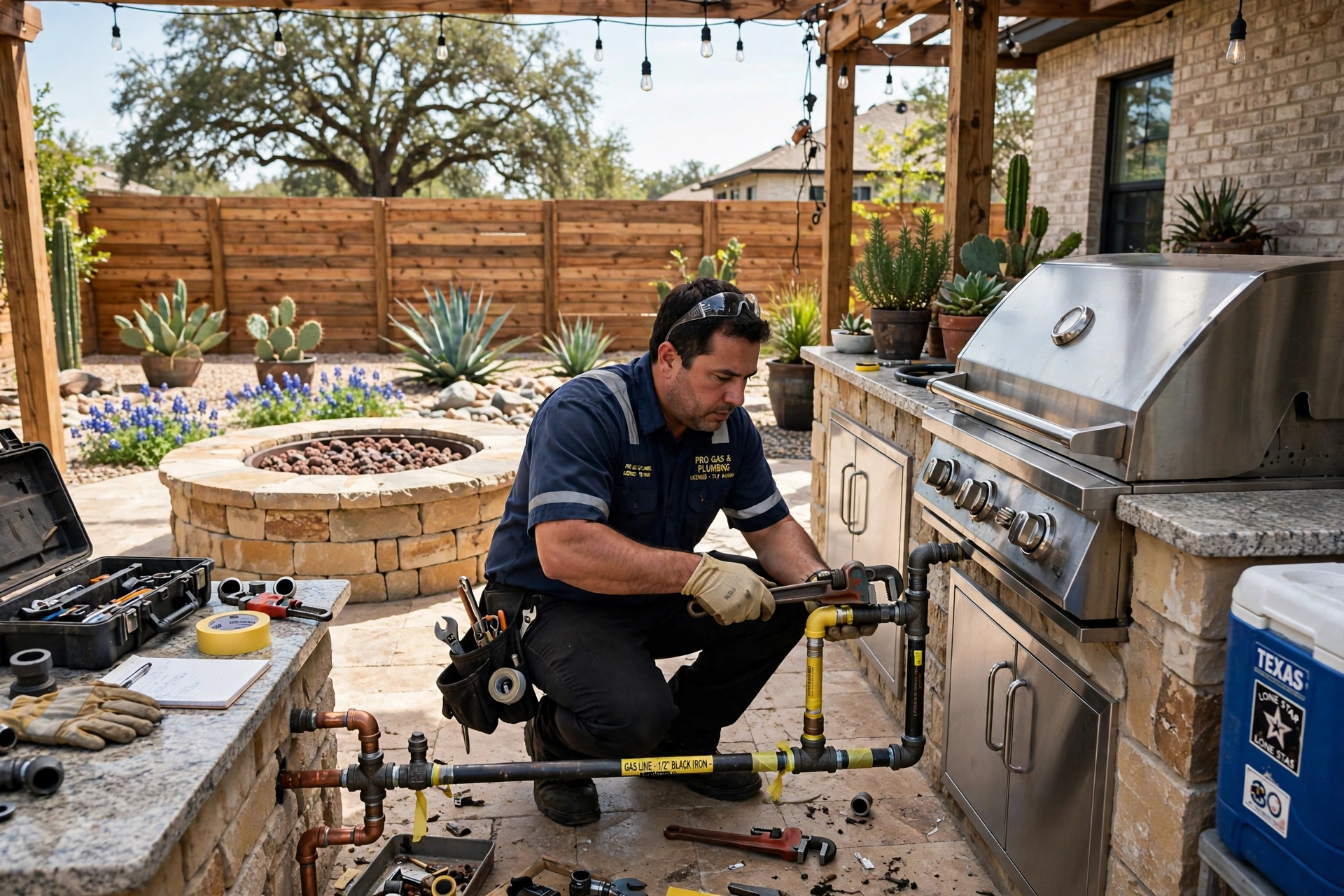
Sugar Land backyards are built for year-round living — outdoor kitchens, built-in grills, fire pits, and pool heaters are standard in communities like Telfair, Riverstone, and Greatwood. The problem is that many homes' original gas lines were sized for a furnace, water heater, and range, not an additional several hundred thousand BTUs of backyard equipment. The symptom is unmistakable: the grill flames die when the pool heater kicks on, or the fire pit sputters on cool evenings. We fix it with proper load calculations, upsizing the run from the meter and adding dedicated branches so every appliance gets full pressure even at peak demand — no more choosing between the pool heater and dinner.
Gas problems rarely fix themselves, and early action is always cheaper and safer than waiting. If you notice any of the following at your Sugar Land home, treat it as a reason to call — we would rather pressure-test a healthy system than repair damage that could have been caught months earlier.
Smell of gas in your home
Natural gas is odorized so leaks smell like rotten eggs. If the odor is strong or growing, leave the house immediately and call from outside — do not flip switches, use the garage door opener, or hunt for the source yourself. A faint, occasional whiff near an appliance still deserves a professional leak check; in Sugar Land's older First Colony homes, it often traces to a corroded joint that will only get worse.
Hissing or whistling sounds
A distinct hiss near a gas line, meter, or appliance connection means gas is escaping under pressure. Shut off the appliance if you can do so safely, leave the area, and call us. Do not try to tighten the fitting yourself — over-torquing a corroded joint in a 1980s black-iron system can turn a small leak into a broken pipe.
Dead or dying vegetation along the line's path
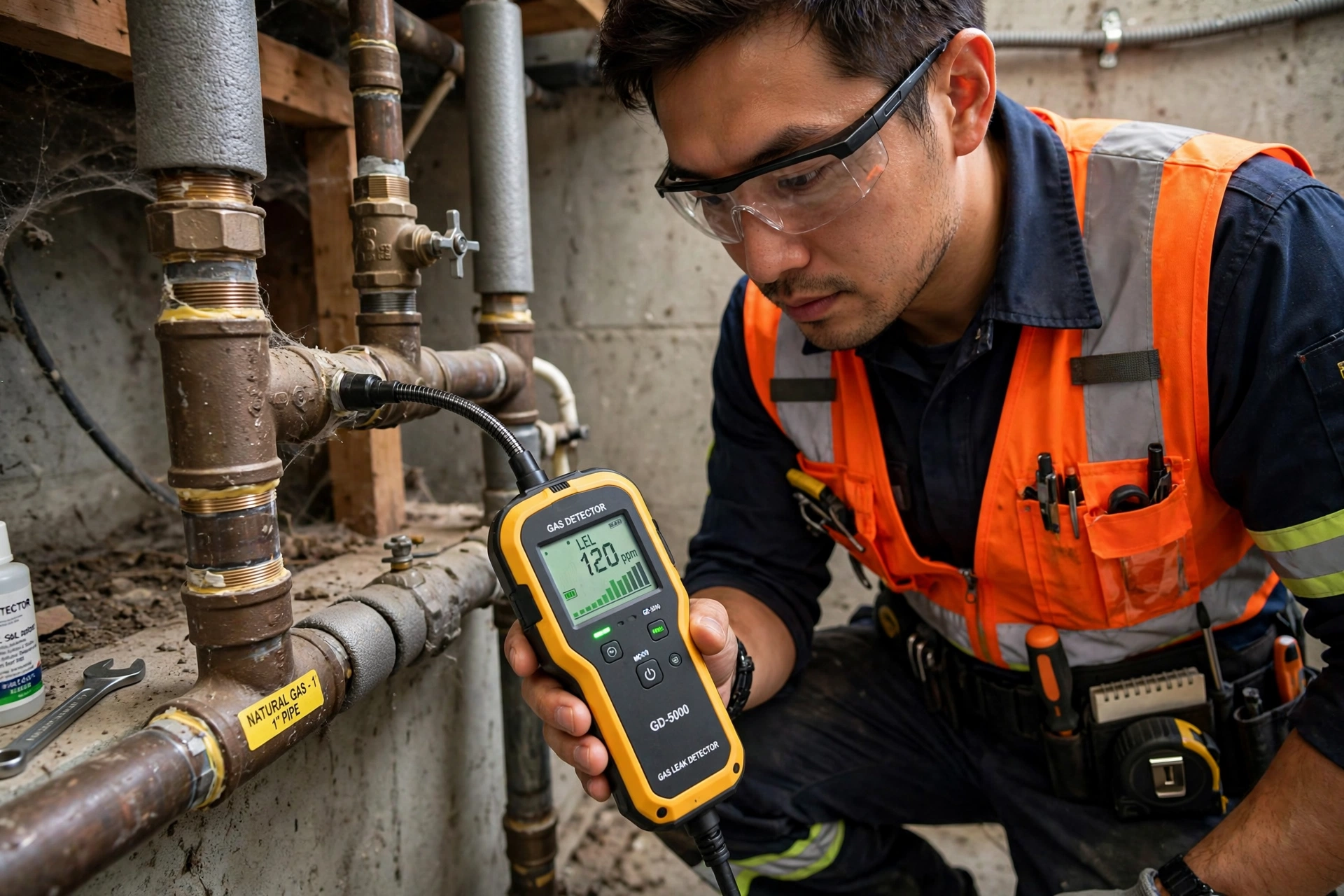
A strip of dead grass or shrubs tracing a straight line across your yard is a classic sign of an underground leak — escaping gas displaces oxygen in the soil and kills roots. In Sugar Land's clay soil, the gas can travel along the trench backfill and surface well away from the actual break, so we trace buried runs with detection equipment rather than digging at the dead patch.
Unexplained increase in your gas bill
When your bill climbs but your usage has not — no new appliances, no change in habits — a leak is a prime suspect. Compare several months of statements and check whether the jump lines up with heating season or a new outdoor appliance. A pressure test will confirm whether the system holds; if it does not, electronic detection finds exactly where it is losing gas.
Yellow or lazy appliance flames
Natural gas should burn with a crisp blue flame. Yellow, orange, or lazy flames signal incomplete combustion, which can mean low gas pressure from a restriction or leak upstream, a failing regulator, or an appliance issue. Do not ignore it — incomplete combustion produces carbon monoxide. We check the supply pressure at the appliance, trace the line back toward the meter, and fix whatever is starving the burner.
Every gas line job in Sugar Land is priced on its own facts, because no two homes present the same combination of pipe age, soil conditions, and scope. A short, accessible repair on an exposed interior line is a fundamentally different job from trenching a new buried run through Fort Bend clay to reach a detached outdoor kitchen. The cards below lay out the factors that move a project up or down: the size and complexity of the work, the materials and access involved, and the permits and testing that keep the job compliant. When we visit, we walk the full scope with you, explain each factor as it applies to your home, and give you a written estimate before any work begins — so the final number is never a surprise.
Job Scope
Scope & complexity varies per job
Materials & Access
What the job involves pipe & routing
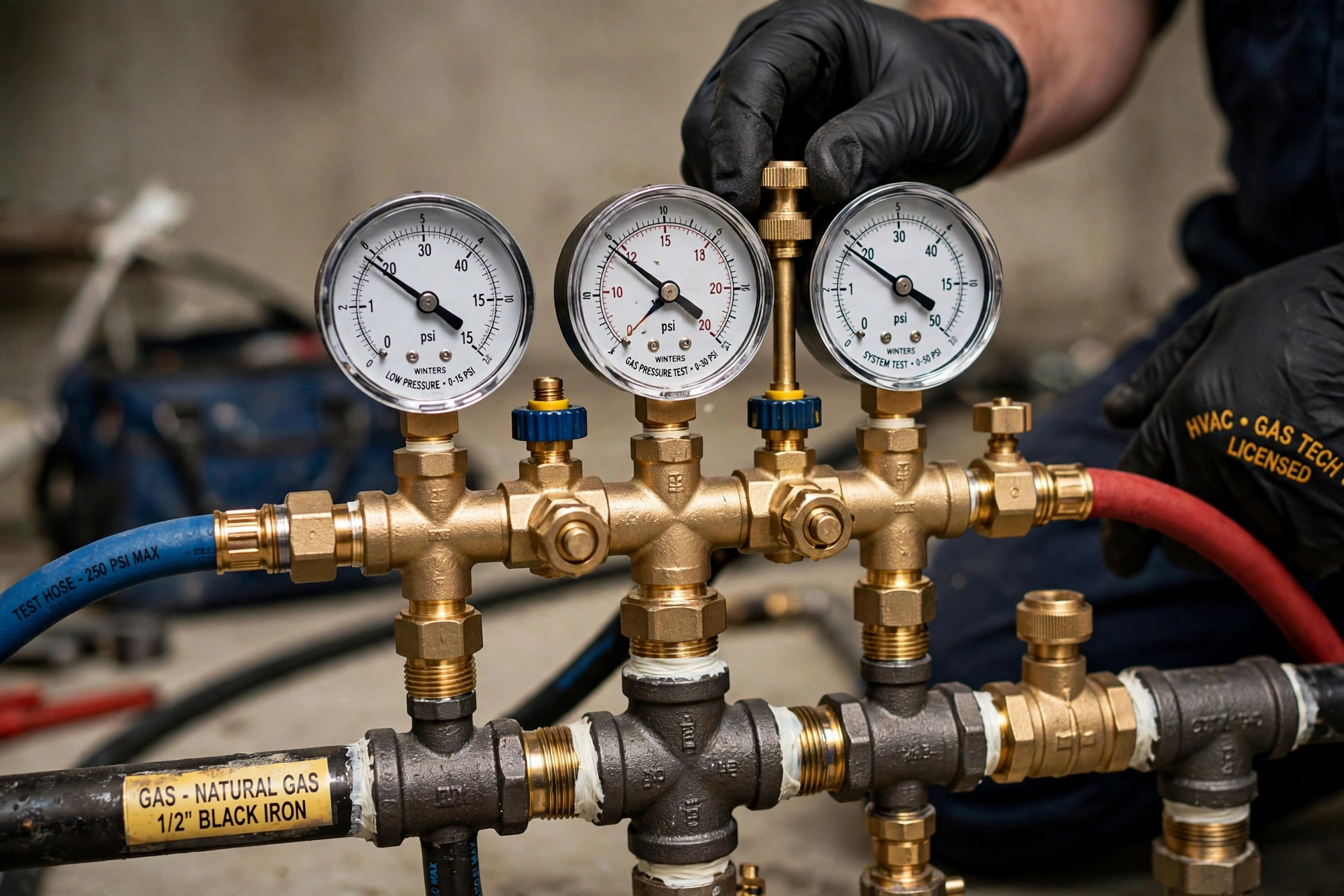
Permits & Testing
Compliance & verification included every job
Sugar Land is easy to navigate once you know its anchors, and our technicians use them the same way locals do — as rally points for routing the day's calls across Fort Bend County. Two landmarks come up constantly when we are finding our way to a job.
The Town Square, just off US-59 near the heart of the city, is our central reference point for jobs in First Colony, Sugar Creek, and the neighborhoods fanning out from Highway 6. With city offices, restaurants, and the plaza all clustered here, it is the landmark every Sugar Land driver knows — when a customer says they are ten minutes from the Square, we know exactly which part of town they mean and the fastest route in.
Out on the city's west side, Constellation Field — home of the Sugar Land Space Cowboys — anchors our routing for Greatwood, New Territory, and Riverstone calls. The ballpark sits near the Highway 6 corridor where so many of the area's 2000s-era master-planned communities grew up, which makes it a natural landmark when we are scheduling the day's work across the western half of our service area.
Our Sugar Land coverage runs neighborhood by neighborhood: First Colony and Sugar Creek near the city's core, Telfair and the Town Square district, Greatwood and New Territory to the west, Sweetwater and Riverstone along the southern corridors, and every street in between. Because we work Fort Bend County daily, most appointments get same-day routing — and if you are just outside the city line in unincorporated Fort Bend County, call anyway. Chances are we are already working nearby.
Sugar Land does not get real winters, but its weather still runs gas systems through a yearly cycle — spring floods, summer soil shrinkage, hurricane season, and the occasional hard freeze. Here is how each season shows up in the gas line work we do across Fort Bend County.
Spring brings the year's heaviest rains, and Fort Bend County's clay soil swells dramatically as it saturates. That swelling heaves foundations and shifts buried gas lines, stressing joints at the meter riser and where lines enter the home. Saturated soil also accelerates exterior corrosion on buried steel. Spring is the season we find the leaks that winter's dry spell was hiding.
Tip: After a stretch of heavy rain, walk your yard for new soft spots or settling along the gas line's path and call if anything looks off.
Summer heat bakes the clay dry, and the soil shrinks away from foundations — the reverse of spring's heave, but just as hard on rigid gas piping. This is also peak season for Sugar Land's outdoor gas loads: pool heaters running for evening swims, built-in grills and outdoor kitchens in near-daily use, and fire pits on summer nights. Undersized lines reveal themselves now, when every appliance calls for gas at once.
Tip: If grill flames drop when the pool heater fires up, your line is undersized for the load — a proper load calculation and upsized run fixes it.
Fall is hurricane season's back half and the start of big temperature swings, both of which move the clay soil again after summer's shrinkage. It is also when furnaces wake up after months idle — the first cold snap exposes leaks and pressure problems that sat unnoticed all summer. We recommend a pre-heating-season inspection in fall: it is the calmest time to find issues, before holiday cooking and heating put the system under full load.
Tip: Schedule a system check before the first cold front — fall appointments are easier to book than mid-winter ones.
Sugar Land winters are mild, but the occasional hard freeze — Texans still remember February 2021 — can catch exposed exterior piping and older regulators off guard. Furnaces run steadily through cold snaps, and any marginal joint or corroded section feels the strain. Winter calls tend to be urgent: no heat, a sudden gas odor, or an appliance that quits on the coldest night of the year. Keep the area around your meter clear and know where your main shutoff is before you need it.
Tip: Locate your main gas shutoff valve now, while the weather is calm — every adult in the home should know where it is.
Sugar Land sits at the center of our Fort Bend County service area, and most days find our technicians routed through several of these neighboring cities between Sugar Land calls. If your city is listed here, you are inside our regular service map.
Straight answers from our team to the questions Sugar Land homeowners ask most before a job starts.
Whether you smell gas near the meter, your pool heater is starving the grill for pressure, or you are planning an outdoor kitchen in Telfair or Riverstone, we are ready to help. Every job starts with a real diagnosis — electronic detection, pressure testing, and a written estimate — and ends with a system we have verified safe. Call (281) 343-3759 to talk through what is going on at your Sugar Land home, or send a message and we will get back to you promptly.
Tell us what is going on at your Sugar Land home — a suspected leak, a new appliance, an outdoor project, or just a system you want checked. Call (281) 343-3759 for the fastest response, or send the form and we will reply promptly.
Phone
(281) 343-3759Address
2209 Texas Pkwy, Missouri City, TX 77489, United States, Missouri City, Texas
Hours
Mon–Fri: 7AM – 7PM
Sat: 8AM – 4PM
Sun: Emergency Only
Emergency calls prioritized