Gas Line Repair Missouri City TX
Get Estimate
Browse Services
Service Areas
Call (281) 343-3759

Gas Line Inspection Missouri City TX

Know exactly what is happening in your gas lines


A gas line inspection is a health check for one of the most important systems in your home. We trace your gas lines across Missouri City, test pressure, check every accessible joint for leaks, and give you a straight report on what we find — whether that is a clean bill of health or a repair you should plan for.

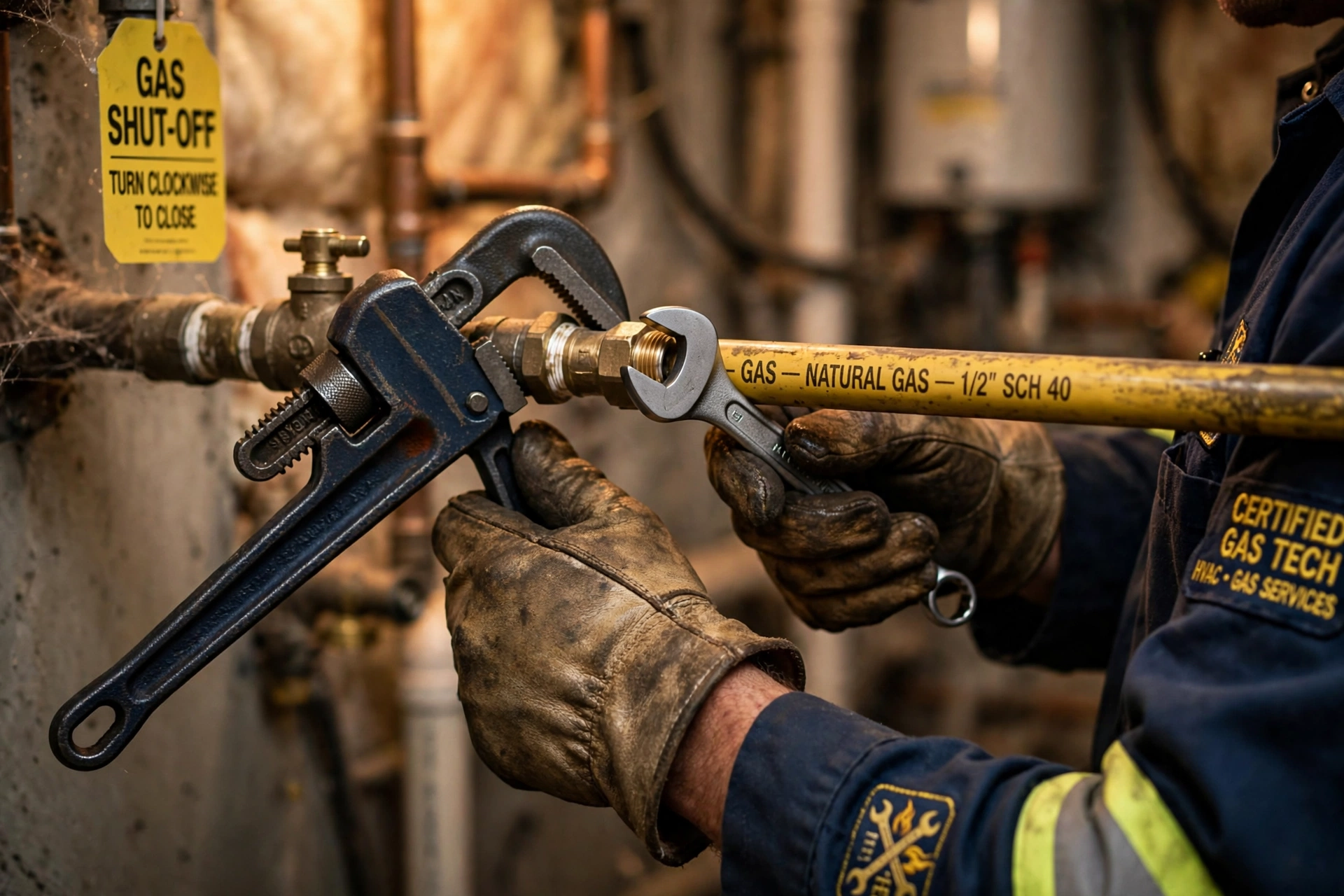
Gas Line Inspection in Missouri City: gas technician carefully inspecting the condition of an underground polyethylene
Trained Team Gas line specialists
Fully Insured Insured & Bonded
Emergency Help Call to schedule service
Careful Workmanship Tested before we leave

What Our Gas Line Inspection Covers

Here is what happens during an inspection visit, step by step.

Visual Inspection

We walk every accessible inch of your gas lines — at the meter, along exterior walls, through attics and crawl spaces — looking for corrosion, damage, improper supports, and code issues. Missouri City’s humidity leaves telltale rust on steel, and we know where to look.

Pressure Testing

We isolate sections of the line and watch the gauge. A steady reading means the section is sealed; a drop means there is a leak to find — even one too small to smell.

Gas Leak Detection

Every accessible joint and fitting gets swept with a calibrated electronic detector, catching leaks that eyes alone would miss.

Written Report

You get a clear written summary: what we checked, what we found, and what we recommend — prioritized so you know what needs attention now versus what can wait.

What a Gas Line Inspection Means in Missouri City


An inspection is a systematic check of your entire gas system: the meter connection, the main run, every branch, and every appliance hookup. We use gas detectors and pressure gauges to verify what eyes cannot see. In Fort Bend County this matters more than most places — gumbo clay shifts buried lines, Gulf Coast humidity corrodes exposed steel, and many homes in Quail Valley and Lake Olympia still run on original 1970s–90s piping.

Homeowners usually call us for an inspection at a few key moments: moving into an older home, finishing a kitchen remodel that touched gas lines, smelling something odd near an appliance, or after a hurricane-season storm dropped flooding or debris near the meter. Whatever brings us out, you get the full picture — not a sales pitch.
What Happens During Your Inspection

A typical inspection takes about an hour. Here is the sequence.

01

Schedule

Call (281) 343-3759 or send a message through our contact form. We will set a visit window and let you know we will need access to the meter, water heater, and any gas appliances.

02

Inspect

Our technician walks the full system — visual check, pressure test, electronic leak sweep — and notes everything along the way.

03

Report

We put the findings in a clear written report: what is fine, what needs watching, and what should be repaired, in priority order.

04

Review

We walk you through the report in plain language and answer your questions. If repairs are needed, you get a separate written estimate — no pressure.

Tools and Methods We Use for Inspections

Tools & Equipment

Gas Leak Detectors

Calibrated electronic sniffers that catch small leaks at joints and valves — the kind you cannot see or smell yet.

Pressure Gauges

We pressurize isolated sections and watch for drops. It is the most reliable way to prove a line is sealed — or find the one that is not.

Inspection Mirrors & Lights

For seeing behind water heaters, into crawl spaces, and along tight runs where corrosion likes to hide.

Methods & Standards

Visual Inspection

A methodical walk of every accessible line, checking for rust, damage, improper supports, and code issues — with extra attention to humid crawl spaces and exterior risers.

Pressure Testing

Isolating and pressurizing sections of the line to verify integrity. A holding gauge is the gold standard for ‘no leaks here.’

Electronic Leak Detection

Sweeping every joint and fitting with a calibrated detector to find leaks long before they become dangerous.

When a Gas Line Inspection Makes Sense

01

You just moved into an older Missouri City home.

What we do: Homes in Quail Valley and Lake Olympia often have original gas lines that have never been professionally inspected. We check the whole system so you know what you bought.

→ You move in knowing your gas system is sound — or knowing exactly what to fix.

02

You finished a remodel that touched gas lines.

What we do: Kitchen and laundry remodels move gas appliances, and every moved connection is a potential leak point. We verify the new work and check what the remodel exposed.

→ You enjoy the new kitchen without wondering about the gas work behind the walls.

03

A storm just rolled through.

What we do: Hurricane-season flooding, fallen branches, and shifting soil can all damage gas lines or pull at connections. A post-storm inspection checks for exactly that.

→ You get confirmation the system survived the storm — or a repair plan if it did not.

Gas Line Inspections, Tuned to Missouri City

Missouri City’s housing stock is a tale of two eras: 1970s–90s homes in Quail Valley and Lake Olympia with aging steel lines, and new construction in Sienna and Riverstone with modern materials and more gas appliances per home. We inspect both, but we look for different things — corrosion and soil-shift damage in the older homes, installation quality and proper sizing in the newer ones. Either way, the inspection follows the National Fuel Gas Code and local requirements.

Neighborhoods We Serve

  • Lake Olympia

    Lake Olympia’s established homes often run gas to water heaters, ranges, dryers, and fireplaces through original lines. We pay special attention to corrosion at the meter and riser, where humidity hits hardest.

  • Quail Valley

    Quail Valley is where we find the oldest steel — lines installed decades ago that have survived countless wet-dry clay cycles. Inspections here focus on joint integrity and pipe wall condition.

  • Sienna

    Sienna’s newer homes have more gas appliances — outdoor kitchens, pool heaters, generators — which means more branches and more connections to verify. We make sure the builder’s work was done right.

Local Conditions We Plan For

  • Aging steel in older neighborhoods

    Quail Valley and Lake Olympia homes from the 70s–90s often still run original steel gas lines. Decades of humidity and clay movement thin pipe walls and loosen joints — exactly what inspections are for.

  • Storm and flood exposure

    Hurricane season brings flooding and debris that can shift soil around buried lines and batter exposed piping. After major storms, an inspection is cheap peace of mind.

Before: Aging Gas Lines

Before

A situation we see often: a homeowner buys a 1980s Quail Valley home and realizes no one has ever inspected the gas lines.

After

Our approach: a full inspection — visual walk, pressure test, electronic leak sweep — and a written report grading every part of the system.

Maintenance: Regular inspections every 1-3 years are recommended to maintain safety.

Before

Another common one: a kitchen remodel moved the range, and the homeowner wants to be sure the gas work was done right.

After

Our approach: inspect every new and disturbed connection, pressure-test the branch, and confirm the installation meets code.

Maintenance: Always inspect gas lines after major renovations.

Before

And after hurricane season: a homeowner worries that flooding around the meter may have caused damage.

After

Our approach: check the meter, riser, and exposed piping for impact or corrosion, test the line, and report exactly what we found.

Maintenance: Post-storm inspections are crucial for safety.

Problems an Inspection Can Uncover

An inspection does not fix anything by itself — but it finds the problems worth fixing. Here is what we uncover most.

Problem

Hidden leaks

Small leaks at joints or valves often produce no smell and no symptoms — until they grow. They are the most common thing we find, and the most important.

Our Fix

Our electronic sweep and pressure test find them while they are still small, so repairs stay simple and inexpensive.

Problem

Corroded or thinning pipe

Gulf Coast humidity rusts exposed steel from the outside in. By the time you can see flaking, the wall may already be thin.

Our Fix

We flag corroded sections in the report with photos and locations, prioritized so you can plan the repair before it becomes a leak.

Problem

Code issues from old or DIY work

Missing sediment traps, inaccessible shutoffs, improper materials — older homes and past remodels often hide code violations that matter at sale or insurance time.

Our Fix

The written report lists every code issue we spot, so you can address them on your schedule instead of discovering them during a sale.

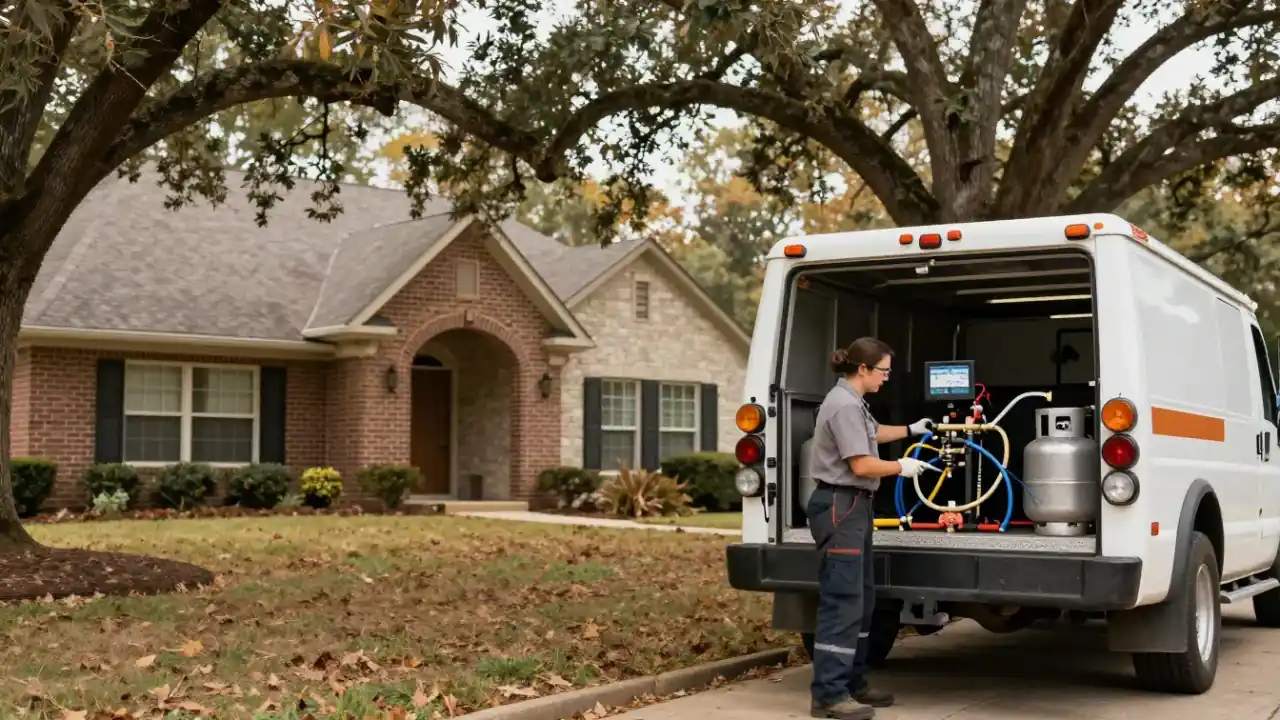
Gas Line Repair in Missouri City: wide shot of a gas service vehicle parked in front of a brick home with mature oak trees

Why Inspect Your Gas Lines

An hour of inspection buys years of confidence. Here is what it gets you.

  • Catch problems early

    A small leak or a thinning section of pipe is a simple repair today and an emergency later. Inspections find trouble while it is still cheap to fix.

  • Know your system

    Our report maps your gas lines, notes their condition, and marks every shutoff location — so you know exactly what you have and where to turn it off.

  • Keep appliances efficient

    Pressure drops from partial blockages or small leaks make appliances work harder. An inspection spots the cause so everything runs as designed.

  • Protect your home’s value

    Documented inspections reassure buyers and keep you ahead of code issues that surface during a sale.

Gas Line Inspection Pricing

Inspection pricing is straightforward: it depends on the size of your system and how much of it we can access. After a quick description of your home, we will tell you the cost up front — and the written report is always included.

What Goes Into Your Estimate

A flat, upfront price for the inspection visit — including the full written report. No hourly meter running.

An inspection is inexpensive protection: it finds the small problems before they become expensive ones.

What changes the price

01

Property and system size

A small home with one gas appliance takes less time than a large home with a range, two water heaters, a dryer, a fireplace, and a generator.

02

Condition and accessibility

Lines behind finished walls or under slabs take longer to assess than exposed runs — access drives the time involved.

03

Additional services

If the inspection turns up something needing repair, that work is quoted separately — the inspection itself never balloons mid-visit.

What You Can Count On

Our Qualifications

  • Trained inspection technicians Our team is trained in gas system inspection methods, pressure testing, and leak detection.
  • National Fuel Gas Code knowledge We inspect against NFGC requirements and Missouri City and Fort Bend County rules — and explain what we find in plain terms.
  • No-pressure reporting Our job is to tell you the truth about your system. The report is yours; what you do with it is your call.

How We Work

Clear communication — you get the full picture.

We show you what we found, where, and what it means — with photos and locations, not vague warnings.

Careful workmanship — we respect your home.

We work cleanly around your appliances and leave every area the way we found it.

Thorough safety testing — nothing skipped.

Every accessible joint gets checked, every section gets tested. If we could not access something, the report says so.

Experience With Missouri City Inspections

We inspect gas systems across Fort Bend County every week — 1970s steel in Quail Valley, new CSST in Sienna, and everything in between. That volume means we recognize the local patterns: where humidity corrodes first, how clay movement shows up, and what past-decade installation shortcuts look like.

  • Technicians trained in gas system inspection, pressure testing, and leak detection.
  • Familiar with the failure patterns of older steel lines and the installation issues of newer builds.
  • Up to date on inspection methods, from electronic detection to proper pressure-test procedure.
  • Grounded in the National Fuel Gas Code (NFGC) and local Missouri City requirements.
Get Started Today
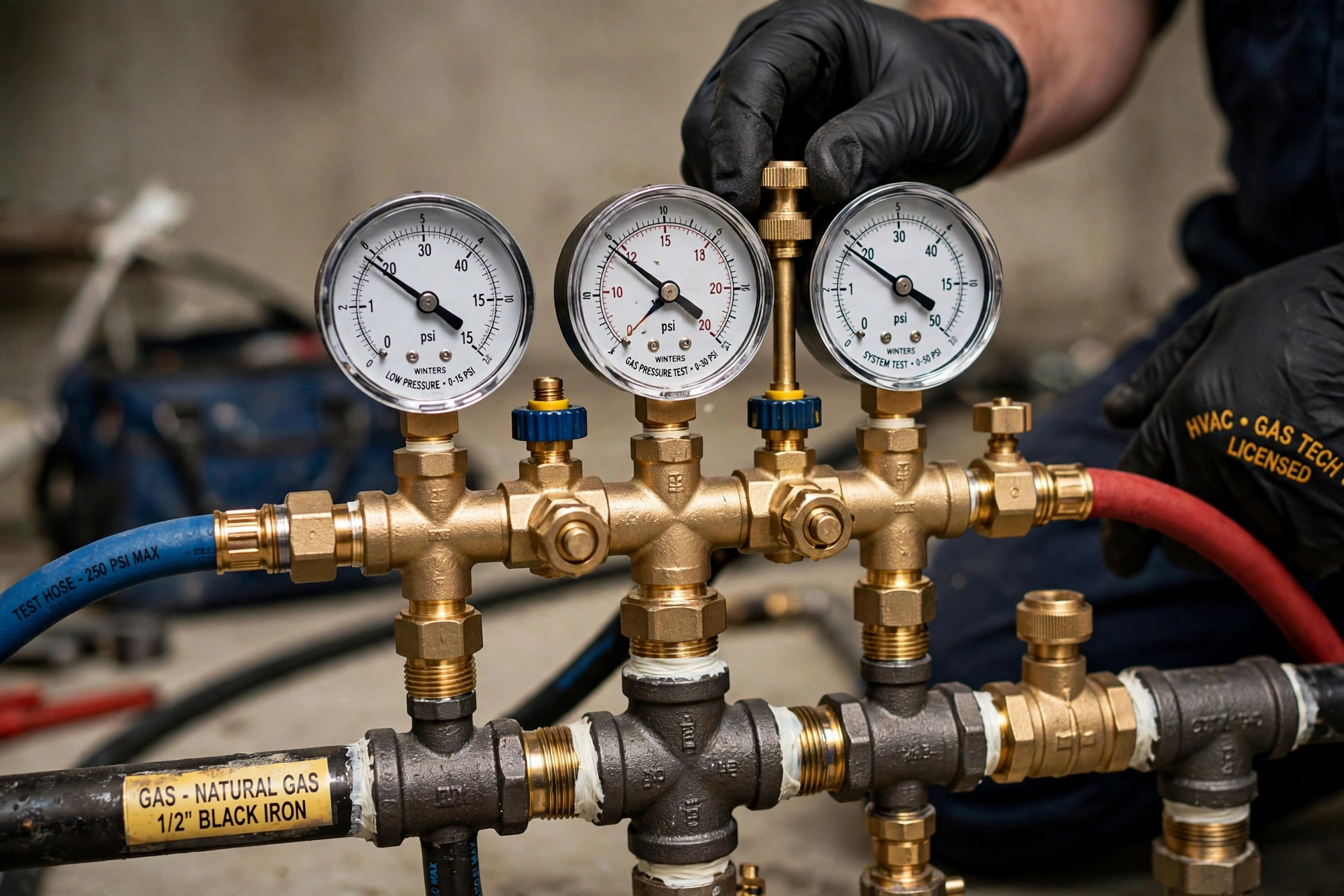
Gas Line Repair in Missouri City: close-up of a gas pressure gauge (manometer) connected to a gas line, showing a steady

What to Expect From Our Service

An inspection should leave you informed, not pressured. Here is our approach on every visit.

“We walk the full system and show you exactly what we find — good news and bad — with photos and plain explanations.”

C

Clear Communication

On every visit

“Our report is prioritized and honest: what needs attention now, what can wait, and what is perfectly fine.”

H

Honest Assessments

On every job

“We test what we can access and tell you plainly about anything we could not reach — no guessing, no padding.”

T

Thorough Testing

Before we leave

Frequently Asked Questions

Straight answers about gas line inspections in Missouri City — how often, what is included, and what affects the cost.

How often should I have my gas line inspected in Missouri City?
Gas lines should be inspected at least once every 1-3 years in Missouri City. Regular inspections help identify potential issues early, ensuring safety.
What does a gas line inspection include in Missouri City?
A gas line inspection includes visual checks, pressure testing, and gas leak detection to ensure your system is safe and efficient.
How much does gas line inspection cost in Missouri City?
Inspection cost depends on the size of your property and gas system, how accessible the lines are, and whether any additional services are needed. We will give you the price up front — the written report is always included.
Do you offer gas line inspection services in Missouri City?
Yes, we provide comprehensive gas line inspection services in Missouri City, ensuring your gas systems are safe and compliant.

Schedule Your Gas Line Inspection in Missouri City Today

Buying an older home, finishing a remodel, or just due for a checkup? Call (281) 343-3759 or send a message — we will inspect your system and give you a straight report.

Call Now Get Started

Get in Touch with Us

Questions about your gas lines or ready to schedule an inspection? Reach out during business hours and we will help you set it up.

Or call us right now at (281) 343-3759 — we answer.

Gas Line Repair Missouri City TX


  • Address

    2209 Texas Pkwy, Missouri City, TX 77489, United States, Missouri City, Texas

  • Hours

    Mon–Fri: 7AM – 7PM
    Sat: 8AM – 4PM
    Sun: Emergency Only
    Call for urgent service needs

Call (281) 343-3759 Get Quote
Call Quote