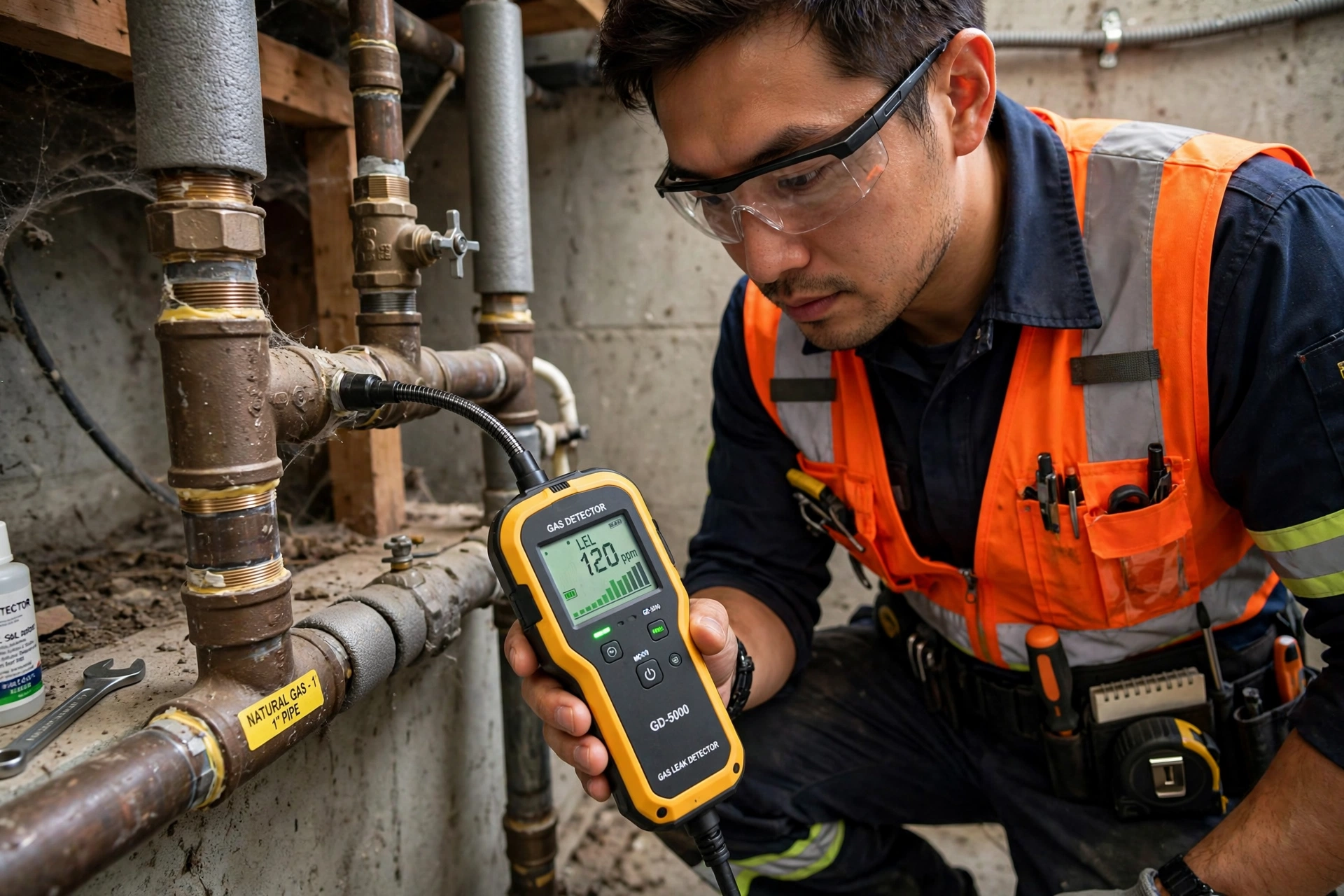
Thorough Inspections
We conduct detailed inspections to identify any issues with your gas lines, ensuring that all potential problems are addressed.
Our gas line repair service includes comprehensive inspections, repairs, and necessary replacements to ensure your gas lines are safe and functional.
We conduct detailed inspections to identify any issues with your gas lines, ensuring that all potential problems are addressed.
Our team specializes in repairing leaks, using high-quality materials to ensure a long-lasting solution.
We ensure all repairs comply with local codes and safety regulations, providing peace of mind for homeowners.
After repairs, we perform safety tests to ensure your gas lines are leak-free and functioning correctly.
The rule of thumb is simple: if the gas appliance stands away from the house, the supply line between the two points belongs underground. Pipe run above ground across a yard is exposed to mowers and string trimmers, bakes in the sun, collects storm debris, and looks unfinished. Burying it removes the eyesore, removes the damage risk, and removes the trip hazard in one move.
Around Missouri City, the calls we get most often are backyard projects: pool and spa heaters, outdoor kitchens with built-in grills, fire pits and fire features, and capped stub-outs for whatever comes next. The other steady category is detached structures — workshops, pool houses, and detached garages with a heater or water heater of their own. Standby generators round out the list, and they are showing up more every year as homeowners decide they want the house to ride through the next extended outage on its own.
Pool heaters are the heavyweights of residential gas demand. Warming thousands of gallons of water takes an enormous amount of fuel, so the underground line feeding a heater has to be sized generously from the start. An undersized run shows up as a heater that never quite reaches temperature and burners that soot from running lean — symptoms that look like a bad heater but trace back to the pipe in the yard. We size from the heater's input rating and the distance from the meter so the unit gets full flow even on a cold March morning when it is working its hardest.
Outdoor kitchens are layout puzzles as much as plumbing projects. The line has to reach the grill island or side burner, often crossing patios, planting beds, and stretches of lawn to get there. Where the route crosses existing concrete, directional boring passes underneath without cutting the slab; across soft landscaping, a narrow open trench is faster and more economical. Either way the finished job is invisible — gas at the island, with nothing above ground except a discreet riser and shutoff tucked against the structure.
Most of a clean installation happens before any digging. We start with a site walk: where the meter sits, where the appliance will live, what lies between the two, how the soil and grading look, where the water table tends to sit after heavy rain. Out of that walk comes a route plan that keeps the run as direct as practical, avoids obstacles, and stays clear of anything that would complicate the work — or the next contractor's work — later.
Then the sequence runs: Texas 811 locates go in, permits are pulled, the trench is opened or the bore path is drilled, pipe goes onto its bedding with tracer wire alongside, risers go up at both ends, and the full run is pressure tested while everything is still exposed. Only after the test passes and the inspection is signed off do we backfill in compacted layers and restore the surface — sod, beds, or concrete matched to what was there before we arrived.
Open trenching is the workhorse method: a narrow trench follows the route, the pipe is laid on prepared bedding, and the trench is backfilled in layers. It is fast and economical across lawns, planting beds, and other soft ground, and it lets us see the pipe, the bedding, and the tracer wire the entire way. For a straightforward run across open yard, trenching is usually the right answer.
Directional boring earns its place wherever the route crosses something worth preserving: a concrete driveway, an existing patio, a sidewalk, a mature oak whose roots you do not want to sever. The boring machine drives a path underground between two small pits and the pipe is pulled through, leaving the surface above untouched. It costs more and takes more setup than trenching, so we use it surgically — bore under the driveway, trench the open lawn — and many Missouri City jobs end up as exactly that combination.
Missouri City sits on the same expansive gumbo clay that underlies much of the Houston metro. This soil is famous for moving: it swells as it absorbs water during wet stretches and shrinks — sometimes dramatically — through the long, hot, dry summers this part of Texas is known for. That seasonal cycle is the defining challenge for anything buried in Fort Bend County, and a gas line has to be designed around it rather than in spite of it.
Then comes the weather on top of the soil. Summer heat that bakes the ground hard, sudden downpours that saturate it in an afternoon, hurricane season with its flooding and erosion, the occasional hard freeze in winter, and spring storm systems that drench everything at once. A buried installation here has to handle saturated ground, soil that shifts under the pipe, and above-ground risers exposed to storm debris and standing water — materials that flex, connections that do not carry the stress, and transitions built to stay put.
Expansive clay can shift several inches between the wet and dry seasons. Along a buried run, that movement shows up as heaving, settling, and lateral pressure on the pipe. Rigid materials fight those forces and lose at the joints — connections loosen, stress concentrates, and small deflections become problems over years. Flexible PE pipe moves with the soil instead, absorbing the seasonal cycle without passing the stress into its fused joints.
The risers get the same engineering attention. Where pipe transitions from underground to above ground is exactly where soil movement tries to work things loose, so the transition has to tolerate slight vertical shifting without straining. Manufactured anodeless risers are built for this — the PE-to-steel change happens inside a protected assembly that is supported independently of the surrounding soil movement.
01
What we do: Contact us immediately for gas line repair in Missouri City. Our technicians will locate and fix the leak quickly.
→ This ensures your home is safe and eliminates the risk of gas exposure.
02
What we do: Our team will inspect the gas lines and connections to identify any issues affecting performance.
→ You'll enjoy improved efficiency and reliability from your gas appliances.
03
What we do: We provide gas line servicing in Missouri City to ensure safe and efficient installations.
→ This guarantees that your new appliances operate safely and effectively.
Gas Line Repair in Missouri City requires an understanding of local building codes and common issues faced by residents. The humid climate can lead to corrosion in gas lines, making regular inspections essential. Our team is familiar with the unique challenges of the area, ensuring effective and compliant repairs. With gas line servicing in Missouri City, we address issues promptly to maintain safety and efficiency.
Bridlewood
This neighborhood often experiences gas line issues due to older infrastructure.
Parker Square
Residents here benefit from our prompt gas line repair services, especially during extreme weather.
Lake Forest
We provide thorough inspections to ensure safety in homes with aging gas lines.
High humidity levels in summer
This can accelerate corrosion in gas lines, necessitating regular inspections and repairs.
Frequent temperature fluctuations in winter
These fluctuations can lead to pipe expansion and contraction, increasing the risk of leaks.
Call Gas Line Repair Missouri City TX at (281) 343-3759 to discuss your underground gas line project. We will walk the property, work out the route and the sizing, and give you a straight explanation of what the job involves — before any digging starts.
Our gas line repair services address common issues that can pose risks to your home and family.
Problem
Ignoring gas leaks can lead to dangerous situations, including explosions or health hazards from inhalation.
Our Fix
Our team quickly identifies and repairs leaks, ensuring your gas lines are safe and compliant with local regulations.
Problem
Faulty connections can lead to inefficient appliance operation and increased energy costs.
Our Fix
We repair and replace faulty connections, improving appliance efficiency and reducing energy bills.
Problem
Pressure drops can affect appliance performance, leading to inadequate heating or cooking.
Our Fix
We diagnose and fix pressure issues, ensuring your gas appliances operate at optimal levels.
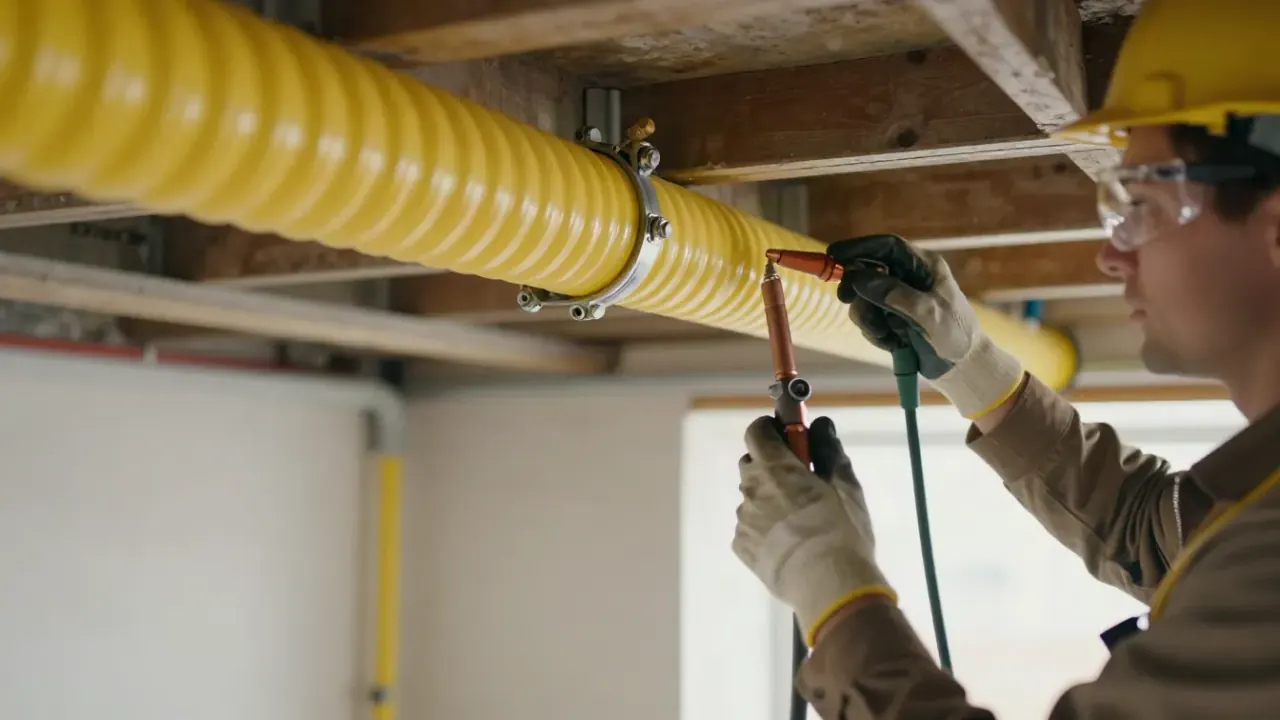
Investing in gas line repair offers numerous advantages that enhance safety and efficiency.
Enhanced Safety
Regular gas line repair significantly reduces the risk of dangerous gas leaks. By addressing potential issues early, homeowners can prevent hazardous situations and ensure their family's safety.
Increased Efficiency
Properly functioning gas lines improve the efficiency of your appliances. This can lead to lower energy bills and a more effective heating system, especially during the colder months in Missouri City.
Longer Lifespan
Timely gas line servicing in Missouri City can extend the lifespan of your gas appliances. By addressing wear and tear, you ensure that your systems function optimally for years.
Compliance with Codes
Gas line repairs ensure compliance with the National Fuel Gas Code (NFGC) and local regulations. This is crucial for avoiding fines and ensuring your home passes inspections.
Gas line repair costs in Missouri City typically range from $180 to $450 in 2026, depending on the complexity of the repair. Factors such as the extent of damage, materials used, and labor involved can affect the final price. Our transparent pricing ensures you know what to expect before we start any work.
Typical Investment Range
$180 - $450 depending on scope
Our pricing reflects the quality of service and materials used, ensuring long-lasting repairs.
What changes the price
Extent of Damage
More extensive damage requires more materials and labor, increasing costs.
Materials Used
The type of piping and fittings required can impact the overall repair cost.
Labor Intensity
Complex repairs that require more time and expertise will cost more.
Google ★★★★★4.9
Quick response and professional service! They fixed my gas leak within hours. Highly recommend!
Yelp ★★★★★4.8
Excellent service! The team was knowledgeable and friendly. They explained everything clearly.
BBB ★★★★★4.7
Very satisfied with the gas line repair. They were prompt and thorough in their work.
With local experience in gas line repair, our team is equipped with the necessary skills and certifications to handle any gas-related issue.
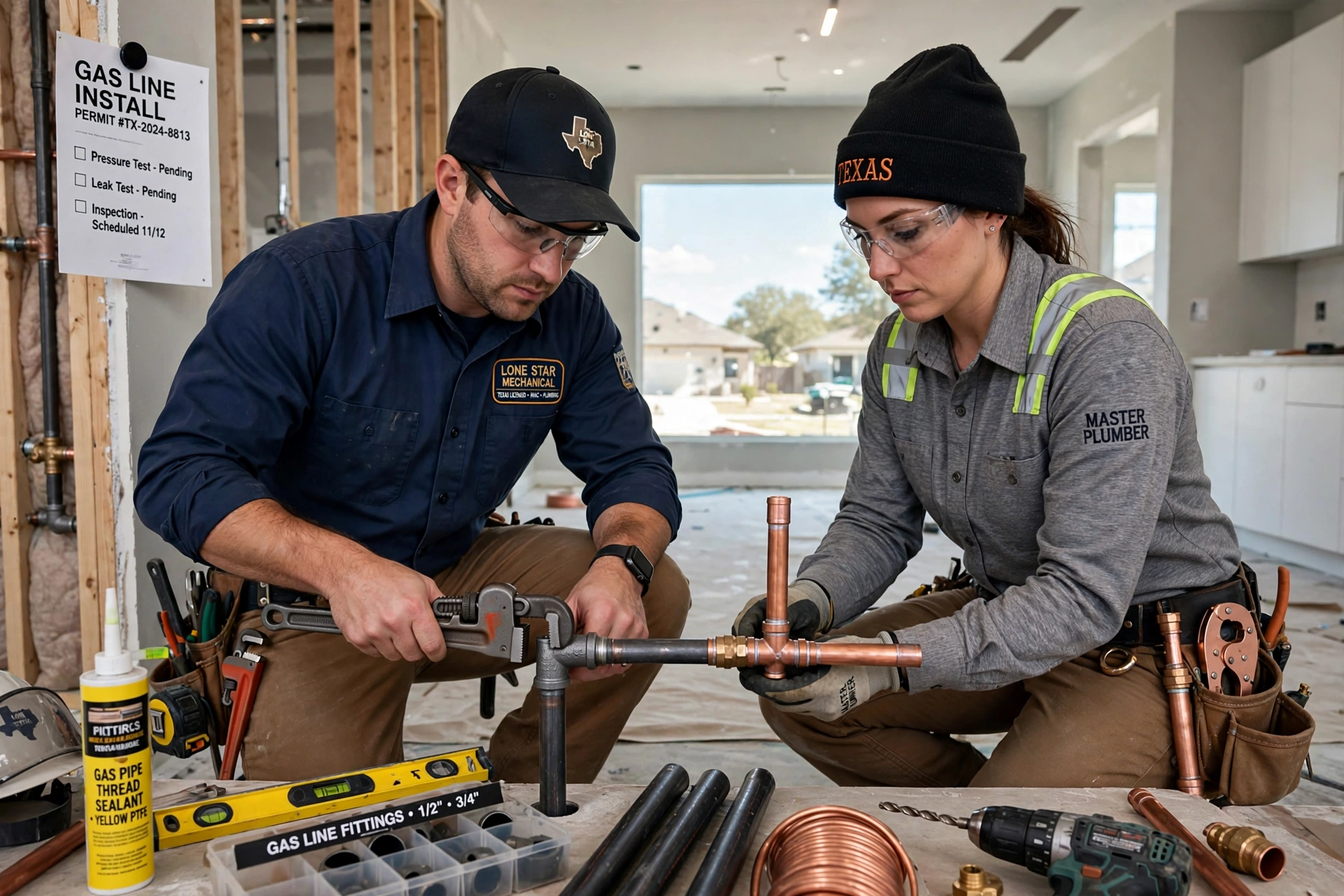
Real experiences from customers who chose our Gas Line Repair services.
“I had a gas leak in my home, and the team responded quickly. They were professional and resolved the issue within hours. Highly recommend!”
Sarah T.
Homeowner, Missouri City
“Their gas line repair service was excellent. They explained everything and worked efficiently. I felt safe knowing my gas lines were in good hands.”
Mark L.
Business Owner, Lewisville
“I appreciated their 24/7 emergency service. When I had a problem late at night, they were there within an hour. Great service!”
Emily R.
Resident, Highland Village
Most residential runs take one to three days of field work, depending on the length of the run, the soil conditions, and whether boring is needed under a driveway or patio. The Texas 811 locate and the permit add lead time before digging starts — usually a few business days. We set a realistic schedule during the site walk so you know the full timeline, not just the digging days.
A trench does open the ground along its route, but we keep it only as wide as the work requires, shield the surrounding grass and plantings while we dig, and restore the surface afterward with layered backfill, thorough compaction, and sod or seed to blend in. Anywhere the route crosses a driveway, patio, or landscaping you care about, we bore underneath instead, so the surface is never disturbed.
Buried residential gas lines go in at a depth that satisfies local requirements and keeps the pipe well clear of normal yard activity — shovels, aerators, edging, fence posts. We confirm the required depth for your jurisdiction before digging and record the installed depth in your project paperwork. In the Houston metro, frost is a minor concern; depth here is about protection from digging and from soil movement, and it works together with proper bedding and marking to keep the line safe.
Yes — directional boring is made for exactly this. We drive a path underground between two small pits and pull the pipe through, leaving the concrete untouched. It is a common solution under driveways, sidewalks, and patios in Missouri City's established neighborhoods. During the site walk we will tell you honestly whether boring or cutting and patching makes more sense for your situation.
In most cases, yes — buried gas work in this area is permitted and inspected like any other gas installation. We handle the application, arrange the inspections (which often include a look at the open trench and the pressure test before backfill), and build to the applicable rules. Keep the permit paperwork; it becomes useful documentation if you ever sell the home.
We use polyethylene (PE) pipe for buried residential gas lines — a flexible yellow piping manufactured for underground fuel gas service. It cannot corrode, it rides out the seasonal swelling and shrinking of gumbo clay instead of fighting it, and its heat-fused joints form continuous runs with very few underground connections. Anodeless risers bring the line above ground at each end, and a tracer wire buried alongside lets future locators find it.
Three ways. The tracer wire buried alongside the pipe lets any locating service find the line with standard equipment. Warning tape in the backfill alerts anyone who digs into the trench zone. And you receive documentation showing the installed route and depth. Keep that paperwork with your home records — it is what you hand to a fence contractor or landscaper before they put a shovel in the ground.
It can be done safely with planning. Keep large trees with aggressive root systems planted well away from the line's route — live oaks and similar Southeast Texas trees can displace a great deal of soil over the years. Irrigation lines crossing over a gas line should maintain separation, and anyone digging for either project should know the gas line is there first. If you are planning landscaping near an existing buried line, call us and we can locate it and advise on sensible clearances.
Our gas line installation service ensures your new gas lines are installed safely and comply with local codes, providing reliable service for your home.
View Gas Line InstallationRegular gas line inspections help identify potential issues before they become serious problems, ensuring the safety and efficiency of your gas systems.
View Gas Line InspectionOur gas leak detection service uses advanced technology to locate leaks quickly, preventing hazardous situations and ensuring your home's safety.
View Gas Leak DetectionWe provide professional gas appliance hookup services, ensuring your appliances are connected safely and function optimally for your home.
View Gas Appliance HookupWe're here to help you with your gas line needs. Reach out during business hours for quick responses and assistance.
Phone
(281) 343-3759Address
2209 Texas Pkwy, Missouri City, TX 77489, USA, Missouri City, Texas
Hours
Mon–Fri: 7AM – 7PM
Sat: 8AM – 4PM
Sun: Emergency Only
24/7 Emergency Available