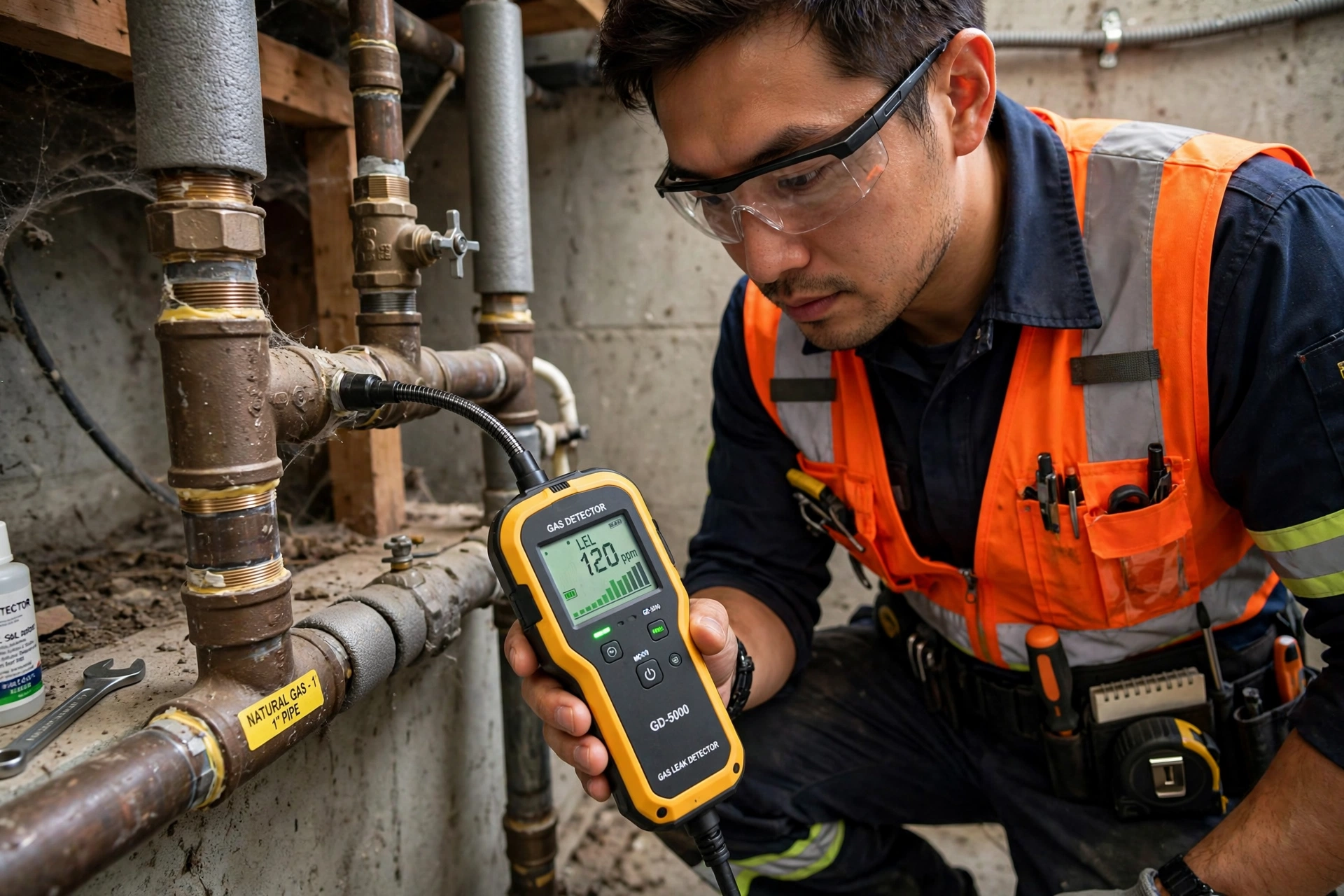
Thorough Inspections
We conduct detailed inspections to identify any issues with your gas lines, ensuring that all potential problems are addressed.
Our gas line repair service includes comprehensive inspections, repairs, and necessary replacements to ensure your gas lines are safe and functional.
We conduct detailed inspections to identify any issues with your gas lines, ensuring that all potential problems are addressed.
Our team specializes in repairing leaks, using high-quality materials to ensure a long-lasting solution.
We ensure all repairs comply with local codes and safety regulations, providing peace of mind for homeowners.
After repairs, we perform safety tests to ensure your gas lines are leak-free and functioning correctly.
Friendswood's well-kept homes are constantly being improved, and gas work is part of nearly every serious upgrade. Kitchen remodels converting from electric to gas ranges, double ovens, and pro-style cooktops are the most common drivers. Outdoor living additions — built-in grills, outdoor kitchens, fire pits, patio heaters, and pool heaters — are close behind. Each project needs proper gas engineering, not just a line tapped into the nearest pipe.
Every installation starts with a load calculation: the existing appliances' demand plus the new load, checked against what the current system can carry. In older Friendswood homes this step is critical, because a 1970s gas system was sized for a 1970s appliance package — a furnace, a water heater, maybe a range — and a modern kitchen plus an outdoor kitchen can double that demand. When the math says the system is short, we upsize the trunk or run a dedicated branch before the appliances arrive, so the project stays on schedule.
Routing respects the home. In established homes we work within existing chases and attic spaces, keeping openings small and patchable; buried runs to outdoor appliances are trenched along routes that avoid major root zones, with proper bedding and depth per code. Every new run gets independent pressure testing, every joint is verified, and appliances are commissioned with the rest of the home's gas equipment running — the system is proven as a whole, not just as parts.
Kitchen remodels in Friendswood's established homes almost always touch the gas system: relocating a range, upgrading to a higher-BTU cooktop, adding a gas line where an electric range used to be, or roughing in for a future appliance while the walls are open. The remodel window is the most economical time in a home's life to touch gas piping — walls are already open, access is free, and a few extra hours of gas work now prevents a costly retrofit later.
Gas leak detection in Friendswood is detective work shaped by the city's landscape: leaks hide along buried runs beneath pine roots, in crawl spaces under 1960s homes, and at joints that have absorbed decades of clay-soil movement. Our process follows a disciplined sequence — confirm, isolate, pinpoint, repair, verify — adapted to each setting, and we never dig or demolish on a hunch.
Underground leaks get electronic line tracing to map the pipe's exact route, then pressure testing with segment isolation to narrow the leak to a specific section. Only then does excavation happen, targeted to the confirmed location. Indoors, we test system segments to find the failing run without exploratory demolition, opening walls only where the test results point. After repair, the complete system is pressure-tested end to end — because a leak in one place is a warning to check everywhere.
Detection tools matter, but interpretation matters more. Electronic sensors find gas; experience reads the pattern — a slow underground leak venting at the meter riser, a root-disturbed joint weeping at the surface fifty feet away, a crawl-space odor tracing back to a single corroded fitting. We follow the evidence, document what we find, and explain it plainly.
Inside the home, the familiar signs apply: the rotten-egg odor of odorized natural gas near appliances or in enclosed spaces, hissing at connections or the meter, and physical symptoms — headache, nausea, dizziness — that ease outdoors. In Friendswood's older homes, pay special attention to crawl spaces, laundry rooms, and the areas around furnaces and water heaters, where original piping runs and slow leaks can accumulate unseen.
Friendswood's high homeownership and long tenures create a distinctive service relationship: we often work on the same home across years — a leak repair today, a remodel rough-in next year, an outdoor kitchen the year after. That continuity is valuable. Each visit builds a record of the home's gas system: what is original, what has been replaced, what the next likely project is. We treat every job as part of that longer story, documenting conditions and flagging what to watch.
Original-owner homes deserve a particular kind of honesty. When you have lived with a gas system for thirty years, you want straight answers: what is still sound, what is reaching end of life, what is worth doing now versus later. We give written findings after inspections and evaluations — not pressure, just the facts — so you can plan on your timeline. Many of our Friendswood customers schedule system updates around remodels, roof replacements, or other projects that already open walls or yards, which is the most economical way to do it.
Renovation-driven gas work is our most common repeat business in Friendswood, and it rewards familiarity: knowing the home's existing capacity, its pipe routing, and its meter size lets us scope additions quickly and accurately. Whether the plan is a kitchen this year and a fire pit next, we can map the whole sequence in one conversation. Call (281) 343-3759 — for Friendswood homeowners, continuity of care is part of the service.
A professional gas system inspection for an established Friendswood home covers the complete installation: the meter and service connection, the buried run's condition as far as it can be assessed, accessible interior piping with attention to joint condition and corrosion, every appliance connection and shutoff, and overall code compliance. We note the pipe material and apparent age, photograph findings, and pressure-test the system to confirm integrity.
01
What we do: Contact us immediately for gas line repair in Missouri City. Our technicians will locate and fix the leak quickly.
→ This ensures your home is safe and eliminates the risk of gas exposure.
02
What we do: Our team will inspect the gas lines and connections to identify any issues affecting performance.
→ You'll enjoy improved efficiency and reliability from your gas appliances.
03
What we do: We provide gas line servicing in Missouri City to ensure safe and efficient installations.
→ This guarantees that your new appliances operate safely and effectively.
Gas Line Repair in Missouri City requires an understanding of local building codes and common issues faced by residents. The humid climate can lead to corrosion in gas lines, making regular inspections essential. Our team is familiar with the unique challenges of the area, ensuring effective and compliant repairs. With gas line servicing in Missouri City, we address issues promptly to maintain safety and efficiency.
Bridlewood
This neighborhood often experiences gas line issues due to older infrastructure.
Parker Square
Residents here benefit from our prompt gas line repair services, especially during extreme weather.
Lake Forest
We provide thorough inspections to ensure safety in homes with aging gas lines.
High humidity levels in summer
This can accelerate corrosion in gas lines, necessitating regular inspections and repairs.
Frequent temperature fluctuations in winter
These fluctuations can lead to pipe expansion and contraction, increasing the risk of leaks.
Our gas line repair services address common issues that can pose risks to your home and family.
Problem
Ignoring gas leaks can lead to dangerous situations, including explosions or health hazards from inhalation.
Our Fix
Our team quickly identifies and repairs leaks, ensuring your gas lines are safe and compliant with local regulations.
Problem
Faulty connections can lead to inefficient appliance operation and increased energy costs.
Our Fix
We repair and replace faulty connections, improving appliance efficiency and reducing energy bills.
Problem
Pressure drops can affect appliance performance, leading to inadequate heating or cooking.
Our Fix
We diagnose and fix pressure issues, ensuring your gas appliances operate at optimal levels.
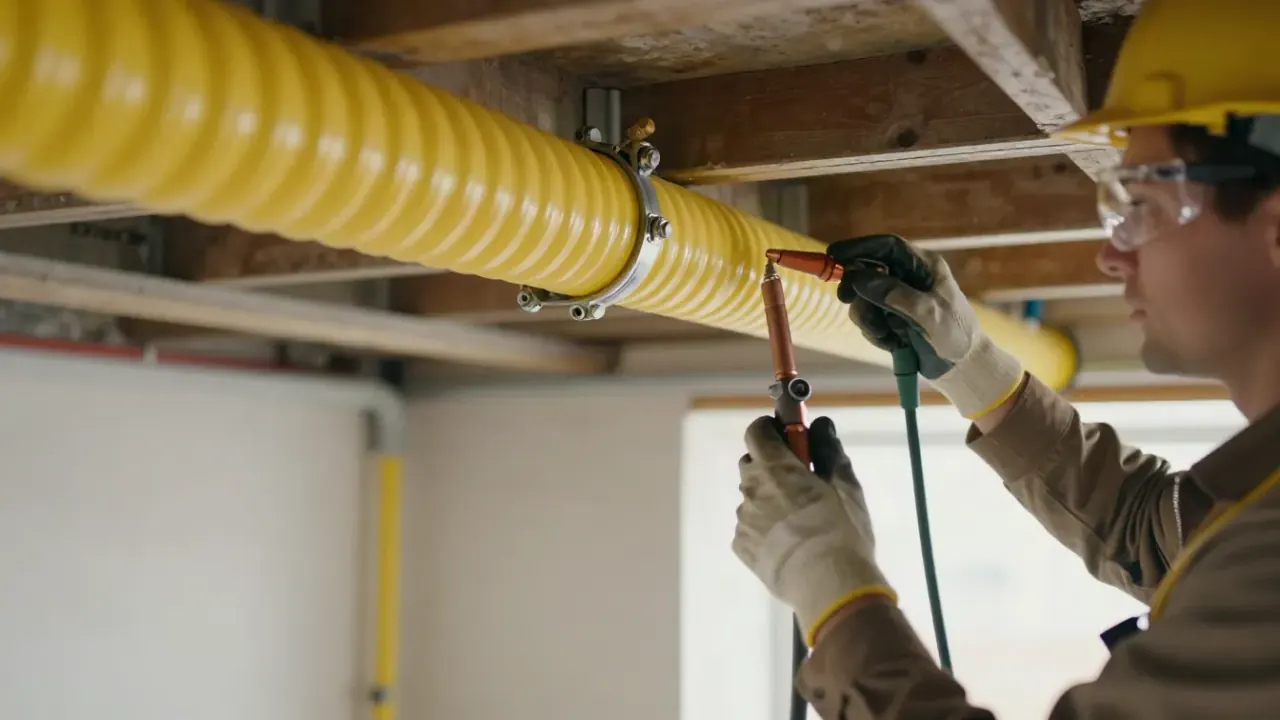
Investing in gas line repair offers numerous advantages that enhance safety and efficiency.
Enhanced Safety
Regular gas line repair significantly reduces the risk of dangerous gas leaks. By addressing potential issues early, homeowners can prevent hazardous situations and ensure their family's safety.
Increased Efficiency
Properly functioning gas lines improve the efficiency of your appliances. This can lead to lower energy bills and a more effective heating system, especially during the colder months in Missouri City.
Longer Lifespan
Timely gas line servicing in Missouri City can extend the lifespan of your gas appliances. By addressing wear and tear, you ensure that your systems function optimally for years.
Compliance with Codes
Gas line repairs ensure compliance with the National Fuel Gas Code (NFGC) and local regulations. This is crucial for avoiding fines and ensuring your home passes inspections.
Gas line repair costs in Missouri City typically range from $180 to $450 in 2026, depending on the complexity of the repair. Factors such as the extent of damage, materials used, and labor involved can affect the final price. Our transparent pricing ensures you know what to expect before we start any work.
Typical Investment Range
$180 - $450 depending on scope
Our pricing reflects the quality of service and materials used, ensuring long-lasting repairs.
What changes the price
Extent of Damage
More extensive damage requires more materials and labor, increasing costs.
Materials Used
The type of piping and fittings required can impact the overall repair cost.
Labor Intensity
Complex repairs that require more time and expertise will cost more.
Google ★★★★★4.9
Quick response and professional service! They fixed my gas leak within hours. Highly recommend!
Yelp ★★★★★4.8
Excellent service! The team was knowledgeable and friendly. They explained everything clearly.
BBB ★★★★★4.7
Very satisfied with the gas line repair. They were prompt and thorough in their work.
With local experience in gas line repair, our team is equipped with the necessary skills and certifications to handle any gas-related issue.
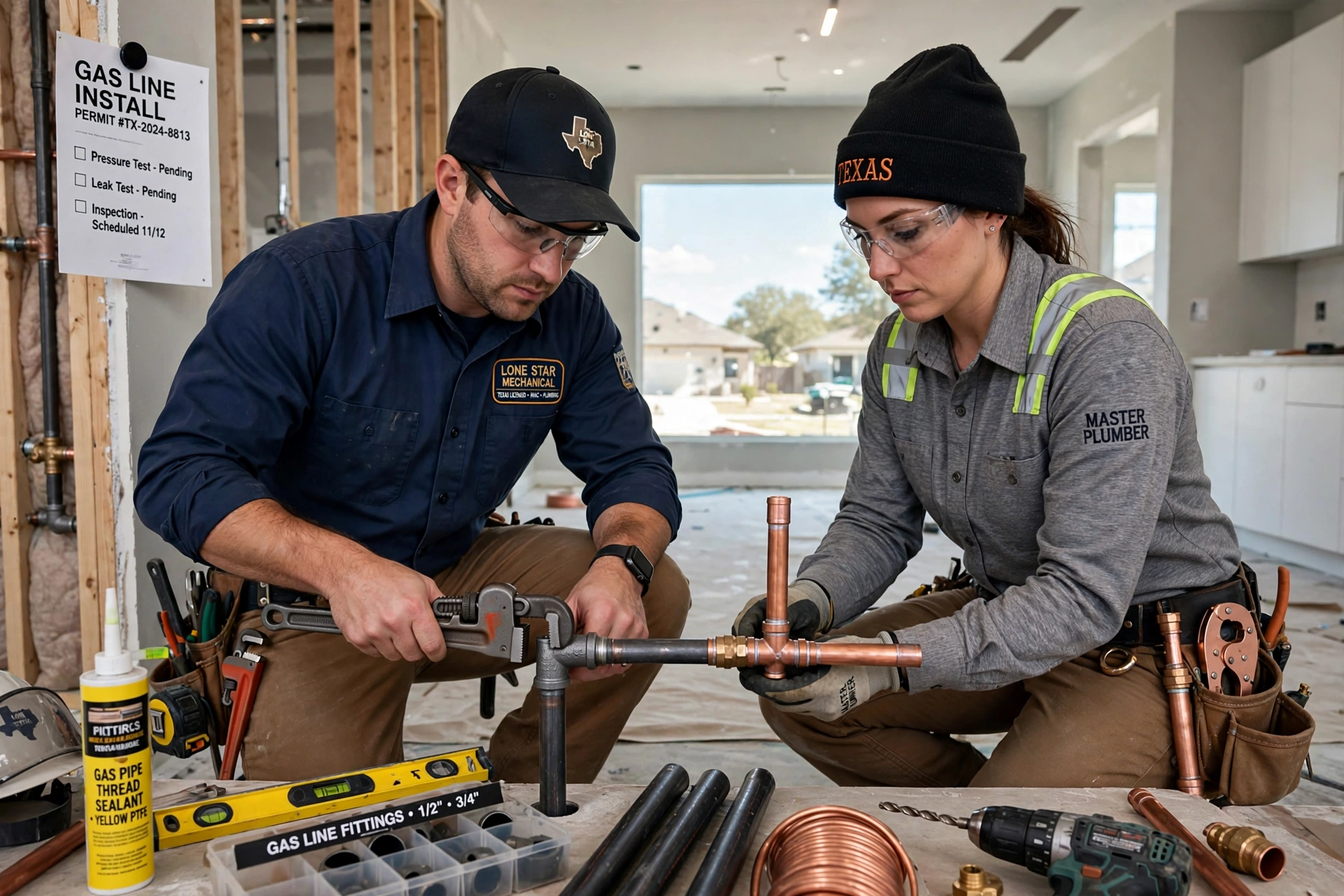
Real experiences from customers who chose our Gas Line Repair services.
“I had a gas leak in my home, and the team responded quickly. They were professional and resolved the issue within hours. Highly recommend!”
Sarah T.
Homeowner, Missouri City
“Their gas line repair service was excellent. They explained everything and worked efficiently. I felt safe knowing my gas lines were in good hands.”
Mark L.
Business Owner, Lewisville
“I appreciated their 24/7 emergency service. When I had a problem late at night, they were there within an hour. Great service!”
Emily R.
Resident, Highland Village
Several factors shape the scope — and therefore the cost — of gas line work here. The pipe's age and material matter: repairing accessible modern piping is straightforward, while replacing corroded 1960s steel in tight crawl spaces is more involved. Root-related access is a real Friendswood factor: a buried line under a pine root mat takes more careful excavation than an open lawn. Permits and inspections add required steps for new installations and major replacements. And overall scope — a single appliance connection versus a whole-home repipe or an underground service replacement — is the biggest driver. We assess each job in person and provide a written estimate before starting, so you see exactly what the work involves and why.
Yes — slowly, over years. Roots do not usually puncture pipe; they displace soil, erode bedding, and press against fittings as they grow, while seasonal clay-soil movement adds stress at the same joints. The damage typically shows as a slow leak at a joint, sometimes venting to the surface far from the actual failure. If your lot has mature pines or oaks and you notice a gas odor outdoors, vegetation die-off along a line, or a rising bill, the buried run deserves professional testing. We locate the line electronically and pressure-test before any excavation, so the repair is targeted and the trees are disturbed as little as possible.
Concerned is the wrong word — prepared is the right one. Original 1960s–1980s steel piping in Friendswood is now at or past the age where corrosion and joint deterioration become expected, not exceptional. The right move is a professional evaluation: we inspect accessible piping, pressure-test the full system, and document its true condition. If the system is sound, you gain peace of mind and a baseline for the future. If sections are failing, you get a clear plan — targeted repairs now, replacement scheduled around your next remodel, or a full repipe if the system is broadly deteriorated. Knowledge first, then decisions.
The usual signs: rotten-egg gas odor near appliances or outdoors, hissing at joints or the meter, dead vegetation in a strip along the underground pipe route, and gas bills that rise without increased usage. In Friendswood's older neighborhoods, also watch for gas smells in crawl spaces and around original furnaces and water heaters. After storms, add exterior checks: odors near the meter, exposed or shifted piping, and damage where fallen trees disturbed the yard. Any of these signs means the system should be professionally checked.
Friendswood, like most Houston-area cities, requires permits and inspections for new gas line installations and major repairs or replacements. Minor appliance connections may fall under simpler requirements, but anything involving new piping, system modifications, or underground work typically needs a permit and a passed inspection. We advise on what your specific project requires and make sure the work is inspection-ready — proper materials, correct installation, and documented pressure testing.
It depends on the system's condition and your plans. If original piping is failing in multiple places, replacement is usually the better investment — one planned project instead of repeated emergency repairs. If the system is mostly sound with an isolated problem, targeted repair makes sense. During a major remodel with walls open, updating the gas piping is almost always worthwhile since access is already available and the incremental cost is a fraction of a standalone repipe. We give honest recommendations based on inspection, not assumptions.
Our gas line installation service ensures your new gas lines are installed safely and comply with local codes, providing reliable service for your home.
View Gas Line InstallationRegular gas line inspections help identify potential issues before they become serious problems, ensuring the safety and efficiency of your gas systems.
View Gas Line InspectionOur gas leak detection service uses advanced technology to locate leaks quickly, preventing hazardous situations and ensuring your home's safety.
View Gas Leak DetectionWe provide professional gas appliance hookup services, ensuring your appliances are connected safely and function optimally for your home.
View Gas Appliance HookupWe're here to help you with your gas line needs. Reach out during business hours for quick responses and assistance.
Phone
(281) 343-3759Address
2209 Texas Pkwy, Missouri City, TX 77489, USA, Missouri City, Texas
Hours
Mon–Fri: 7AM – 7PM
Sat: 8AM – 4PM
Sun: Emergency Only
24/7 Emergency Available