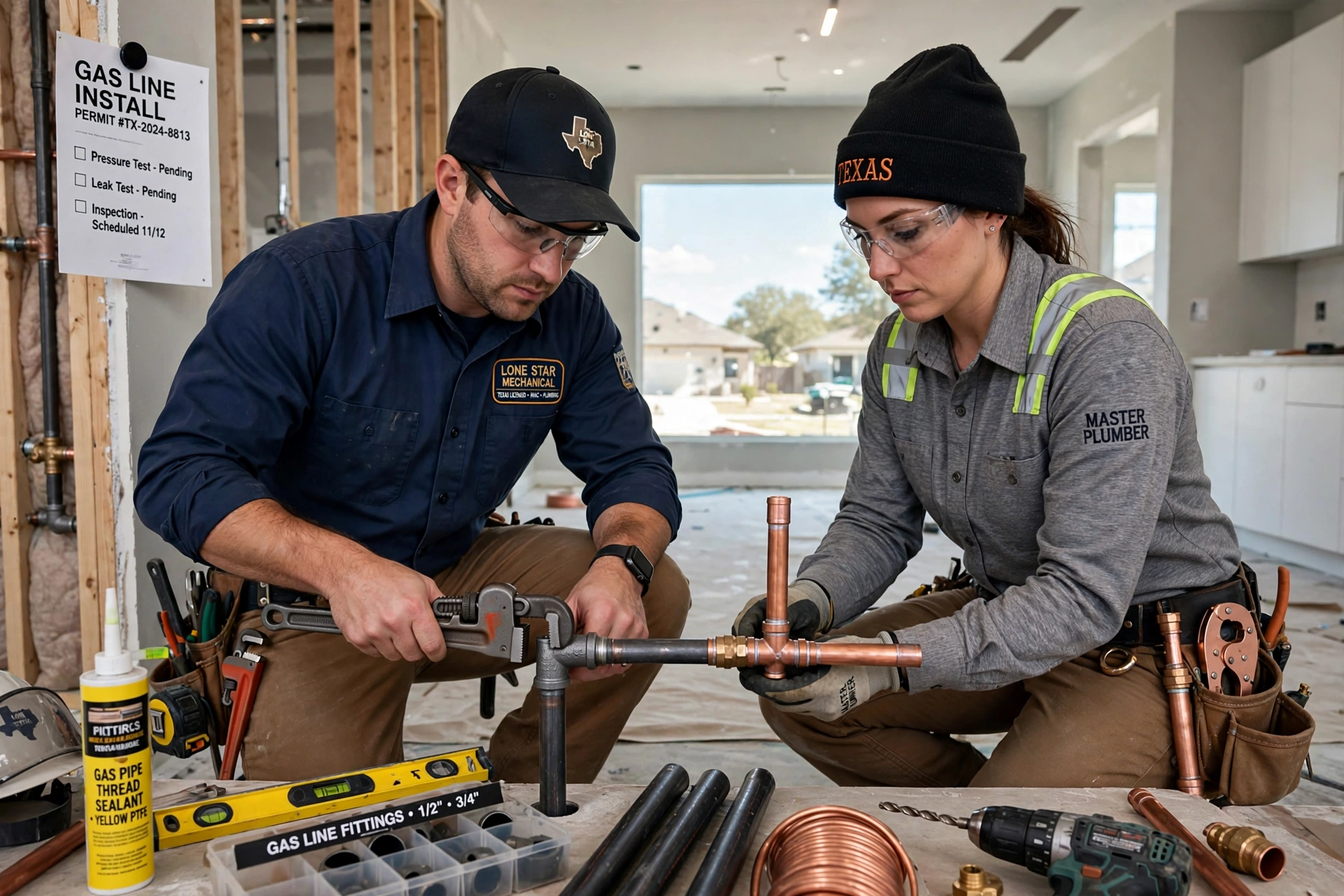
Planning & Sizing
We map the run, calculate the gas load for every appliance it will feed — range, water heater, dryer, fireplace, generator — and size the pipe so pressure stays steady when everything runs at once.
From the first walkthrough to the final pressure test, here is what an installation with us covers.
We map the run, calculate the gas load for every appliance it will feed — range, water heater, dryer, fireplace, generator — and size the pipe so pressure stays steady when everything runs at once.
Buried yard lines, exposed exterior runs, and indoor branches each need different materials. We choose pipe and fittings rated for gas service and suited to Missouri City’s damp soil and humid air.
Our technicians run the line, set shutoff valves where code requires them, and make every connection to spec. Before any digging, we confirm underground utilities are marked through Texas 811.
The finished line is pressure-tested and every joint is checked with a gas detector. We walk you through the shutoff locations and what was installed before we leave.
A gas line installation runs new piping from your meter — or an existing branch — to wherever the appliance needs it. That sounds simple until you factor in Fort Bend County’s gumbo clay, which shifts buried lines as it swells and shrinks, and a high water table in some areas that keeps soil wet around buried pipe. Material choice and proper bedding matter as much as the connections themselves.
Most of our installation calls in Missouri City fall into three buckets: new construction in Sienna and Riverstone, where builders need lines for outdoor kitchens, pool heaters, and standby generators; remodels in Quail Valley and Lake Olympia, where a kitchen upgrade means extending or upsizing an old steel run; and appliance conversions, where a homeowner switches to a gas range or tankless water heater. Whatever the project, we size it right, permit it where required, and test it before we go.
Here is the sequence from first call to first use.
Schedule
Call (281) 343-3759 or send a message through our contact form. We will set up a site visit and tell you what to have ready — usually just clear access to the meter and the appliance location.
Plan
Our technician walks the route, calculates gas load, and explains the plan: where the line runs, what materials we will use, and what it will cost — in writing, before any work starts.
Install
We run the line to code, set valves and sediment traps where required, and keep you posted as the work progresses. If we hit anything unexpected, you hear about it first.
Test & Review
The new line is pressure-tested, every joint is leak-checked, and we show you the shutoff locations before we leave.
Pipe Wrenches
Sized to grip without crushing — used to tighten every fitting to the torque it needs, no more, no less.
Gas Leak Detectors
After the line is in, we sweep every joint with a calibrated detector to confirm zero leaks before the gas is turned on.
Pressure Gauges
The new run is pressurized and watched. A steady gauge means a sealed system; any drop means we find the leak before you ever use the line.
Pipe Cutters & Threaders
Clean cuts and proper threads are what make joints seal. We cut pipe square and thread to spec so every connection seats fully.
Load Calculations
We size pipe using National Fuel Gas Code tables so the line delivers enough gas when your range, water heater, and dryer all run at once — no starved appliances.
Local Code Compliance
Missouri City and Fort Bend County have specific requirements for permits, shutoff placement, and materials. We build to them so inspections pass the first time.
Pressure Testing
Every new installation is pressure-tested and monitored before it goes live. It is the only way to prove a line is sealed.
01
What we do: New builds often need gas run to outdoor kitchens, pool heaters, fire pits, and standby generators. We install the full system to code, coordinated with your builder’s schedule.
→ Every gas appliance gets the steady supply it was designed for, from day one.
02
What we do: Moving to a gas range, a tankless water heater, or a gas dryer usually means extending an existing line or upsizing it. We tie into your system safely and verify the whole run.
→ You get the performance of gas without overloading the old piping.
03
What we do: Kitchen and laundry remodels move appliances — and gas lines have to move with them. We reroute lines to fit the new layout and bring everything up to current code.
→ Your renovated space gets a clean, compliant gas system behind the walls.
Installing gas lines here means dealing with what is underground: gumbo clay that heaves and settles, a high water table in parts of Fort Bend County that keeps soil saturated, and older neighborhoods where we tie into decades-old steel. We bed buried pipe properly, choose corrosion-resistant materials for damp soil, and always confirm utility marking through Texas 811 before we dig. Above ground, Gulf Coast humidity attacks exposed steel, so exterior runs get materials and coatings that stand up to it.
Sienna
Sienna’s new construction keeps us busy with gas lines for outdoor kitchens, pool heaters, fire pits, and whole-home generators. We coordinate with builders and homeowners to get the routing right the first time.
Riverstone
Riverstone homes often want gas in more places than the builder provided — a grill island here, a fireplace there. We extend existing systems cleanly, with proper sizing so pressure stays steady.
Quail Valley
In Quail Valley’s older homes, installations usually mean replacing or extending aging steel lines during remodels. We bring the old work up to current code while we are in the walls.
High water table and wet soil
In parts of Fort Bend County the water table sits high, which complicates trenching and keeps buried pipe in wet soil. We plan depth, bedding, and materials accordingly — and use trenchless methods where they make sense.
Texas 811 and safe digging
Any underground work starts with a call to Texas 811 so existing utilities are marked. It is free, it is the law, and it keeps everyone safe.
Sometimes the right fix is not repairing the old line — it is installing the right line. Here is when we recommend it.
Problem
Decades-old steel lines in Quail Valley and Lake Olympia were sized for the appliances of their era. Add a tankless water heater or a standby generator and the system is undersized — appliances starve and pressure drops.
Our Fix
We install a new, properly sized run — or a dedicated branch — so every appliance gets the gas flow it needs, even at peak demand.
Problem
Outdoor kitchens, pool heaters, fire pits, and generators need gas where no line exists yet. A proper buried or routed line — not a makeshift extension — is the safe answer.
Our Fix
We run new lines from the meter or an existing branch, with shutoffs placed where code requires them, and test everything before use.
Problem
When walls move, gas lines have to move too. Old routing rarely matches the new floor plan, and patched-together new-to-old connections are where leaks start.
Our Fix
We reroute cleanly during the remodel — while walls are open — and bring every connection up to current code in one pass.
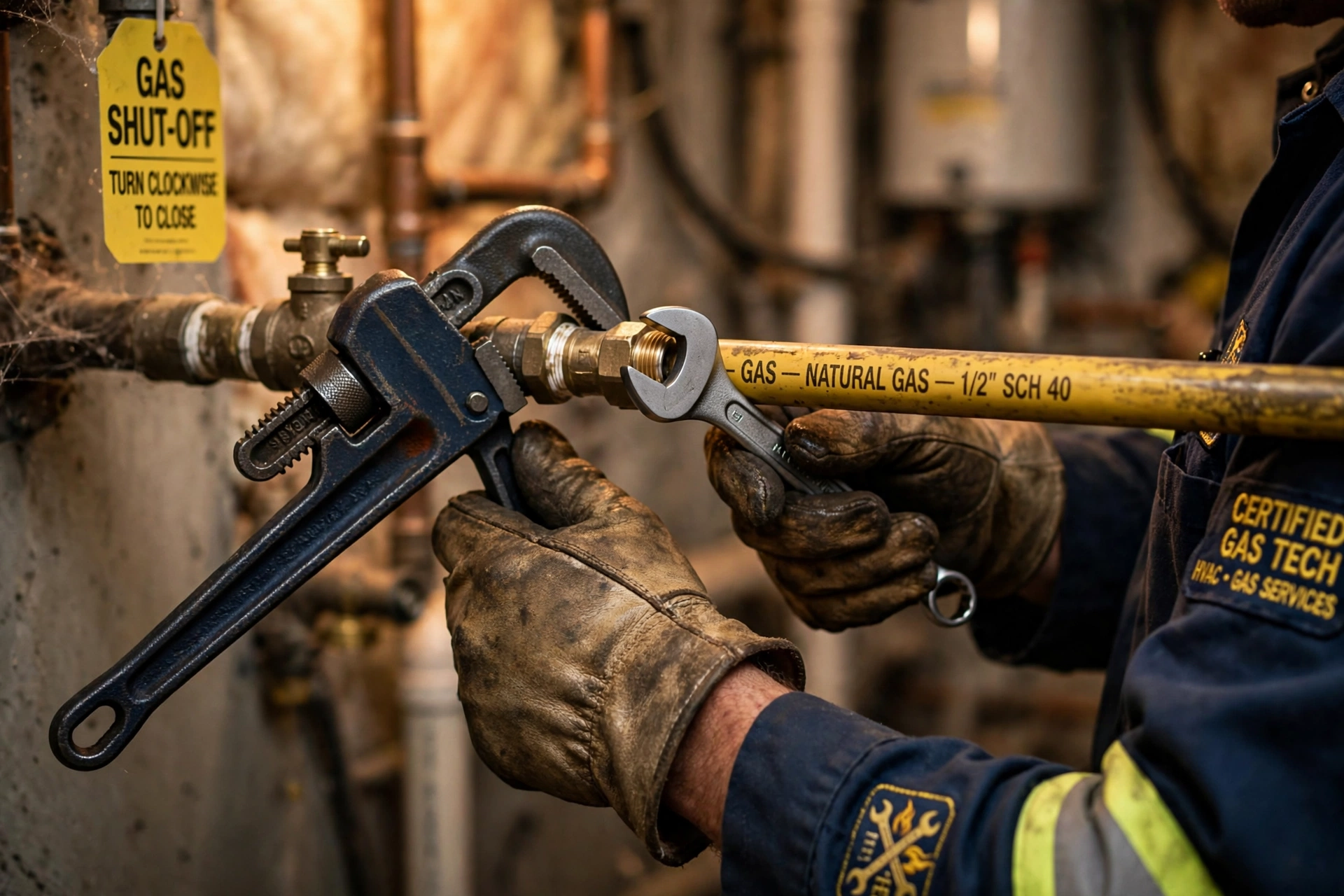
A gas line is not a DIY project and not a handyman special. Here is what proper installation gives you.
Safety from day one
Correct sizing, proper materials, and tested joints mean the line is safe the first time gas flows through it — not after a scare.
Code compliance
Permitted, inspected, and built to the National Fuel Gas Code plus local requirements. That paperwork matters when you sell, insure, or renovate.
Full appliance performance
A line sized for the actual load delivers steady pressure, so your range, water heater, and generator all perform the way the manufacturer intended.
Built to last
Proper bedding in our shifting clay, corrosion-resistant materials for damp soil, and solid connections mean the line stays trouble-free for years.
No two installations cost the same, because no two runs are the same length or complexity. We price by the job: after a site visit, you get a clear written estimate that breaks down materials, labor, and any permit or inspection fees — before we start.
What Goes Into Your Estimate
A detailed written estimate after our site visit — materials, labor, and fees itemized, no hidden charges.
Professional installation is an investment in safety and compliance. Our estimates show you exactly where every dollar goes.
What changes the price
Length of the run
A short branch to a dryer costs far less in materials and labor than a long buried run to a pool heater.
Materials
Steel, CSST, and polyethylene suit different situations — buried, exposed, or indoor — and each carries a different cost.
Labor and access
Trenching through gumbo clay, boring under a driveway, or fishing pipe through finished walls all take time, and time is labor.
Permits and inspections
Where Missouri City or Fort Bend County requires permits and inspections, those fees are part of the honest total — we handle the paperwork.
Clear communication — you approve the plan before we start.
You will see the proposed route, the materials, and the itemized estimate before we cut a single pipe.
Careful workmanship — we respect your property.
We protect landscaping along trench routes, keep the work area tidy, and restore the site as close to original as possible.
Thorough safety testing — every line gets verified.
New installations are pressure-tested and leak-checked before gas ever flows. If it does not hold, we fix it first.
We install gas lines across Fort Bend County every week — new construction rough-ins, remodel reroutes, appliance branches, and buried yard lines. That repetition means we know the soil, the code officials’ expectations, and the materials that last here.
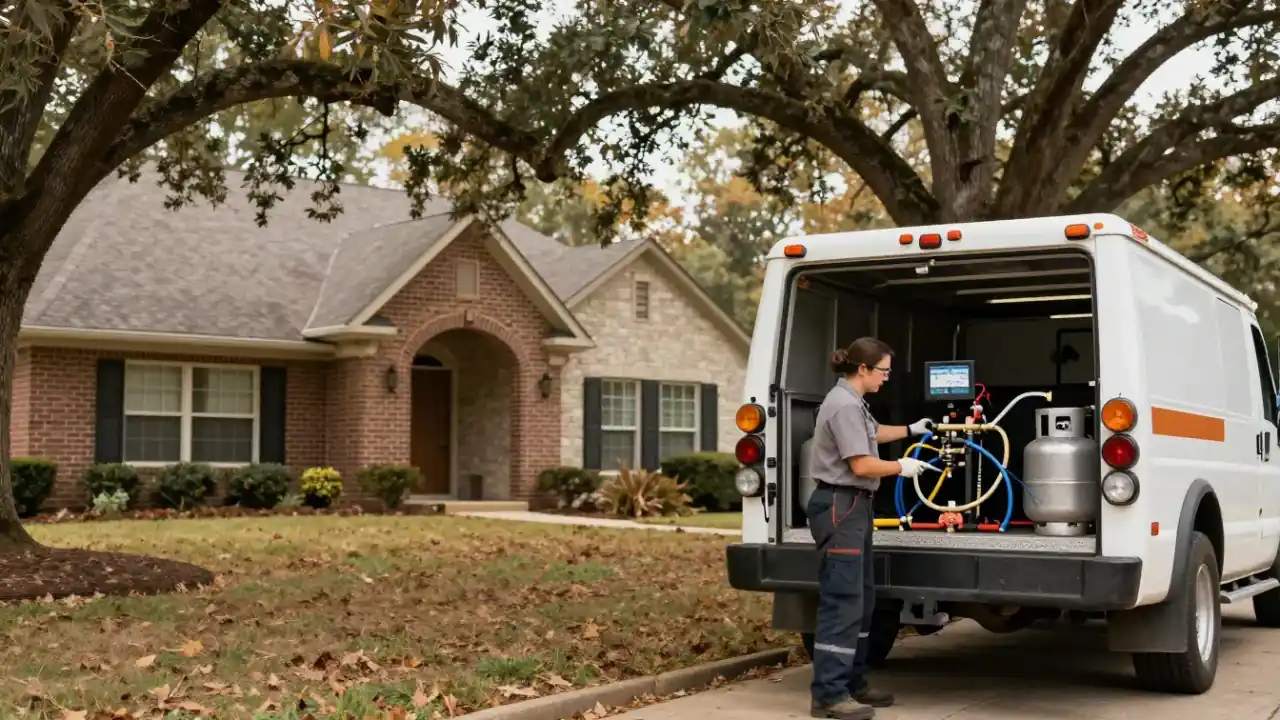
Here is how we treat every installation visit — no surprises, just straight work.
“We show you the full plan — route, materials, and itemized cost — and do not start until you approve it.”
Clear Communication
On every visit
“We give you an itemized estimate before we start, and we explain any change before it happens — no surprise line items.”
Honest Estimates
On every job
“We pressure-test every new line and check each joint before gas flows — verified safe, not assumed safe.”
Thorough Testing
Before we leave
Straight answers about gas line installation in Missouri City — the process, permits, and what affects the cost.
If an inspection or a leak turns up a damaged section, we repair it to code — cut out the bad pipe, install new, and pressure-test the fix.
View Gas Line RepairBefore you buy, after a remodel, or once every few years: a full inspection traces your lines, tests pressure, and reports exactly what we find.
View Gas Line InspectionSuspect a leak on an old line — or a new one? Electronic detection and pressure testing pinpoint the source fast.
View Gas Leak DetectionNew range, dryer, or water heater after the line is in? We connect it with proper shutoffs and sediment traps, then test the whole run.
View Gas Appliance HookupTell us about your project — new construction, remodel, or appliance upgrade — and we will help you plan the gas line work during business hours.
Phone
(281) 343-3759Address
2209 Texas Pkwy, Missouri City, TX 77489, United States, Missouri City, Texas
Hours
Mon–Fri: 7AM – 7PM
Sat: 8AM – 4PM
Sun: Emergency Only
Call for urgent service needs