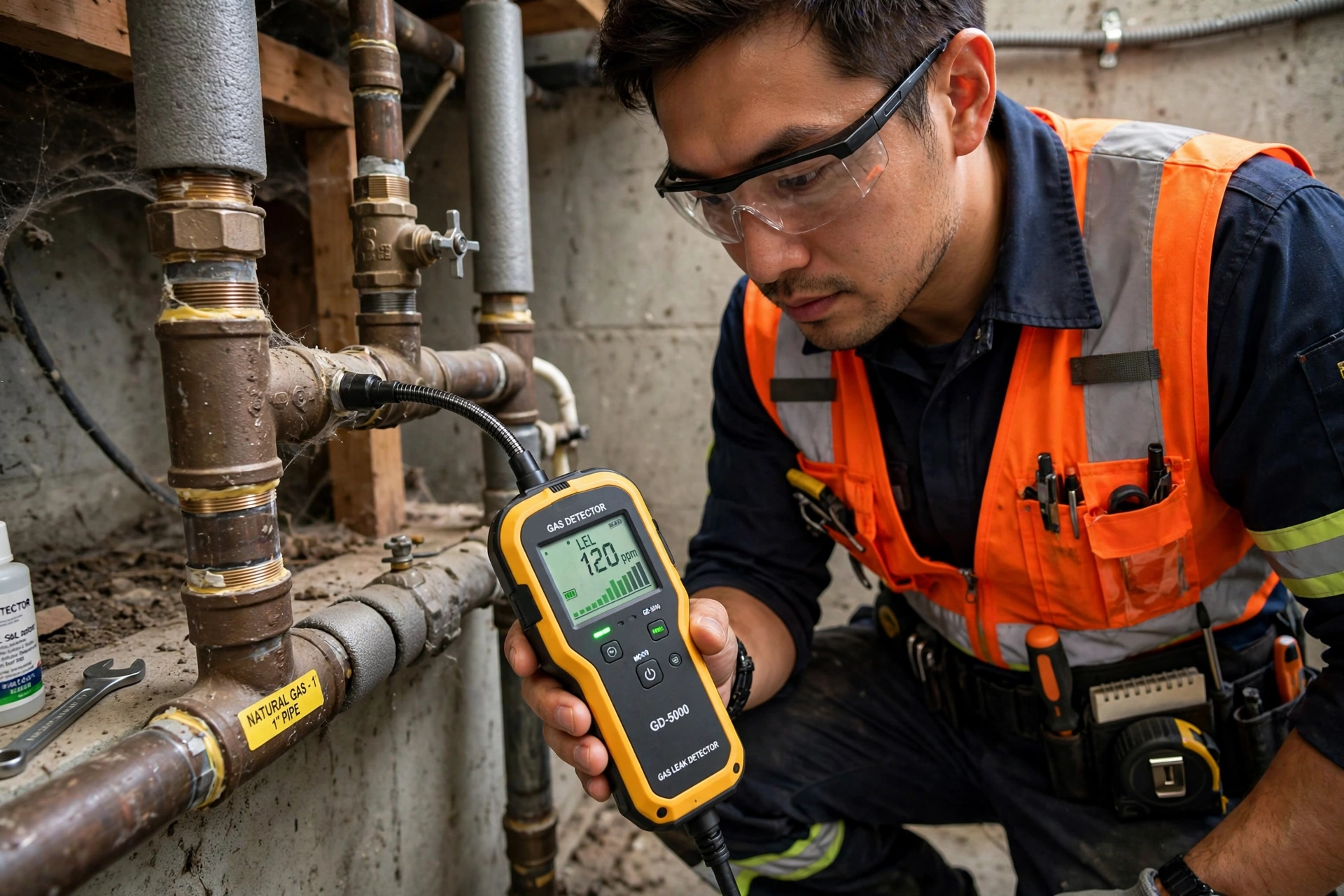
Repeat leak repairs
If you have paid for leak repairs twice in a few years — especially in different spots — the system is telling you the pipe itself is failing, not just one joint. Each new leak is a preview of the next one.
A lot of Missouri City homes are running gas through pipe installed decades ago. Here is how we decide — with you, looking at the actual pipe — whether a targeted repair or a full replacement is the right call.
Not every aging gas line needs full replacement, and any contractor who defaults to re-piping everything is selling, not diagnosing. Our rule is simple: if the pipe is generally sound and the problem is local — one bad joint, one corroded section, one damaged fitting — we repair the section. If the system has widespread corrosion, multiple previous repairs, or pipe material that has reached the end of its reliable life, replacement costs less over five years than a drip-feed of emergency calls.
The inspection decides. We walk the whole system — exposed interior runs, the meter assembly, exterior piping, and buried yard lines — and we pressure-test it. What we find goes into a written assessment with photos: this section is solid, this fitting is weeping, this run is paper-thin. You see what we see, and the recommendation follows the evidence.
Age is a factor but not the verdict. A forty-year-old black iron run in a dry wall cavity can outlast a twenty-year-old line buried in wet clay. Material, environment, and maintenance history matter more than the birthday. That is why we test instead of guessing.
Any one of these deserves a professional look. Two or more together usually point toward replacement.
If you have paid for leak repairs twice in a few years — especially in different spots — the system is telling you the pipe itself is failing, not just one joint. Each new leak is a preview of the next one.
Light surface rust on a fitting is cosmetic. Flaking, pitting, or rust you can crumble with a fingernail across long runs means the pipe wall is thinning. In our humidity, exterior and crawl-space piping ages fastest.
Homes built before the nineties often run galvanized steel gas pipe, which corrodes from the inside out. You cannot see the worst of it — but pressure tests and the pipe's age tell the story.
One weak appliance is an appliance problem. Every appliance running weak — burners that will not fully light, a water heater that cycles oddly — can mean the main run is restricted by internal corrosion.
Opening walls for a kitchen or addition is the cheapest moment to replace aging gas pipe. Doing it while the walls are open costs a fraction of opening them twice.
A pool heater, an outdoor kitchen, or a garage apartment for extended family can push an old system past what it was sized for. Replacement lets us size the new system for the home you have now, not the one built in 1982.
Replacement is only as good as the material going in. For interior runs in Missouri City homes, we typically use corrugated stainless steel tubing (CSST) or black iron, chosen per run — CSST where flexibility and fewer joints matter, black iron where rigidity and protection count. Every CSST installation gets proper bonding, which matters enormously in a lightning-prone region like ours; an unbonded CSST run is a lightning-strike fire risk, and we treat bonding as non-negotiable.
For buried yard lines, polyethylene (PE) pipe is the modern standard — it does not corrode, it flexes with our shifting clay instead of fighting it, and heat-fused joints are as strong as the pipe itself. Old buried steel gets abandoned in place or pulled, and the new PE run goes in at proper depth with tracer wire so it can be located later.
The meter assembly and exterior fittings get corrosion-resistant treatment: coated pipe, proper hangers, and drip legs where condensate collects. Exterior gas piping in Southeast Texas lives a hard life — we build it for that life instead of installing interior-grade work outside and hoping.
A full replacement sounds disruptive. Done right, it is a choreographed few days — here is the sequence.
01
We map every gas run, test the system, and give you a written plan: what gets replaced, what material goes where, the permit, and the timeline. You approve the whole picture before anything is cut.
02
We pull the permit and coordinate with the gas utility on meter work or service changes. Inspection slots get booked ahead so the project never sits waiting on a calendar.
03
We do not leave you without gas for the whole job. Replacement happens in phases — new sections go in and get tested while the old system still feeds the house, then we cut over in one planned window, usually hours, not days.
04
The new system is pressure-tested to code and inspected by the city. You get the test record and the signed permit card — proof the work is right, useful at resale.
05
We walk you through the new system: where the shutoffs are, what was replaced, what material was used. You keep an as-built sketch so the next contractor — or the next homeowner — knows exactly what is in the walls.
Every home's story is a little different, but these are the replacement jobs we do on repeat across Missouri City.
Problem
A seventies or eighties ranch still running its original galvanized pipe, with two leak repairs in the last three years and rust blooming on every exposed fitting. We replace the system with modern materials sized for today's appliances.
Our Fix
Full re-pipe, usually phased over a few days. The new system gets bonded CSST or black iron inside and PE underground — and a pressure test record for your files.
Problem
You are opening walls for a kitchen renovation or adding a primary suite, and the exposed gas pipe is old enough to vote. Replacing it now — while everything is open — avoids opening finished walls later.
Our Fix
We coordinate with your remodel schedule so the gas work lands in the right phase and the walls close on time.
Problem
Extended family moved in — or is about to — and the plans include a garage apartment, an outdoor kitchen, or a pool heater. The old half-inch runs were never sized for this life.
Our Fix
We size the replacement for the household you actually have: the ADU, the extra water heater, the grill line, all of it on one correctly calculated system.
Problem
The yard line to the house or the pool heater is original steel, and the yard shows the classic signs — dead grass strips, faint odor after rain. Buried steel in wet clay has a finite life.
Our Fix
We abandon or pull the steel and run new PE pipe at proper depth with tracer wire, bored or trenched with your landscaping in mind.
Missouri City has a lot of multigenerational households — grandparents, parents, and kids under one roof, sometimes with a garage apartment or a converted space for extended family. That way of living puts real demand on a gas system designed for a 1980s nuclear family: more hot water, more cooking, sometimes a second laundry. When the household grows, the gas system has to grow with it, and a piecemeal approach — tapping one more appliance into an already-tired system — is how pressure problems start.
If you are planning an addition, a garage apartment, or a big remodel, bring the gas assessment into the planning early. Sizing the replacement for the finished household — every water heater, every range, the outdoor kitchen you want next year — costs little more than sizing for today, and it means you do it once. We will look at your plans, run the load math for the finished home, and design the replacement around it.
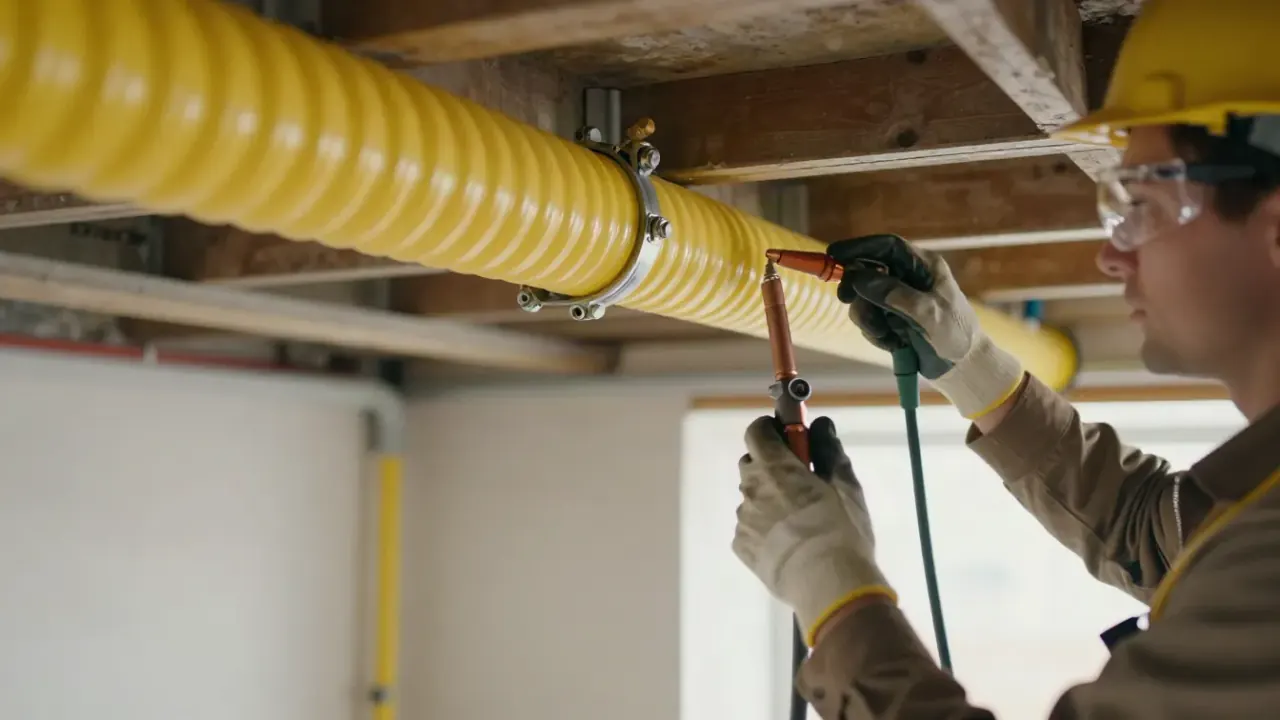
A replacement is an investment — here is what it actually buys.
Decades of quiet
New pipe, modern materials, correct sizing — the gas system stops being something you think about. No more scheduling life around the next leak repair.
Capacity for the life you live
Sized for your actual household and your actual appliances, including the additions and outdoor projects on the horizon — not the 1982 blueprint.
A system that passes scrutiny
Permitted, inspected, pressure-tested, documented. When you sell, the buyer's inspector finds a modern system with paperwork instead of a question mark.
Built for this climate
Corrosion-resistant exterior work, PE underground that flexes with clay soil, bonded CSST inside — materials chosen for Fort Bend County, not for anywhere.
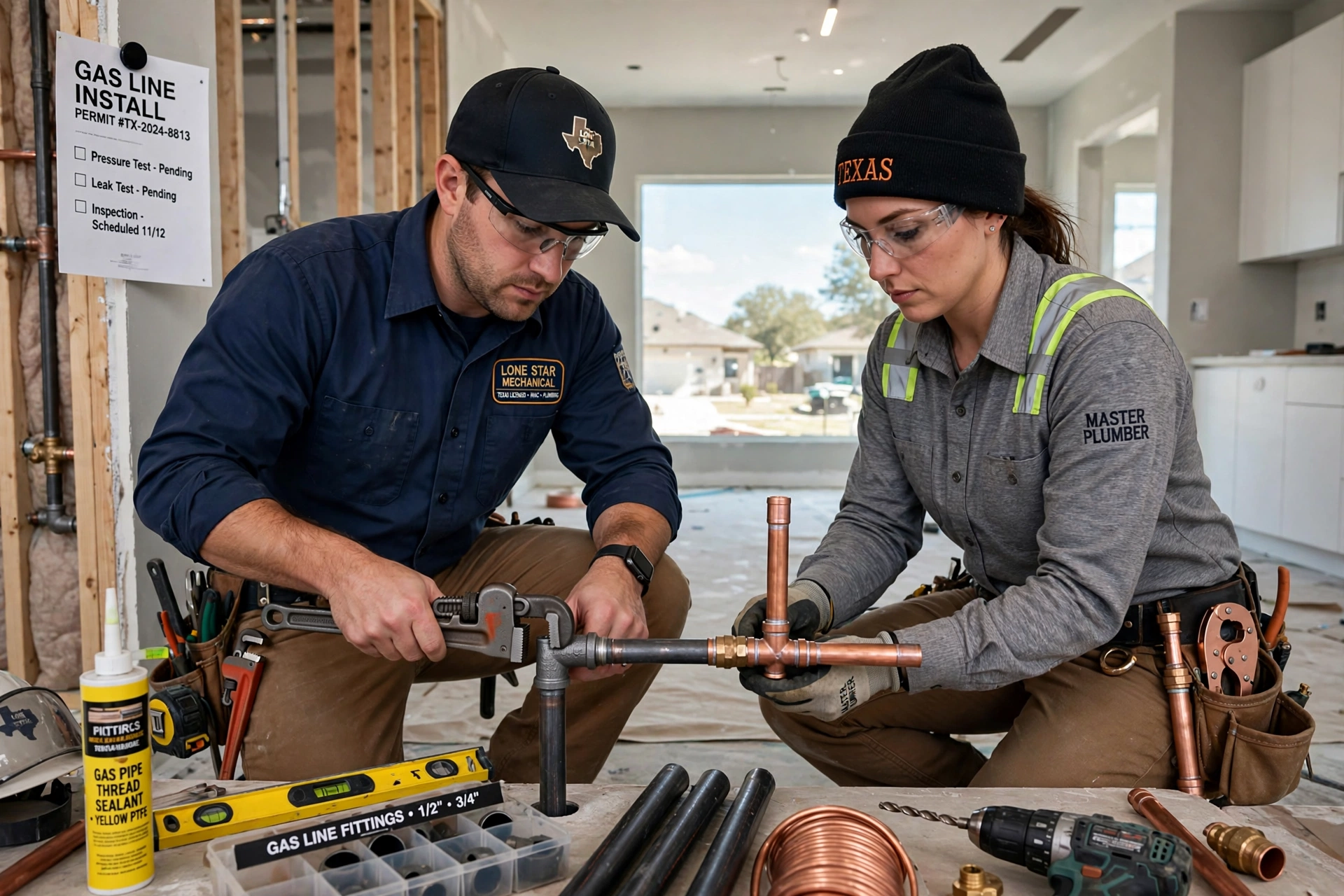
Gas work rewards the careful and punishes the hurried. Our technicians work Missouri City gas systems every day — the same clay soil, the same housing stock, the same Gulf Coast weather — and that repetition builds judgment you cannot get from a manual.
Real experiences from customers who chose our Gas Line Repair services.
"Helpful guidance and uncomplicated service from first contact to job completion."
"Everything was described in everyday terms and handled carefully."
"Easy to reach, easy to schedule, and the visit went as planned."
Get an assessment, not a sales pitch. We inspect the whole system and pressure-test it, then show you what we found — photos included. Local repairs make sense when the pipe is generally sound; replacement makes sense with widespread corrosion, repeat leaks in different spots, or pipe material past its reliable life. The evidence decides.
Most Missouri City homes take two to four working days, phased so you are not without gas the whole time. Larger homes or complex buried-line work can run longer. You get a written timeline before we start, and we hit it.
Only for the planned cutover window — usually hours, not days. New sections go in and get tested while the old system still feeds the house, then we switch over in one coordinated step. We schedule the cutover with you, not around you.
It depends on the run: bonded CSST or black iron for interior work, polyethylene (PE) for buried lines. We choose per run based on code, the application, and Gulf Coast conditions — and we explain each choice before we install it.
Usually yes, and it is the economical moment to do it. We size the new system for the finished household — the apartment's water heater and range, plus everything else — so you do the work once instead of tapping an old system past its capacity.
Yes, in Missouri City and throughout Fort Bend County. We pull the permit, do the work to code, and coordinate the inspection. You keep the signed permit card and pressure-test record.
CSST is safe when it is installed to code — and proper bonding is the critical part, especially in lightning-prone Southeast Texas. We bond every CSST installation to the electrical grounding system, which is what the code requires and what keeps it safe. Unbonded CSST is the problem you have heard about; we never install it that way.
New gas runs for homes and additions around Missouri City, sized for your appliances and routed to stand up to our shifting clay soil.
View Gas Line InstallationSystem-by-system checks that catch corrosion, loose fittings, and code issues before they turn hazardous — smart before buying or after a big storm.
View Gas Line InspectionElectronic detection that traces odors and suspected leaks to the exact fitting or pipe section — indoors, at the meter, and along buried yard lines.
View Gas Leak DetectionSafe connections for ranges, dryers, water heaters, grills, and fire features — right connectors, proper shutoffs, and a pressure check at each appliance.
View Gas Appliance HookupThinking about replacement — or just tired of repeat repairs? Tell us about the house and its history. We will respond during business hours and set up an assessment at a time that works for you.
Phone
(281) 343-3759Address
2209 Texas Pkwy, Missouri City, TX 77489, USA, Missouri City, Texas
Hours
Mon–Fri: 7AM – 7PM
Sat: 8AM – 4PM
Sun: Emergency Only
24/7 Emergency Available