01
Do not light anything
No matches, no lighters, no flipping light switches, no starting cars in the garage. Any spark can ignite accumulated gas. Leave electrical things exactly as they are.
Not every gas problem is an emergency — but the ones that are do not negotiate. Here is how to tell, what to do first, and what happens when we arrive.
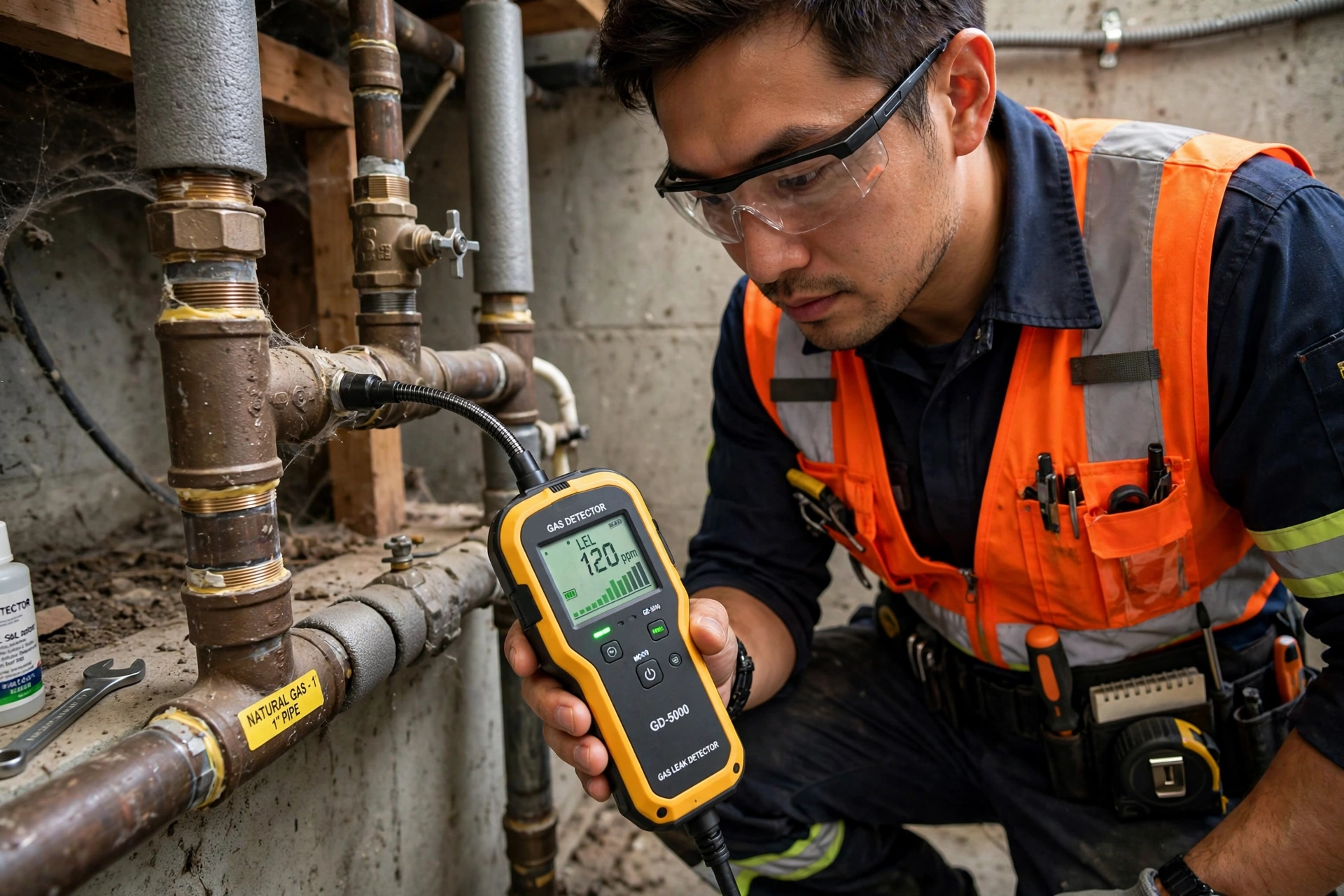
Any suspected gas leak is an emergency. Full stop. If you smell the rotten-egg odor of mercaptan, hear hissing near a gas line or appliance, see dead vegetation in a line over a buried pipe, or your carbon monoxide detector is alarming — that is an emergency call, not a next-week appointment.
Physical damage counts too. A fence crew hits a yard line. Storm debris cracks an exposed pipe. A contractor nicks a line during a remodel. A car clips the meter. Any impact to gas piping or the meter assembly is an emergency until a professional verifies it is not leaking — damage you cannot see can still be leaking.
When in doubt, call. We would rather roll out at 2 AM to find a false alarm than have someone sit on a real leak until morning because they did not want to bother anyone. Gas does not grade on politeness.
Memorize this sequence. In the moment, you will not want to be deciding — you will want to be doing.
01
No matches, no lighters, no flipping light switches, no starting cars in the garage. Any spark can ignite accumulated gas. Leave electrical things exactly as they are.
02
People and pets leave the building immediately. Do not stop to open windows on your way — that is a myth from another era and it wastes the seconds that matter. Just leave.
03
Once you are out and away from the building, call 911 if the situation feels immediately dangerous, then call us at (281) 343-3759. Do not call from inside the house.
04
Not for the dog, not for your phone, not to double-check. Firefighters go back in with breathing gear. You do not have breathing gear.
05
We will locate the leak, stop it, and verify the building is safe before anyone re-enters. The all-clear comes from testing, not from the smell fading.
When the phone rings at midnight, it is usually one of these. We are equipped for all of them.
The classic: rotten-egg smell in the house, at the meter, or in the yard. We respond fast, locate the source with electronic detection, and do not leave until the system is verified safe.
Fence posts, landscaping, and construction hit buried lines more often than anyone admits. Storm debris damages exposed piping. We make the scene safe, repair the damage, and pressure-test before restoring service.
A clipped or leaning meter — cars, mowers, and falling limbs are the usual suspects — is an emergency until proven otherwise. We secure it, check for leaks at every joint, and coordinate with the utility on meter resets.
A range or water heater leaking at its connection, a flexible connector that failed, a pilot issue filling a utility room with gas. We isolate the appliance, repair the connection, and verify before it goes back in service.
After hurricanes and major floods, we run emergency calls for shifted buried lines, water-damaged meter assemblies, and buildings that took water. Do not restore service yourself — get the system verified first.
A CO alarm is a different emergency with overlapping causes — often a venting or combustion problem rather than a pipe leak. We treat it with the same urgency and diagnose the actual source.
Hurricane season writes its own chapter of gas emergencies. Floodwater is the big one — it saturates the clay soil, the soil moves, and buried gas lines move with it, stressing joints that held fine for twenty years. After any significant flooding, buried lines in the affected area deserve suspicion until tested, especially older steel runs.
Wind does the visible damage: tree limbs on meter assemblies, patio covers torn into exterior piping, debris battering the exposed runs along a house. And evacuations create a special case — homes that sat empty with gas on, or that had service shut off and need verification before the utility restores it.
Our storm protocol is straightforward: we prioritize odor calls and visible damage first, then work through verification requests for buildings that took water. If your home flooded and the gas was on, call us before you turn appliances back on — a pressure test now is cheap compared to what a leak costs later.
The first minutes are about safety, not paperwork. We confirm everyone is out, check the scene with detection equipment, and isolate the gas — at the appliance valve, the house valve, or the meter — whatever stops the leak fastest. Only when the immediate danger is controlled do we start diagnosing.
Then we find it. Electronic detection narrows the leak to the joint, fitting, or pipe section. We show you what we found and explain the repair before we make it — even at 3 AM, you deserve to know what is happening to your house. Most emergency repairs are completed on the spot: remade connections, replaced fittings, repaired sections.
Before we leave, we verify. The repaired system gets pressure-tested, the area gets re-checked with detection equipment, and you get told — plainly — what happened, what we did, and what to watch. Emergency work does not get a pass on verification just because it happened at night.
The 2 AM repair stops the danger. Sometimes it is also the whole fix; sometimes it is the first step.
Problem
The leak was local — a failed connector, one bad joint — and the rest of the system tested fine. The emergency repair is the complete repair, and we tell you so.
Our Fix
No upsell, no manufactured urgency. The pressure test after the repair is your proof it is done.
Problem
The emergency repair fixed tonight's leak, but the inspection found widespread corrosion or multiple weak points. Tonight is handled; the system needs a bigger conversation.
Our Fix
We will give you an honest assessment with photos and a written plan — repair strategy or replacement — for you to decide on in daylight, without pressure.
Problem
Floodwater shifted the yard line and the emergency repair stabilized it. Buried lines that moved once have shown they can move.
Our Fix
We recommend replacing the affected buried section with flexible PE pipe at proper depth — and we will explain why that is different from just patching the joint that failed.
Problem
The damage extends to the meter or the utility's service line — our side is secure, but the utility has to do their part before full service is restored.
Our Fix
We coordinate directly with the utility, document our side for their records, and stay on it until your service is fully back.
Gas work rewards the careful and punishes the hurried. Our technicians work Missouri City gas systems every day — the same clay soil, the same housing stock, the same Gulf Coast weather — and that repetition builds judgment you cannot get from a manual.
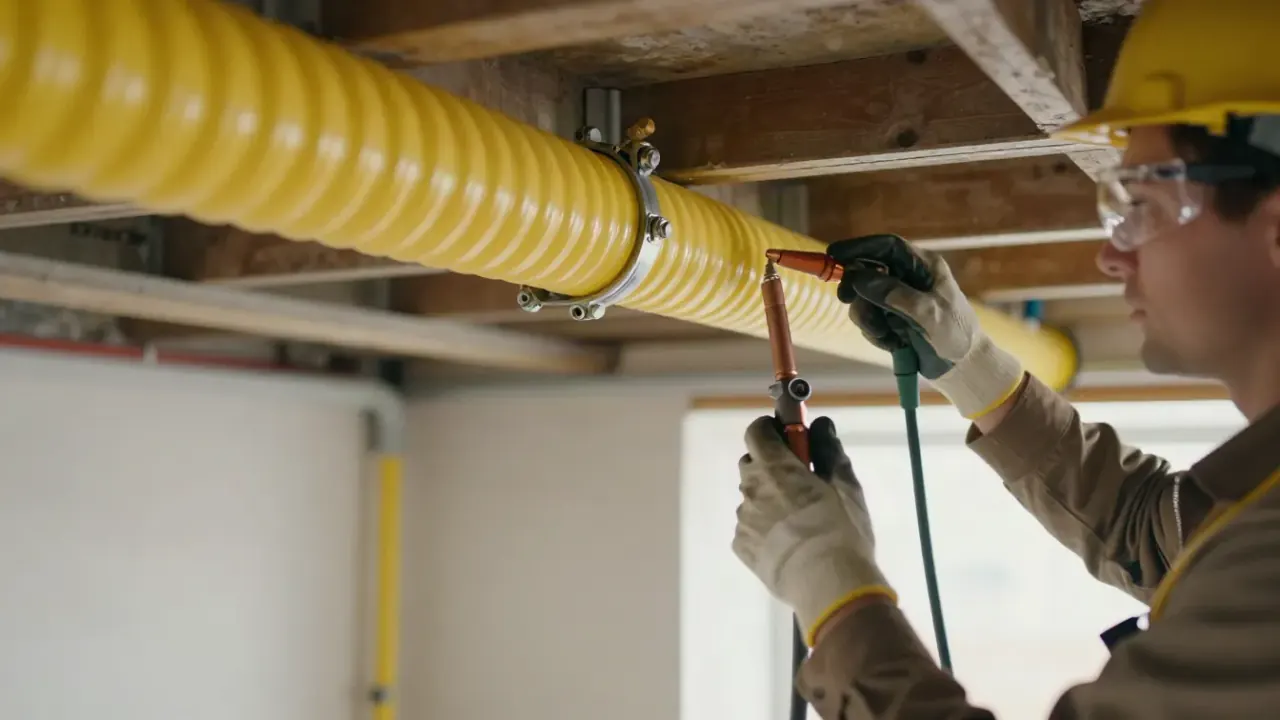
Gas work rewards the careful and punishes the hurried. Our technicians work Missouri City gas systems every day — the same clay soil, the same housing stock, the same Gulf Coast weather — and that repetition builds judgment you cannot get from a manual.
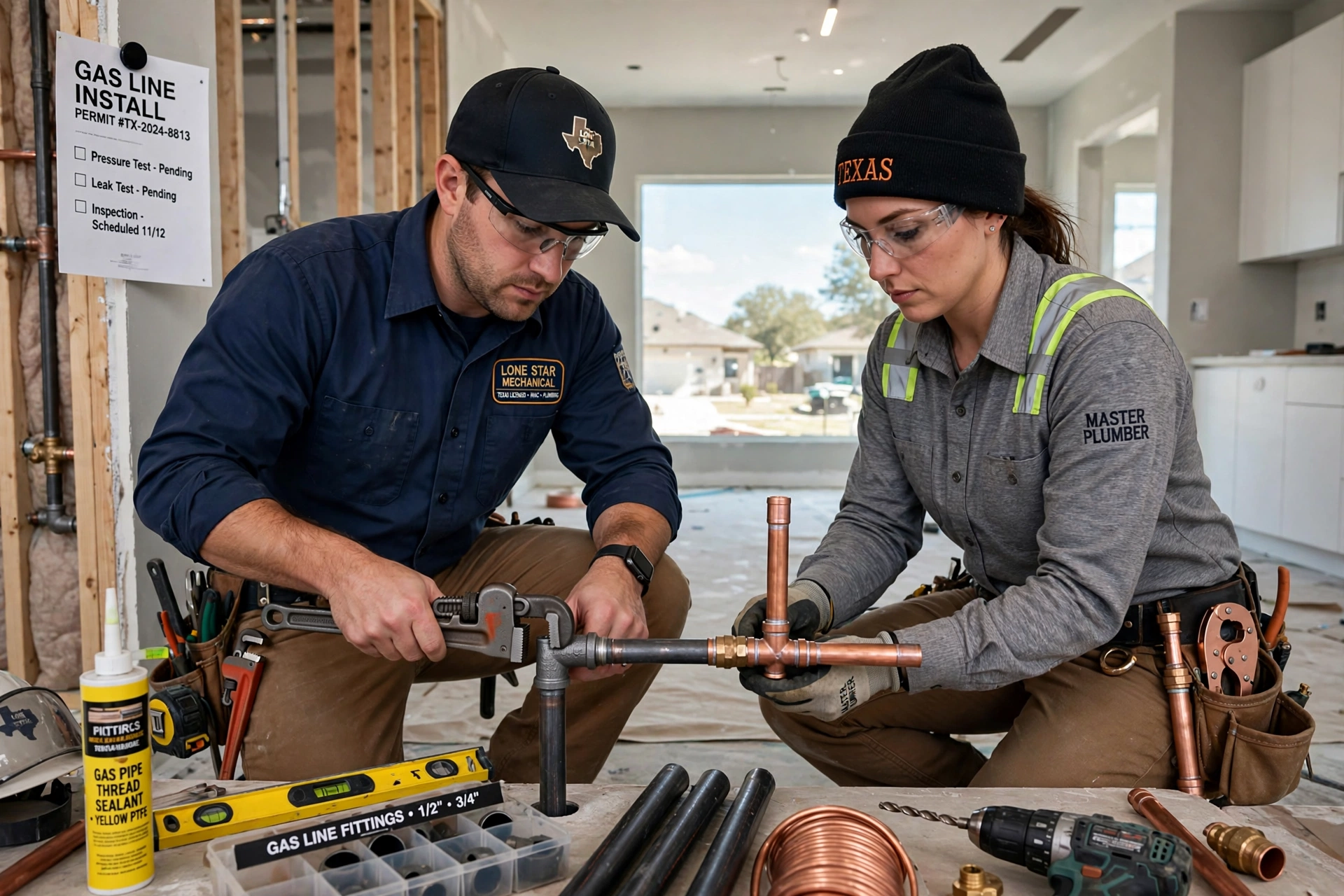
Real experiences from customers who chose our Gas Line Repair services.
"Helpful guidance and uncomplicated service from first contact to job completion."
"Everything was described in everyday terms and handled carefully."
"Easy to reach, easy to schedule, and the visit went as planned."
Do not light anything or flip switches. Get everyone — people and pets — out of the building immediately. From a safe distance outside, call 911 if it feels immediately dangerous, then call us. Do not go back inside until professionals verify it is safe.
Yes. Gas emergencies do not schedule themselves, so neither do we. Call (281) 343-3759 any time — nights, weekends, holidays. A suspected leak is always worth the call.
If there is immediate danger — strong odor, hissing, visible damage — call 911 from outside first. Then call us. We handle the house-side diagnosis and repair; we also coordinate with the utility when the meter or service line is involved.
Response time depends on where you are in our service area and current call volume, but suspected leaks jump the queue — always. When you call, we will give you a straight estimate and safety instructions for while you wait.
We diagnose first and explain before we repair — even in the middle of the night, you will know what is wrong and what the fix costs before we do it. Emergency work carries an after-hours rate, and we will tell you exactly what it is on the phone.
Yes. Odors fade for many reasons — wind, ventilation, the leak being intermittent — and none of them mean the leak fixed itself. A leak that comes and goes is still a leak. Get it checked.
No — let us do the verification. We pressure-test the repaired system and check the area with detection equipment before clearing it. Turning gas back onto an unverified system is how small problems become big ones.
New gas runs for homes and additions around Missouri City, sized for your appliances and routed to stand up to our shifting clay soil.
View Gas Line InstallationSystem-by-system checks that catch corrosion, loose fittings, and code issues before they turn hazardous — smart before buying or after a big storm.
View Gas Line InspectionElectronic detection that traces odors and suspected leaks to the exact fitting or pipe section — indoors, at the meter, and along buried yard lines.
View Gas Leak DetectionSafe connections for ranges, dryers, water heaters, grills, and fire features — right connectors, proper shutoffs, and a pressure check at each appliance.
View Gas Appliance HookupFor emergencies, call (281) 343-3759 right now — do not use this form. For non-urgent questions after an incident, or to schedule follow-up work, send us a message and we will respond during business hours.
Phone
(281) 343-3759Address
2209 Texas Pkwy, Missouri City, TX 77489, USA, Missouri City, Texas
Hours
Mon–Fri: 7AM – 7PM
Sat: 8AM – 4PM
Sun: Emergency Only
24/7 Emergency Available