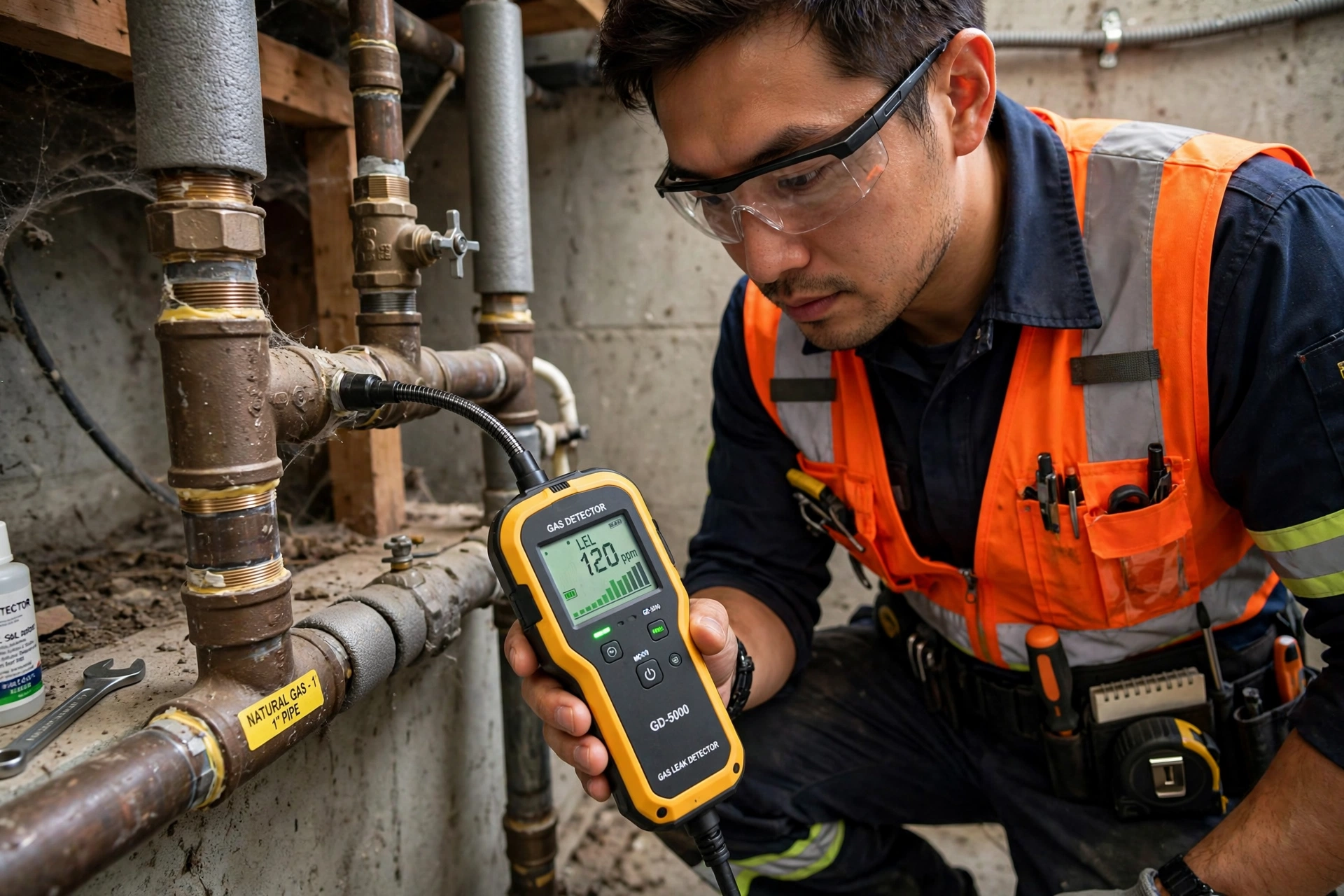
Thorough Inspections
We conduct detailed inspections to identify any issues with your gas lines, ensuring that all potential problems are addressed.
Our gas line repair service includes comprehensive inspections, repairs, and necessary replacements to ensure your gas lines are safe and functional.
We conduct detailed inspections to identify any issues with your gas lines, ensuring that all potential problems are addressed.
Our team specializes in repairing leaks, using high-quality materials to ensure a long-lasting solution.
We ensure all repairs comply with local codes and safety regulations, providing peace of mind for homeowners.
After repairs, we perform safety tests to ensure your gas lines are leak-free and functioning correctly.
Missouri City evenings are made for the patio. Even in a Southeast Texas winter, nights in the 30s and 40s are exactly what fire pits and patio heaters are for — and both are far better on a permanent natural gas connection than on portable propane. A gas fire pit on the house supply lights with the turn of a key or the flip of a switch, burns cleanly without sparks or ash, and runs as long as you want to sit outside. No hauling tanks, no mid-evening flame-outs, no wood smoke drifting over the fence.
Patio heaters come in two broad families: freestanding mushroom heaters that usually run on portable tanks, and permanently mounted infrared or post heaters on a fixed gas line. The fixed units put out far more heat, never need refueling, and stay put in the wind. Under a covered patio, wall- or ceiling-mounted infrared heaters are popular because they warm people and furniture directly instead of heating the night air, and they keep the floor clear for seating.
Fire pits, torches, and heaters share one planning requirement: honest load math. A large fire pit burner can draw 65,000 to 125,000 BTU, a commercial-style patio heater another 40,000 to 50,000, and a run of tiki torches adds its own steady draw. If the same gas run also feeds a grill, the total climbs fast. We add up the combined load of every planned outdoor appliance and size the pipe so the fire pit holds a full, even flame with the grill lit.
A fire pit gas line typically runs underground from the house to the pit, then up through the pit structure to the burner. The shutoff valve belongs in an accessible spot outside the pit — a key valve on the side wall or a valve box set in the surrounding hardscape. You should be able to kill gas to the pit in seconds without reaching over the burner, and everyone in the household should know where that valve is.
A pool heater is the difference between a pool you use four months a year and one you use eight. Around Houston, plenty of homeowners heat from March through October and keep the spa steaming all winter, and natural gas is the usual fuel because gas heaters warm water fast and keep up on cool nights when heat pumps struggle. But pool heaters are gas hogs: a typical residential unit draws 200,000 to 400,000 BTU, several times what a grill pulls. That single fact drives every decision about the gas line.
Because of that load, a pool heater almost always needs its own dedicated gas run sized specifically for it. Sharing a line with the furnace and water heater is a recipe for pressure drop — the heater starves, the water stays lukewarm, and the burners soot up from running lean. We take the heater's input rating, measure the distance from the meter to the equipment pad, and size the pipe so the heater gets full pressure even while the rest of the house is drawing gas.
Routing to the equipment pad is its own puzzle. The pad usually sits at the far corner of the yard, which means the longest trench on the property — often crossing patios, planting beds, and irrigation lines. We plan the route to minimize hardscape cuts, coordinate the final stub location with the pool equipment installer, and position the stub so the heater's gas connection lands cleanly, without awkward bends or strained flexible connectors.
Sizing starts with two numbers: the heater's BTU input rating and the length of the run from the gas meter. Both matter because gas loses pressure as it travels — the longer the run, the larger the pipe needed to deliver the same energy at the far end. A 400,000 BTU heater 80 feet from the meter needs substantially larger pipe than the same heater sitting 20 feet away. We run the calculation for every pool heater job rather than guessing, because an undersized line is the number one reason pool heaters never reach temperature.
Every outdoor gas line is either buried or run above ground, and each approach has situations where it is clearly the right call. Buried runs win on appearance — nothing visible except the stub where the pipe emerges — and they are protected from mowers, string trimmers, and the general chaos of an active backyard. Above-ground runs win on cost and access: no trenching, no sod repair, and every inch of pipe stays visible for inspection. Most Missouri City projects end up a mix, such as a buried main with short above-ground risers at each appliance.
The path usually decides. Crossing open lawn? Bury it. Running along the back of the house from the meter to a grill ten feet away? An above-ground run on stand-off brackets, painted to match the siding, is clean and simple. Crossing a patio slab that is already poured? That means either boring underneath or going around — and going around above ground along a fence line or foundation wall is often the practical answer.
Local conditions factor in as well. Buried pipe in Southeast Texas clay deals with soil that swells and shrinks with the seasons, so bedding and backfill technique matter. Above-ground pipe deals with intense sun, Gulf humidity, and the occasional hailstorm, so material choice and protective coatings matter — bare steel left exposed in this humidity corrodes faster than most homeowners expect. We walk through the trade-offs for your specific route and recommend the approach that will look good and last on your property.
Buried outdoor gas piping has to survive decades underground in Fort Bend County's expansive clay. That starts with the right material — typically polyethylene pipe or properly coated and wrapped steel — installed at the correct depth on a bed of clean fill rather than sharp native rock. Coating integrity is everything on buried steel: the wrap has to survive handling and installation intact, which is why the pipe is bedded carefully instead of dragged through the trench.
01
What we do: Contact us immediately for gas line repair in Missouri City. Our technicians will locate and fix the leak quickly.
→ This ensures your home is safe and eliminates the risk of gas exposure.
02
What we do: Our team will inspect the gas lines and connections to identify any issues affecting performance.
→ You'll enjoy improved efficiency and reliability from your gas appliances.
03
What we do: We provide gas line servicing in Missouri City to ensure safe and efficient installations.
→ This guarantees that your new appliances operate safely and effectively.
Gas Line Repair in Missouri City requires an understanding of local building codes and common issues faced by residents. The humid climate can lead to corrosion in gas lines, making regular inspections essential. Our team is familiar with the unique challenges of the area, ensuring effective and compliant repairs. With gas line servicing in Missouri City, we address issues promptly to maintain safety and efficiency.
Bridlewood
This neighborhood often experiences gas line issues due to older infrastructure.
Parker Square
Residents here benefit from our prompt gas line repair services, especially during extreme weather.
Lake Forest
We provide thorough inspections to ensure safety in homes with aging gas lines.
High humidity levels in summer
This can accelerate corrosion in gas lines, necessitating regular inspections and repairs.
Frequent temperature fluctuations in winter
These fluctuations can lead to pipe expansion and contraction, increasing the risk of leaks.
Call Gas Line Repair Missouri City TX at (281) 343-3759 to plan your outdoor gas line. We will walk the yard with you, work out the appliance layout and pipe sizing, and explain exactly what the project involves.
Our gas line repair services address common issues that can pose risks to your home and family.
Problem
Ignoring gas leaks can lead to dangerous situations, including explosions or health hazards from inhalation.
Our Fix
Our team quickly identifies and repairs leaks, ensuring your gas lines are safe and compliant with local regulations.
Problem
Faulty connections can lead to inefficient appliance operation and increased energy costs.
Our Fix
We repair and replace faulty connections, improving appliance efficiency and reducing energy bills.
Problem
Pressure drops can affect appliance performance, leading to inadequate heating or cooking.
Our Fix
We diagnose and fix pressure issues, ensuring your gas appliances operate at optimal levels.
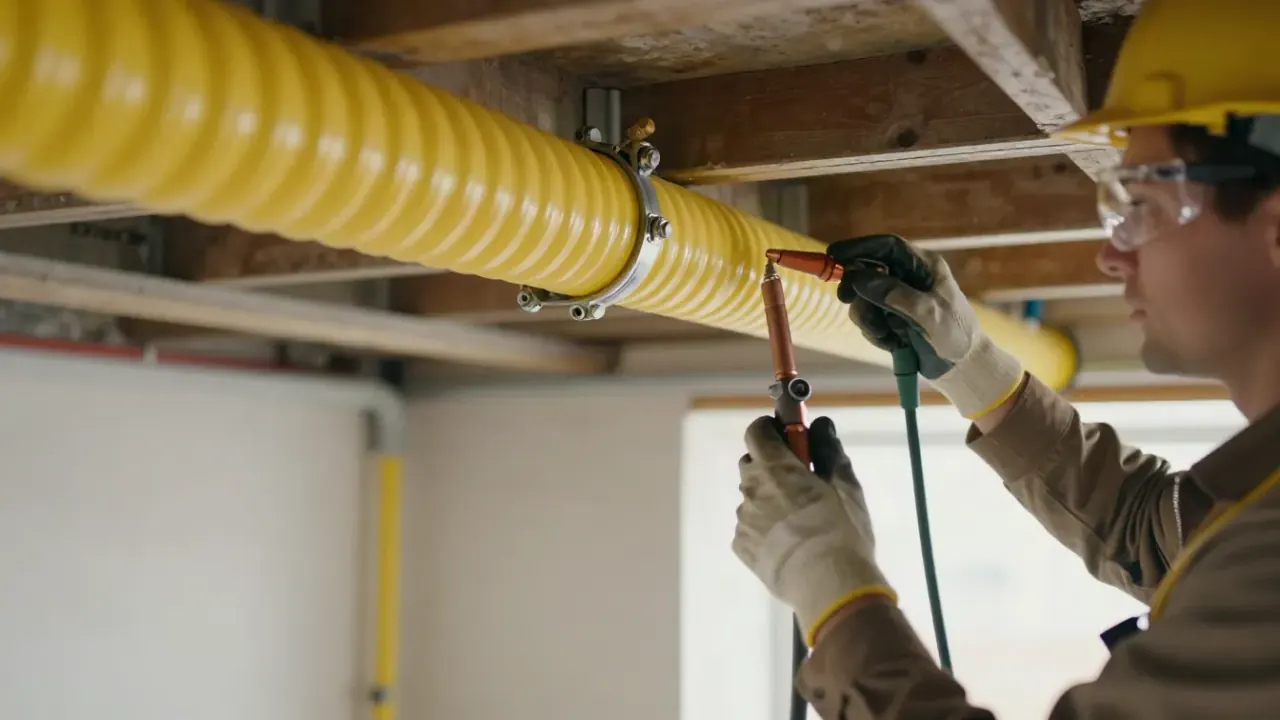
Investing in gas line repair offers numerous advantages that enhance safety and efficiency.
Enhanced Safety
Regular gas line repair significantly reduces the risk of dangerous gas leaks. By addressing potential issues early, homeowners can prevent hazardous situations and ensure their family's safety.
Increased Efficiency
Properly functioning gas lines improve the efficiency of your appliances. This can lead to lower energy bills and a more effective heating system, especially during the colder months in Missouri City.
Longer Lifespan
Timely gas line servicing in Missouri City can extend the lifespan of your gas appliances. By addressing wear and tear, you ensure that your systems function optimally for years.
Compliance with Codes
Gas line repairs ensure compliance with the National Fuel Gas Code (NFGC) and local regulations. This is crucial for avoiding fines and ensuring your home passes inspections.
Gas line repair costs in Missouri City typically range from $180 to $450 in 2026, depending on the complexity of the repair. Factors such as the extent of damage, materials used, and labor involved can affect the final price. Our transparent pricing ensures you know what to expect before we start any work.
Typical Investment Range
$180 - $450 depending on scope
Our pricing reflects the quality of service and materials used, ensuring long-lasting repairs.
What changes the price
Extent of Damage
More extensive damage requires more materials and labor, increasing costs.
Materials Used
The type of piping and fittings required can impact the overall repair cost.
Labor Intensity
Complex repairs that require more time and expertise will cost more.
Google ★★★★★4.9
Quick response and professional service! They fixed my gas leak within hours. Highly recommend!
Yelp ★★★★★4.8
Excellent service! The team was knowledgeable and friendly. They explained everything clearly.
BBB ★★★★★4.7
Very satisfied with the gas line repair. They were prompt and thorough in their work.
With local experience in gas line repair, our team is equipped with the necessary skills and certifications to handle any gas-related issue.
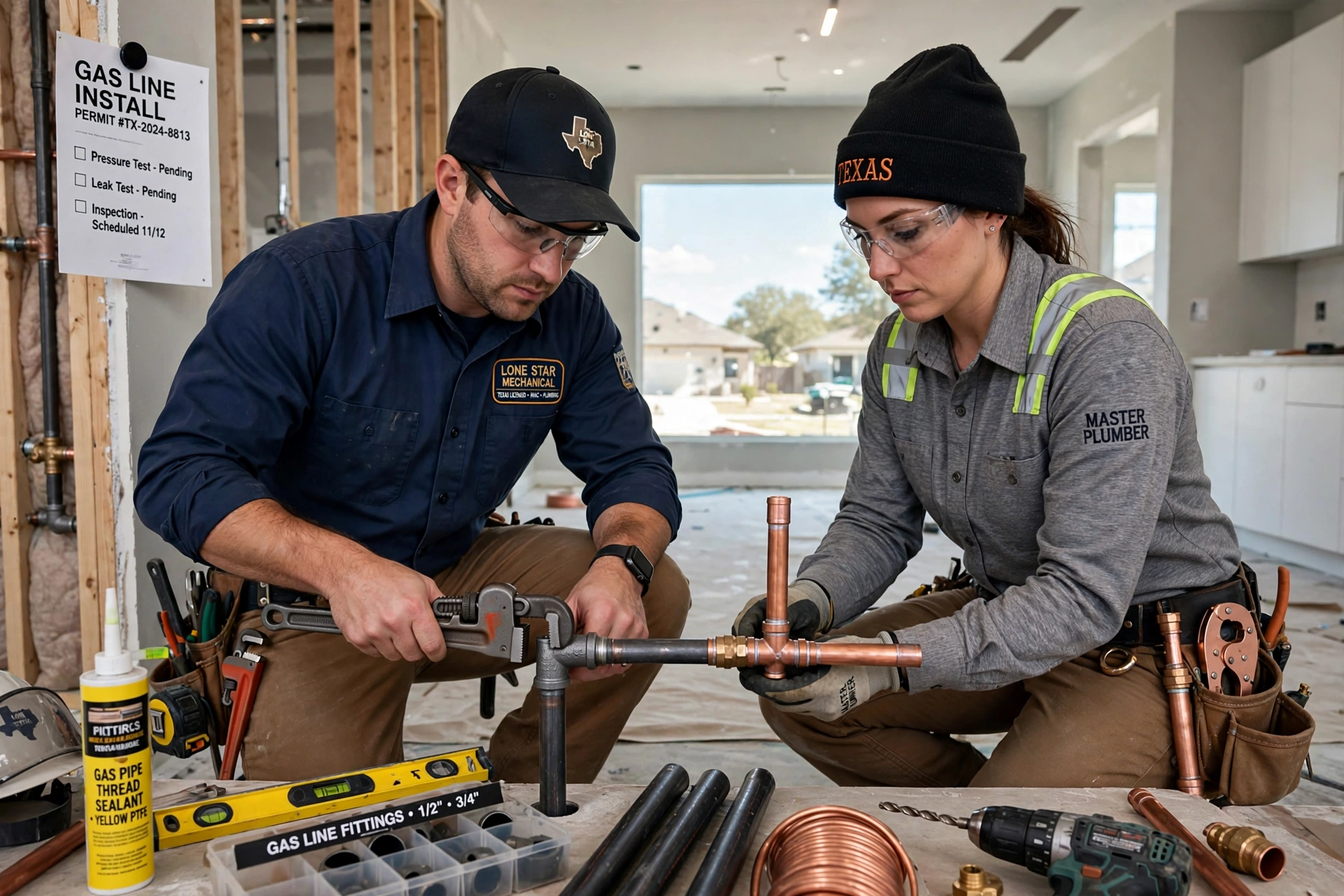
Real experiences from customers who chose our Gas Line Repair services.
“I had a gas leak in my home, and the team responded quickly. They were professional and resolved the issue within hours. Highly recommend!”
Sarah T.
Homeowner, Missouri City
“Their gas line repair service was excellent. They explained everything and worked efficiently. I felt safe knowing my gas lines were in good hands.”
Mark L.
Business Owner, Lewisville
“I appreciated their 24/7 emergency service. When I had a problem late at night, they were there within an hour. Great service!”
Emily R.
Resident, Highland Village
Often, yes — with a natural gas conversion kit made for your specific grill model, since propane and natural gas use different burner orifices. Not every grill is convertible, so check the manufacturer's guidance first. Once the grill is converted, we install the gas stub to match its natural gas requirements.
Distance itself is not the limit — pipe size is. Longer runs simply get larger pipe so full pressure still arrives at the far end. We routinely run lines 50 to 100 feet or more across Missouri City yards to reach pool equipment pads and detached structures; the sizing calculation for distance plus BTU load is what makes it work.
Buried lines look cleaner and stay protected from mowers and trimmers, which makes them the usual choice for crossing lawns to reach grills, fire pits, and pool heaters. Above-ground runs along a foundation or fence work well for short distances and cost less to install since there is no trenching. We recommend whichever approach fits your route, your budget, and how the finished installation will look.
Each appliance needs its own valve and connection point, but one correctly sized main can serve several of them. The main has to carry the combined load of everything likely to run at once — grill plus fire pit plus heater, for example. Individual stubs off a well-sized main is the standard setup.
Gas fire pits are often allowed during burn bans that prohibit wood fires, since they produce no sparks, embers, or ash — but the rules vary by county and municipality and can change with conditions. Always check the current Fort Bend County and City of Missouri City restrictions before using one during dry periods, and follow whatever guidance is posted.
Residential pool heaters typically draw 200,000 to 400,000 BTU, making them the largest gas appliance on most properties — several times the draw of a grill or fire pit. That is why pool heaters get a dedicated, properly sized gas run, and why we verify that your gas meter can supply the added load before installation begins.
Yes, outdoor gas line installations generally require a permit from the City of Missouri City, and the work must pass inspection before the line goes into service. We handle the permit application and coordinate inspections as part of every project, so you do not have to navigate the process yourself.
Yes, and it is one of the smartest moves you can make. Installing a capped stub — or sizing the main run for future appliances — while the trench is already open costs far less than digging a second trench later. Tell us about your long-term plans during the site visit and we will build the system with room to grow.
Our gas line installation service ensures your new gas lines are installed safely and comply with local codes, providing reliable service for your home.
View Gas Line InstallationRegular gas line inspections help identify potential issues before they become serious problems, ensuring the safety and efficiency of your gas systems.
View Gas Line InspectionOur gas leak detection service uses advanced technology to locate leaks quickly, preventing hazardous situations and ensuring your home's safety.
View Gas Leak DetectionWe provide professional gas appliance hookup services, ensuring your appliances are connected safely and function optimally for your home.
View Gas Appliance HookupWe're here to help you with your gas line needs. Reach out during business hours for quick responses and assistance.
Phone
(281) 343-3759Address
2209 Texas Pkwy, Missouri City, TX 77489, USA, Missouri City, Texas
Hours
Mon–Fri: 7AM – 7PM
Sat: 8AM – 4PM
Sun: Emergency Only
24/7 Emergency Available