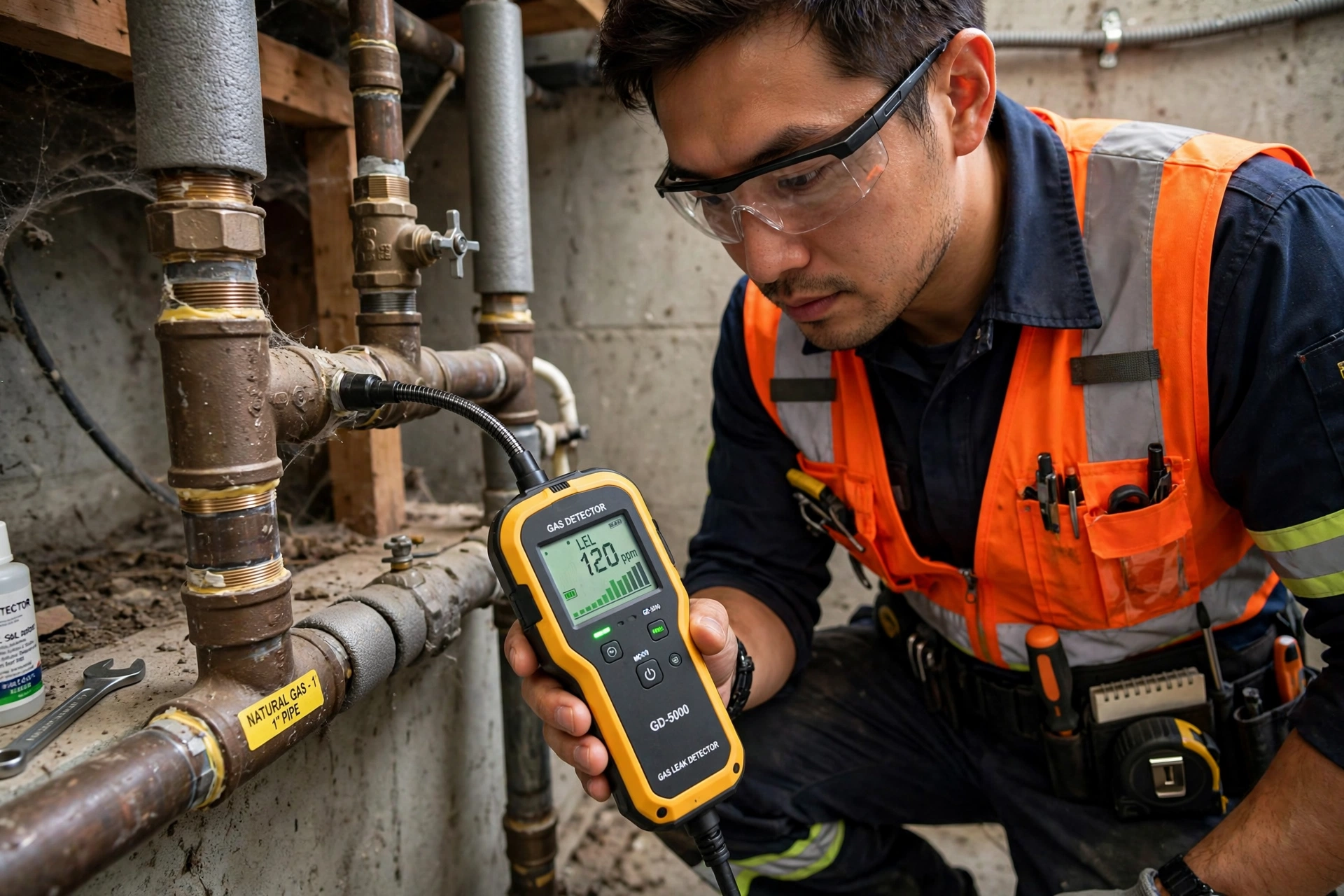
Thorough Inspections
We conduct detailed inspections to identify any issues with your gas lines, ensuring that all potential problems are addressed.
Our gas line repair service includes comprehensive inspections, repairs, and necessary replacements to ensure your gas lines are safe and functional.
We conduct detailed inspections to identify any issues with your gas lines, ensuring that all potential problems are addressed.
Our team specializes in repairing leaks, using high-quality materials to ensure a long-lasting solution.
We ensure all repairs comply with local codes and safety regulations, providing peace of mind for homeowners.
After repairs, we perform safety tests to ensure your gas lines are leak-free and functioning correctly.
Pressure testing is not routine maintenance; it is called for at specific moments in a gas system's life. Recognizing those moments explains why a contractor, an inspector, or a homebuyer is asking for one — and what the test is meant to prove each time.
The common thread is change or uncertainty. New piping has never been proven, so it gets tested. Repaired or modified piping has been disturbed, so it gets tested. A system changing hands needs its condition on paper, so it gets tested. And a system under suspicion — a possible leak, an unexplained symptom — gets tested to settle the question one way or the other.
New gas line work should be pressure tested before it disappears from view — before the trench is backfilled, before the drywall goes up, before the line is buried under a patio slab. Testing while everything is still exposed means anything found can be fixed directly, without excavation or demolition. Around Missouri City this is standard practice and, for most permitted work, a required step before inspection signoff.
The same logic covers modifications to existing systems: extending a line to a new appliance, rerouting pipe during a remodel, replacing a section of aging pipe, or adding a branch for an outdoor kitchen or pool heater. Whenever joints are opened and remade, the affected piping gets tested to prove the new work. A modification without a follow-up test leaves the newest — and least proven — part of your system unverified.
A proper pressure test follows the same deliberate procedure every time, because the preparation matters as much as the test itself. Testing the wrong section, leaving an appliance in the circuit, or using a gauge that cannot resolve small changes produces a result you cannot trust. Consistency in the setup is what makes the result mean the same thing on every job.
The broad strokes are straightforward: the test section is isolated, every opening is sealed, appliances are disconnected or valved out of the circuit, the gauge goes on, the line is charged with air, and the reading is monitored over the required duration. Simple to describe — and the reliability lives in the details.
Setup starts by defining exactly what is being tested: a whole-house system, a single new branch, a buried run before backfill. Shutoff valves isolate that section from the rest of the piping and from the gas supply. The test runs on air, so the gas stays off and entirely out of the picture.
Appliances come next. Gas appliances and their controls are built for low operating pressure, not test pressure, so they are disconnected or isolated from the test circuit before anything is pressurized. Their individual shutoff valves are closed, and where a valve alone cannot be trusted to isolate, the appliance is disconnected and the opening capped. That protects the equipment — and it keeps the test honest, since a leaking appliance valve would otherwise masquerade as a piping leak.
When the observation period ends there are two possible outcomes, and both are useful. A pass gives you verified assurance about the piping. A failure gives you specific, actionable information about a problem — found under controlled conditions, before gas is involved. Neither outcome is a dead end.
What matters is that the result is interpreted correctly and written down clearly. A passing test should leave you holding a record. A failing test should leave you with a clear explanation of what was found and what the repair path looks like — not a vague warning and a shrug.
A steady gauge across the full test period means the isolated piping has no leaks — not in the visible joints, not in the hidden runs, not in the buried sections. That is the outcome everyone wants, and it is worth being precise about what it proves: the piping, as a system, is sound at the time of the test.
It does not prove the appliances are in good shape — they were isolated from the test and were not evaluated. It does not promise nothing will ever leak — piping can be damaged later by digging, shifting clay soil, or corrosion over long spans of time. What it establishes is a verified baseline: as of this date, at this pressure, for this duration, the piping held. That baseline carries real weight in a real estate transaction or after new work.
01
What we do: Contact us immediately for gas line repair in Missouri City. Our technicians will locate and fix the leak quickly.
→ This ensures your home is safe and eliminates the risk of gas exposure.
02
What we do: Our team will inspect the gas lines and connections to identify any issues affecting performance.
→ You'll enjoy improved efficiency and reliability from your gas appliances.
03
What we do: We provide gas line servicing in Missouri City to ensure safe and efficient installations.
→ This guarantees that your new appliances operate safely and effectively.
Gas Line Repair in Missouri City requires an understanding of local building codes and common issues faced by residents. The humid climate can lead to corrosion in gas lines, making regular inspections essential. Our team is familiar with the unique challenges of the area, ensuring effective and compliant repairs. With gas line servicing in Missouri City, we address issues promptly to maintain safety and efficiency.
Bridlewood
This neighborhood often experiences gas line issues due to older infrastructure.
Parker Square
Residents here benefit from our prompt gas line repair services, especially during extreme weather.
Lake Forest
We provide thorough inspections to ensure safety in homes with aging gas lines.
High humidity levels in summer
This can accelerate corrosion in gas lines, necessitating regular inspections and repairs.
Frequent temperature fluctuations in winter
These fluctuations can lead to pipe expansion and contraction, increasing the risk of leaks.
Call Gas Line Repair Missouri City TX at (281) 343-3759 to schedule a pressure test. We will explain what will be tested, how long it takes, and what the documentation covers — before we ever connect a gauge.
Our gas line repair services address common issues that can pose risks to your home and family.
Problem
Ignoring gas leaks can lead to dangerous situations, including explosions or health hazards from inhalation.
Our Fix
Our team quickly identifies and repairs leaks, ensuring your gas lines are safe and compliant with local regulations.
Problem
Faulty connections can lead to inefficient appliance operation and increased energy costs.
Our Fix
We repair and replace faulty connections, improving appliance efficiency and reducing energy bills.
Problem
Pressure drops can affect appliance performance, leading to inadequate heating or cooking.
Our Fix
We diagnose and fix pressure issues, ensuring your gas appliances operate at optimal levels.
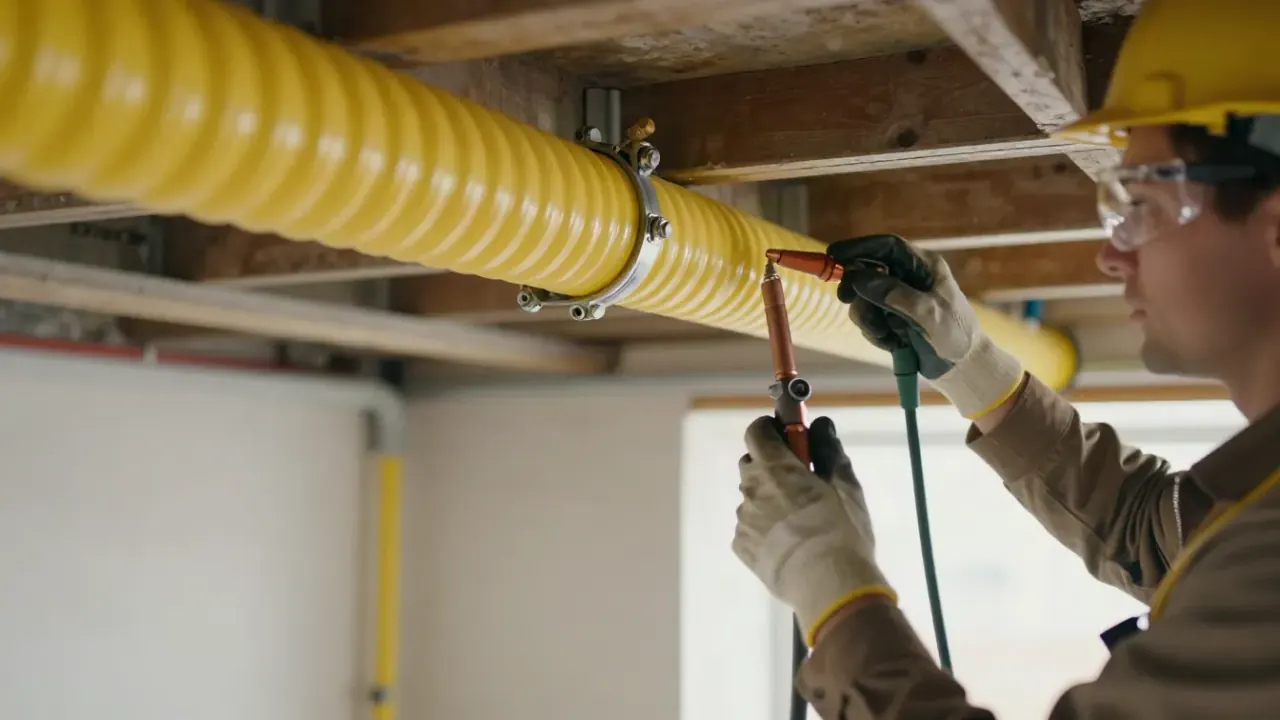
Investing in gas line repair offers numerous advantages that enhance safety and efficiency.
Enhanced Safety
Regular gas line repair significantly reduces the risk of dangerous gas leaks. By addressing potential issues early, homeowners can prevent hazardous situations and ensure their family's safety.
Increased Efficiency
Properly functioning gas lines improve the efficiency of your appliances. This can lead to lower energy bills and a more effective heating system, especially during the colder months in Missouri City.
Longer Lifespan
Timely gas line servicing in Missouri City can extend the lifespan of your gas appliances. By addressing wear and tear, you ensure that your systems function optimally for years.
Compliance with Codes
Gas line repairs ensure compliance with the National Fuel Gas Code (NFGC) and local regulations. This is crucial for avoiding fines and ensuring your home passes inspections.
Gas line repair costs in Missouri City typically range from $180 to $450 in 2026, depending on the complexity of the repair. Factors such as the extent of damage, materials used, and labor involved can affect the final price. Our transparent pricing ensures you know what to expect before we start any work.
Typical Investment Range
$180 - $450 depending on scope
Our pricing reflects the quality of service and materials used, ensuring long-lasting repairs.
What changes the price
Extent of Damage
More extensive damage requires more materials and labor, increasing costs.
Materials Used
The type of piping and fittings required can impact the overall repair cost.
Labor Intensity
Complex repairs that require more time and expertise will cost more.
Google ★★★★★4.9
Quick response and professional service! They fixed my gas leak within hours. Highly recommend!
Yelp ★★★★★4.8
Excellent service! The team was knowledgeable and friendly. They explained everything clearly.
BBB ★★★★★4.7
Very satisfied with the gas line repair. They were prompt and thorough in their work.
With local experience in gas line repair, our team is equipped with the necessary skills and certifications to handle any gas-related issue.
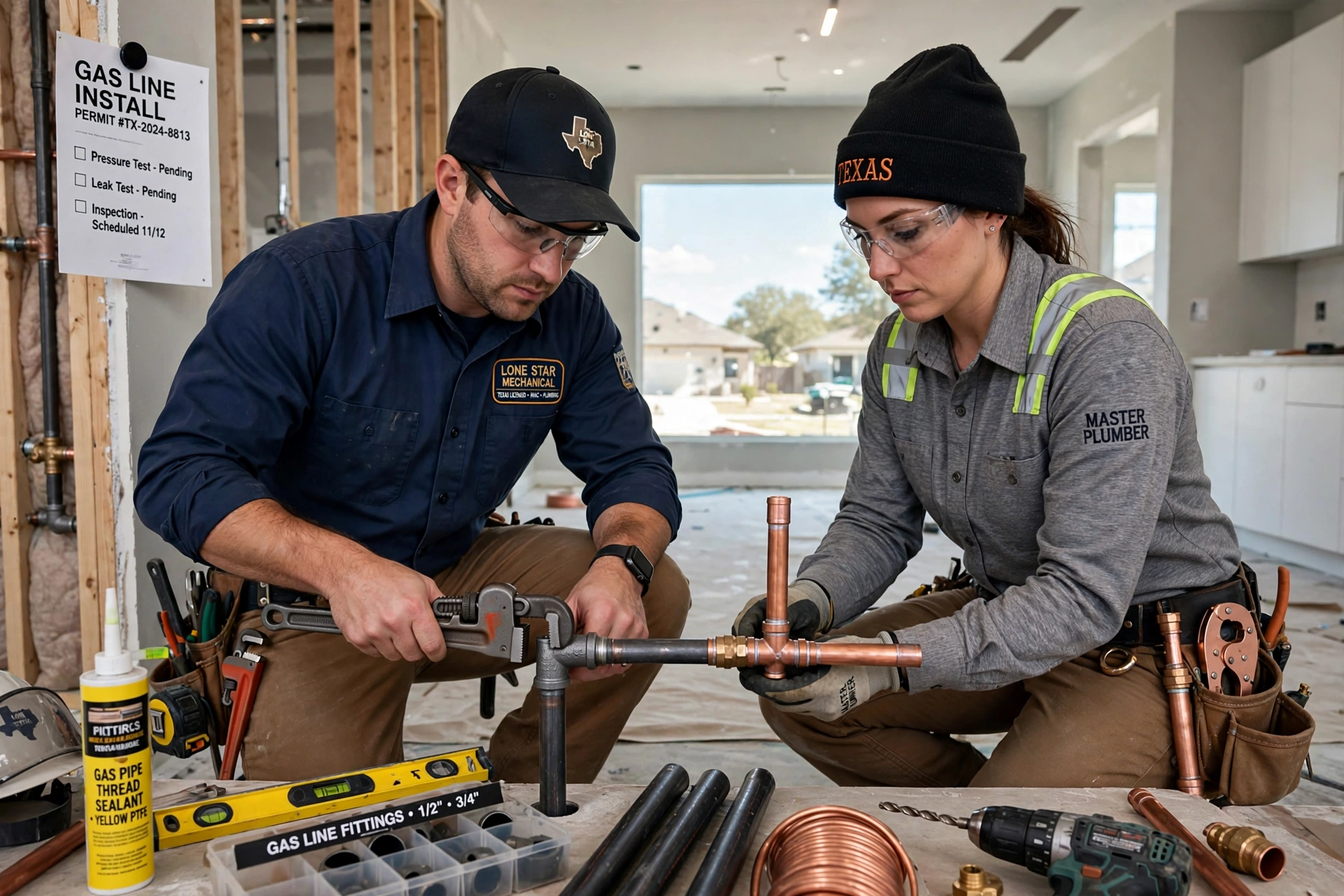
Real experiences from customers who chose our Gas Line Repair services.
“I had a gas leak in my home, and the team responded quickly. They were professional and resolved the issue within hours. Highly recommend!”
Sarah T.
Homeowner, Missouri City
“Their gas line repair service was excellent. They explained everything and worked efficiently. I felt safe knowing my gas lines were in good hands.”
Mark L.
Business Owner, Lewisville
“I appreciated their 24/7 emergency service. When I had a problem late at night, they were there within an hour. Great service!”
Emily R.
Resident, Highland Village
A pressure test proves a section of gas piping is leak-free. We seal the section off from the gas supply and the appliances, attach a sensitive gauge, charge it with air above normal operating pressure, and watch over a set period. A steady gauge means sound piping; a falling gauge means air is escaping somewhere — and then we track down the leak.
The on-site work usually takes one to two hours, including isolating the test section, setting up the gauge, pressurizing, and the observation period. Slow leaks need time to reveal themselves, so the monitoring window is a genuine part of the test rather than a formality. If the test finds a leak, locating and repairing it adds time — and the section is retested afterward to confirm the fix.
It helps to have someone available at the start so we can get into the areas involved — the meter, the appliances, attic or crawlspace entries — and confirm which piping is in scope. Once the test is underway and the gauge is being monitored, you do not need to hover. We will walk you through the results and leave the documentation with you when the test is complete.
No — appliances never see test pressure. Before pressurizing, we close each appliance's shutoff valve, and where a valve alone is not a trustworthy seal, we disconnect the appliance and cap its opening. Keeping the equipment out of the test circuit is a fixed step in our procedure on every test.
A failed test means a leak was found, so the next step is pinpointing it. We recheck our own test caps and gauge connections first, then brush leak detection solution over every joint and fitting in the section until bubbles reveal the source. Typical culprits are threaded joints that need resealing, tired valves, or aging connectors. After the repair, we test again — and keep testing until the gauge holds.
This is not a DIY task. It takes a properly calibrated test gauge, the fittings to seal and pressurize the system safely, and the knowledge to isolate appliances, read results with temperature effects accounted for, and — critically — find and repair a leak correctly if the test fails. Gas piping work also generally requires permits and inspection. If you need a test, have it done properly.
There is no fixed calendar schedule for most homes; tests are event-driven. They happen after new installations or modifications, after repairs, during real estate transactions, and whenever a leak is suspected. That said, if your home is older, its gas work history is unknown, or the property has been through severe soil movement from Southeast Texas drought-and-deluge cycles, a test is a sensible precaution even without a specific symptom.
Our test records list what was tested, the test pressure, the duration, the readings, and the result — the facts inspectors, buyers, and agents need. For permitted work we coordinate the test with the inspection schedule so everything happens in the right order. If your inspector or buyer has specific documentation requirements, tell us upfront and we will make sure the record covers them.
Our gas line installation service ensures your new gas lines are installed safely and comply with local codes, providing reliable service for your home.
View Gas Line InstallationRegular gas line inspections help identify potential issues before they become serious problems, ensuring the safety and efficiency of your gas systems.
View Gas Line InspectionOur gas leak detection service uses advanced technology to locate leaks quickly, preventing hazardous situations and ensuring your home's safety.
View Gas Leak DetectionWe provide professional gas appliance hookup services, ensuring your appliances are connected safely and function optimally for your home.
View Gas Appliance HookupWe're here to help you with your gas line needs. Reach out during business hours for quick responses and assistance.
Phone
(281) 343-3759Address
2209 Texas Pkwy, Missouri City, TX 77489, USA, Missouri City, Texas
Hours
Mon–Fri: 7AM – 7PM
Sat: 8AM – 4PM
Sun: Emergency Only
24/7 Emergency Available