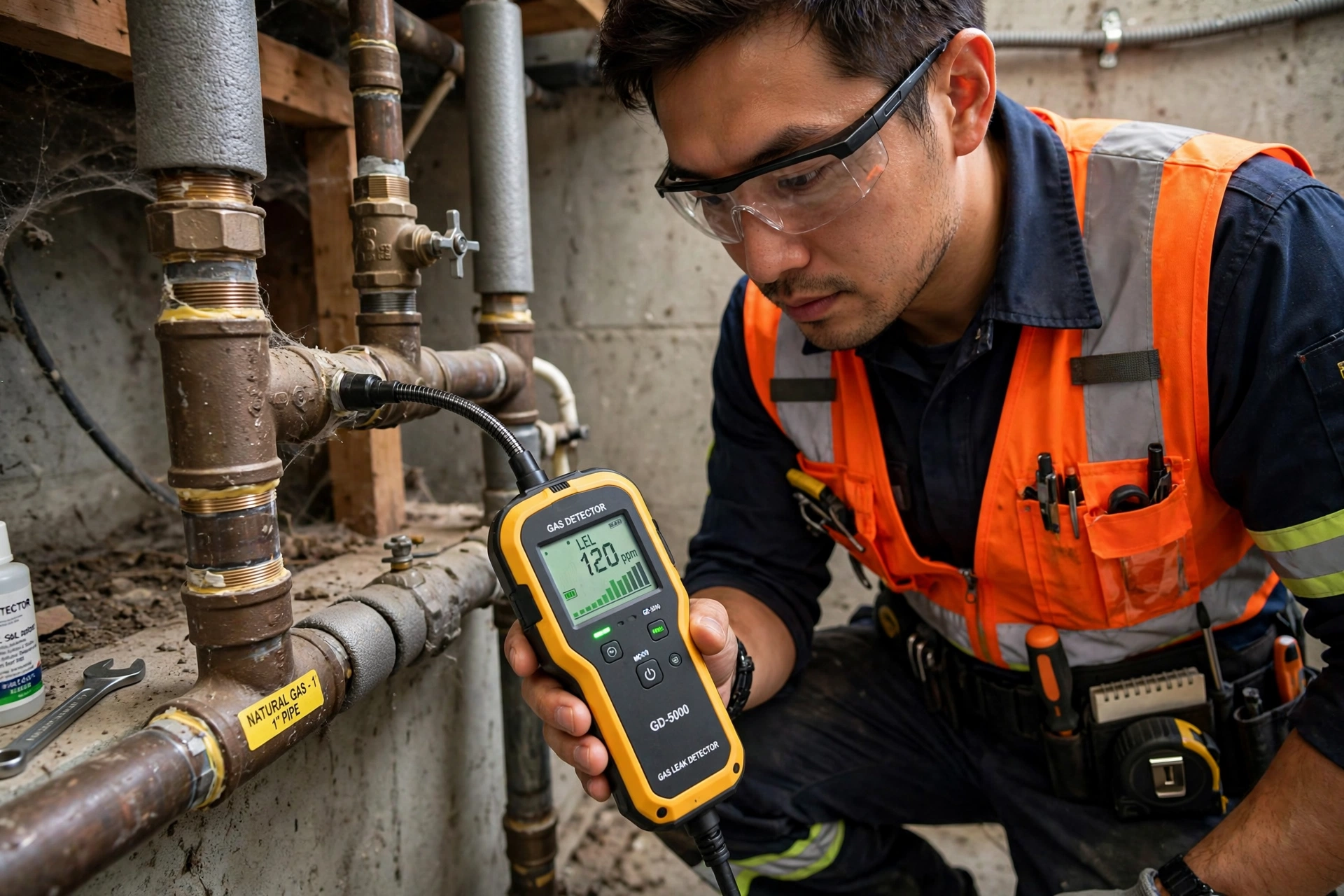
Thorough Inspections
We conduct detailed inspections to identify any issues with your gas lines, ensuring that all potential problems are addressed.
Our gas line repair service includes comprehensive inspections, repairs, and necessary replacements to ensure your gas lines are safe and functional.
We conduct detailed inspections to identify any issues with your gas lines, ensuring that all potential problems are addressed.
Our team specializes in repairing leaks, using high-quality materials to ensure a long-lasting solution.
We ensure all repairs comply with local codes and safety regulations, providing peace of mind for homeowners.
After repairs, we perform safety tests to ensure your gas lines are leak-free and functioning correctly.
The single most common and reliable sign of a gas leak is the distinctive sulfur or rotten-egg odor. You might notice it near a gas appliance such as a stove, water heater, or pool heater — outdoor gas features are popular in Missouri City suburbs — in a utility closet where piping runs, or outside near the gas meter or along the path of a buried service line. The strength of the smell often tracks with the size of the leak and your distance from it, but even a faint, persistent whiff deserves attention.
One important nuance: the smell may come and go. A small leak at a threaded fitting can release gas intermittently as temperature swings cause the metal to expand and contract — something Gulf Coast weather delivers in abundance. If you catch the odor once and then it fades, do not assume the problem fixed itself. Note where and when you smelled it, ventilate the area if it is safe to do so, and arrange for a professional evaluation. A trained technician performing professional gas leak detection can pinpoint the source with specialized equipment instead of guesswork.
A strong, obvious gas odor — especially one that fills a room or hits you the moment you walk in — calls for immediate action: leave the building, avoid anything that could create a spark, and call for help from a safe distance. A faint smell still warrants a prompt response, but you have a moment to think: do not flip electrical switches on or off, do not light anything, and step outside to call. In both cases, never try to find the leak yourself with a lighter or match — that mistake has caused serious injuries.
Natural gas travels through your home’s piping under pressure, and when it escapes through a crack, a loose fitting, or a damaged section, it can produce an audible hiss, whistle, or — with a larger break — a roaring sound. Indoors, listen near appliance connections, shutoff valves, and exposed piping in utility areas. Outdoors, the sound may come from the gas meter assembly or from the ground above a buried service line.
Context matters. A gas stove makes a soft hiss for a moment when a burner ignites; that is normal. What is not normal is a continuous hissing from piping, a whistle coming from inside a wall cavity, or any loud rushing sound near the meter. If you hear something like that, treat it as a serious warning sign, leave the area, and get professional help. Sounds combined with the sulfur odor are an especially strong indication of an active leak.
Appliances make all kinds of normal sounds: the click of an igniter, the whoosh of a burner lighting, the hum of a furnace blower. Leak sounds are different — they are steady, unchanging, and tied to no appliance cycle. If the hissing continues with every gas appliance turned off, or if it seems to come from inside a wall or from underground rather than from an appliance, that points to a piping problem. In the Houston metro, there is another local factor worth knowing: expansive clay soil swells when wet and shrinks when dry, and that ground movement can stress buried joints over time, sometimes opening small leaks that hiss intermittently after heavy rain and dry spells.
An underground gas leak can kill vegetation in a telltale pattern. Escaping natural gas displaces oxygen in the soil, effectively suffocating grass roots and plant root systems in the affected zone. The result is often a distinct patch of dead, yellowed, or brown grass — sometimes tracing a line along the buried pipe’s route — while the surrounding lawn stays green and healthy.
In Missouri City, where summer heat and periodic drought already stress lawns, it is easy to mistake leak damage for weather damage. The key difference is the pattern: drought stress tends to hit broad areas or spots with poor sprinkler coverage, while a gas leak creates a localized, often linear patch that does not respond to watering. If one strip of your yard keeps dying no matter how much you water it, and it roughly follows the path from the street to your gas meter, a leak is worth investigating.
Texas lawns suffer from many ailments — heat stress, grub infestations, fungal disease, chinch bugs — so compare carefully. Grub damage usually lets you peel back the turf like a carpet because the roots are eaten away. Fungal patches often show a ring pattern. Gas damage tends to appear as a defined band or oval of dead grass with none of those secondary signs, and it persists through watering and treatment. When in doubt, a professional inspection of the underground line can rule a leak in or out.
01
What we do: Contact us immediately for gas line repair in Missouri City. Our technicians will locate and fix the leak quickly.
→ This ensures your home is safe and eliminates the risk of gas exposure.
02
What we do: Our team will inspect the gas lines and connections to identify any issues affecting performance.
→ You'll enjoy improved efficiency and reliability from your gas appliances.
03
What we do: We provide gas line servicing in Missouri City to ensure safe and efficient installations.
→ This guarantees that your new appliances operate safely and effectively.
Gas Line Repair in Missouri City requires an understanding of local building codes and common issues faced by residents. The humid climate can lead to corrosion in gas lines, making regular inspections essential. Our team is familiar with the unique challenges of the area, ensuring effective and compliant repairs. With gas line servicing in Missouri City, we address issues promptly to maintain safety and efficiency.
Bridlewood
This neighborhood often experiences gas line issues due to older infrastructure.
Parker Square
Residents here benefit from our prompt gas line repair services, especially during extreme weather.
Lake Forest
We provide thorough inspections to ensure safety in homes with aging gas lines.
High humidity levels in summer
This can accelerate corrosion in gas lines, necessitating regular inspections and repairs.
Frequent temperature fluctuations in winter
These fluctuations can lead to pipe expansion and contraction, increasing the risk of leaks.
If you believe there is a gas leak, follow these steps in order. First, do not try to locate the leak yourself, and do not turn any electrical devices, light switches, or appliances on or off — even a tiny spark can ignite accumulated gas. Do not light matches, candles, or cigarettes, and do not use a phone, flashlight, or garage door opener inside the affected building. Second, leave the building immediately by the nearest safe exit, taking people and pets with you. If you can open doors as you go without slowing down, do so to help ventilate.
Third, once you are a safe distance away — across the street is a good rule of thumb — call your gas utility’s emergency line or 911. After the immediate hazard is addressed and the area is declared safe, contact a qualified gas line professional to find and repair the source. The utility’s job is to stop the immediate danger; the permanent gas line repair on your side of the meter is typically the homeowner’s responsibility.
A professional investigation starts with safety checks, then uses specialized tools — combustible gas detectors, electronic sniffers, and pressure testing — to isolate the leaking section. For underground lines, acoustic listening equipment or tracer gas can pinpoint the spot without digging up the whole yard, which matters in neighborhoods where landscaping and driveways sit over the service line’s path. Once found, the damaged section is repaired or replaced, the system is pressure-tested to verify it holds, and appliances are checked before gas service is restored. Knowing this process in advance makes the experience far less stressful if it ever happens to you.
Our gas line repair services address common issues that can pose risks to your home and family.
Problem
Ignoring gas leaks can lead to dangerous situations, including explosions or health hazards from inhalation.
Our Fix
Our team quickly identifies and repairs leaks, ensuring your gas lines are safe and compliant with local regulations.
Problem
Faulty connections can lead to inefficient appliance operation and increased energy costs.
Our Fix
We repair and replace faulty connections, improving appliance efficiency and reducing energy bills.
Problem
Pressure drops can affect appliance performance, leading to inadequate heating or cooking.
Our Fix
We diagnose and fix pressure issues, ensuring your gas appliances operate at optimal levels.
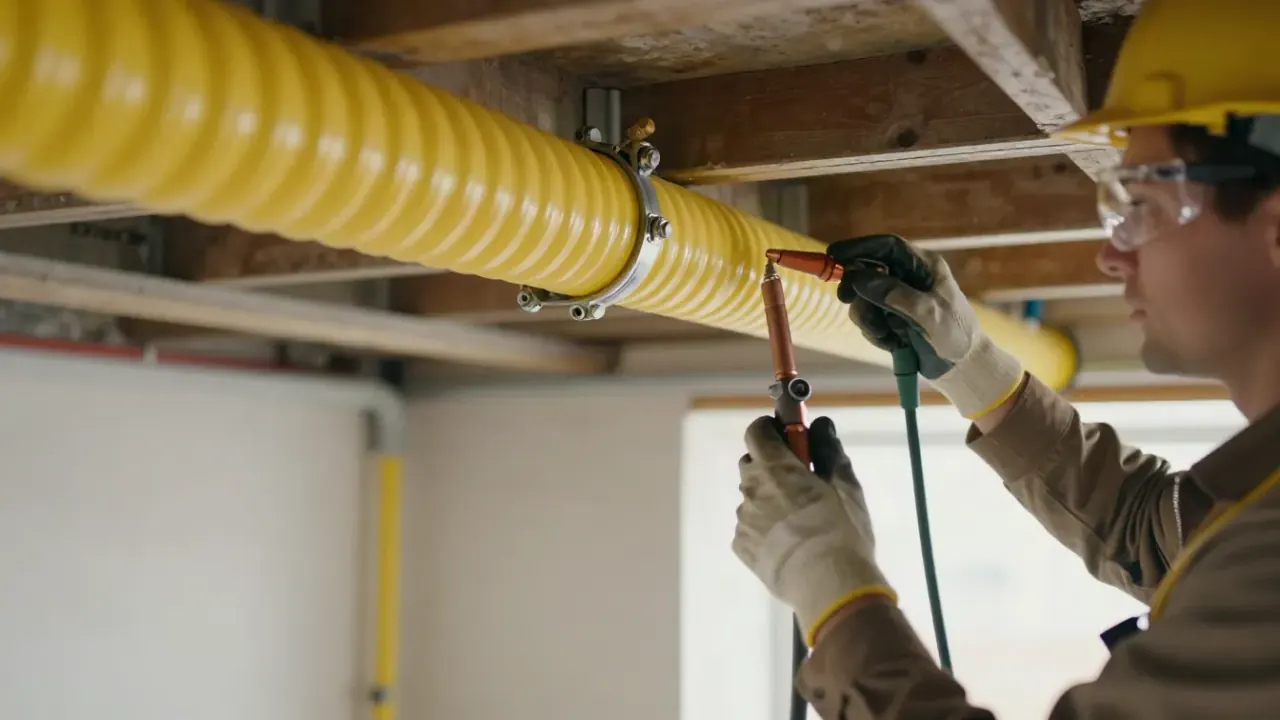
Investing in gas line repair offers numerous advantages that enhance safety and efficiency.
Enhanced Safety
Regular gas line repair significantly reduces the risk of dangerous gas leaks. By addressing potential issues early, homeowners can prevent hazardous situations and ensure their family's safety.
Increased Efficiency
Properly functioning gas lines improve the efficiency of your appliances. This can lead to lower energy bills and a more effective heating system, especially during the colder months in Missouri City.
Longer Lifespan
Timely gas line servicing in Missouri City can extend the lifespan of your gas appliances. By addressing wear and tear, you ensure that your systems function optimally for years.
Compliance with Codes
Gas line repairs ensure compliance with the National Fuel Gas Code (NFGC) and local regulations. This is crucial for avoiding fines and ensuring your home passes inspections.
Gas line repair costs in Missouri City typically range from $180 to $450 in 2026, depending on the complexity of the repair. Factors such as the extent of damage, materials used, and labor involved can affect the final price. Our transparent pricing ensures you know what to expect before we start any work.
Typical Investment Range
$180 - $450 depending on scope
Our pricing reflects the quality of service and materials used, ensuring long-lasting repairs.
What changes the price
Extent of Damage
More extensive damage requires more materials and labor, increasing costs.
Materials Used
The type of piping and fittings required can impact the overall repair cost.
Labor Intensity
Complex repairs that require more time and expertise will cost more.
Google ★★★★★4.9
Quick response and professional service! They fixed my gas leak within hours. Highly recommend!
Yelp ★★★★★4.8
Excellent service! The team was knowledgeable and friendly. They explained everything clearly.
BBB ★★★★★4.7
Very satisfied with the gas line repair. They were prompt and thorough in their work.
With local experience in gas line repair, our team is equipped with the necessary skills and certifications to handle any gas-related issue.
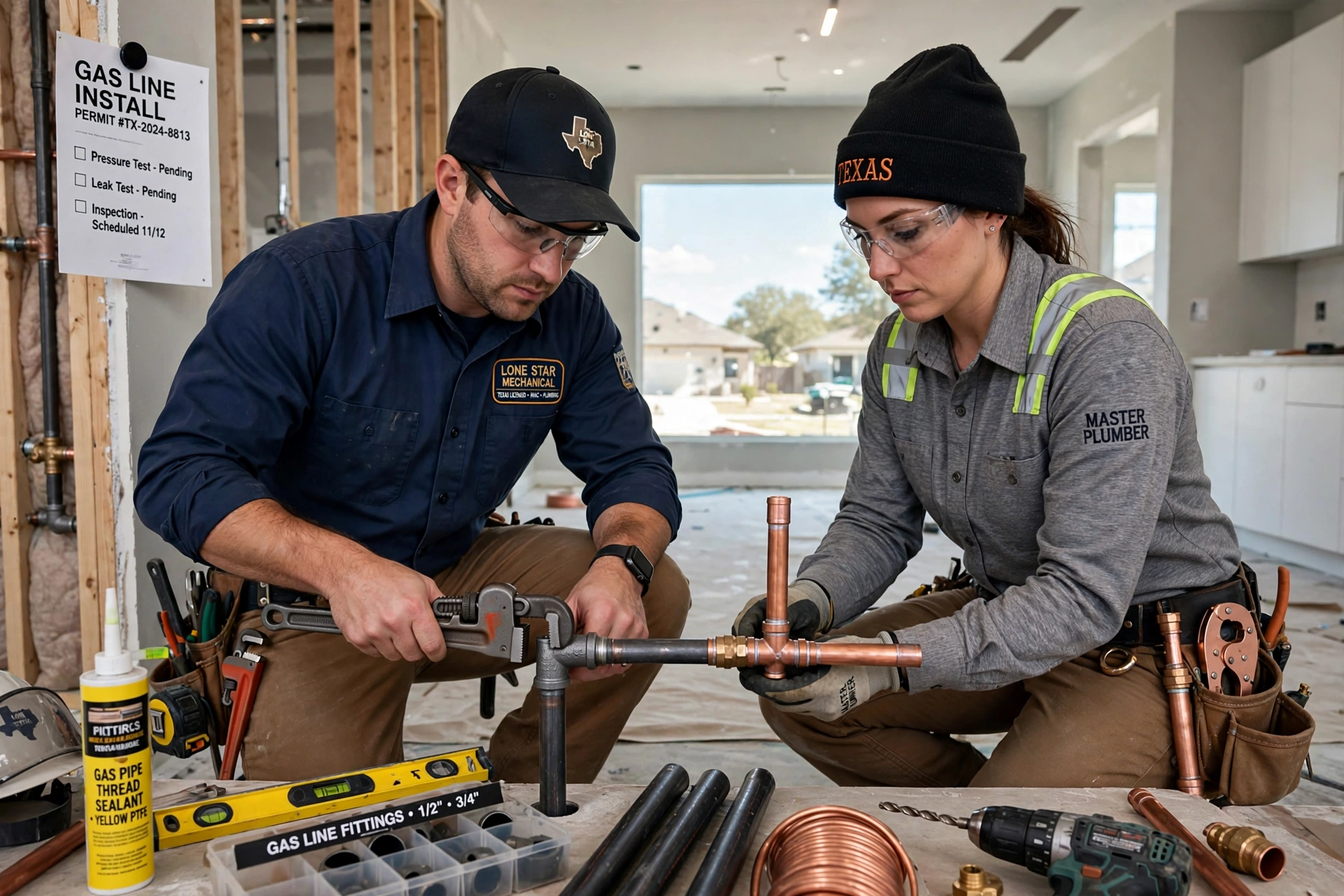
Real experiences from customers who chose our Gas Line Repair services.
“I had a gas leak in my home, and the team responded quickly. They were professional and resolved the issue within hours. Highly recommend!”
Sarah T.
Homeowner, Missouri City
“Their gas line repair service was excellent. They explained everything and worked efficiently. I felt safe knowing my gas lines were in good hands.”
Mark L.
Business Owner, Lewisville
“I appreciated their 24/7 emergency service. When I had a problem late at night, they were there within an hour. Great service!”
Emily R.
Resident, Highland Village
Natural gas is odorless on its own, so utilities add a chemical called mercaptan that smells like rotten eggs or sulfur. That distinctive odor is the most common sign of a leak. If you smell it strongly indoors, leave the building right away and call for help from a safe distance outside.
Yes. Odor fade in new piping, soil filtering the odorant out of an underground leak — common with dense clay soils — or simply having a cold can all mask the smell. That is why sounds, dead vegetation, physical symptoms, and rising gas bills are also important warning signs, and why you should never rely on smell alone.
No. Carbon monoxide detectors only detect CO, which comes from incomplete combustion — not unburned natural gas. Some combination units also sense combustible gases, but a standard CO alarm will not alert you to a methane leak. Homes with gas appliances benefit from both types of protection.
Only if you can do it safely from outside and you know exactly how — the meter shutoff valve typically requires a wrench and a quarter turn. If the smell is strong, if the meter is indoors or hard to reach, or if you are unsure about anything, leave the building and let emergency responders handle it.
First, call your gas utility’s emergency line or 911 from a safe location outside the building — in the Houston metro area the natural gas utility is typically CenterPoint Energy. The utility will stop the immediate hazard. For the permanent repair of the leaking pipe on your property, contact a qualified gas line repair professional.
Technicians use combustible gas detectors and electronic sniffers for indoor leaks, pressure testing to confirm which section is losing gas, and acoustic or tracer-gas methods for underground lines. This targeted approach avoids unnecessary digging and gets the repair done with minimal disruption to your yard.
Our gas line installation service ensures your new gas lines are installed safely and comply with local codes, providing reliable service for your home.
View Gas Line InstallationRegular gas line inspections help identify potential issues before they become serious problems, ensuring the safety and efficiency of your gas systems.
View Gas Line InspectionOur gas leak detection service uses advanced technology to locate leaks quickly, preventing hazardous situations and ensuring your home's safety.
View Gas Leak DetectionWe provide professional gas appliance hookup services, ensuring your appliances are connected safely and function optimally for your home.
View Gas Appliance HookupWe're here to help you with your gas line needs. Reach out during business hours for quick responses and assistance.
Phone
(281) 343-3759Address
2209 Texas Pkwy, Missouri City, TX 77489, USA, Missouri City, Texas
Hours
Mon–Fri: 7AM – 7PM
Sat: 8AM – 4PM
Sun: Emergency Only
24/7 Emergency Available